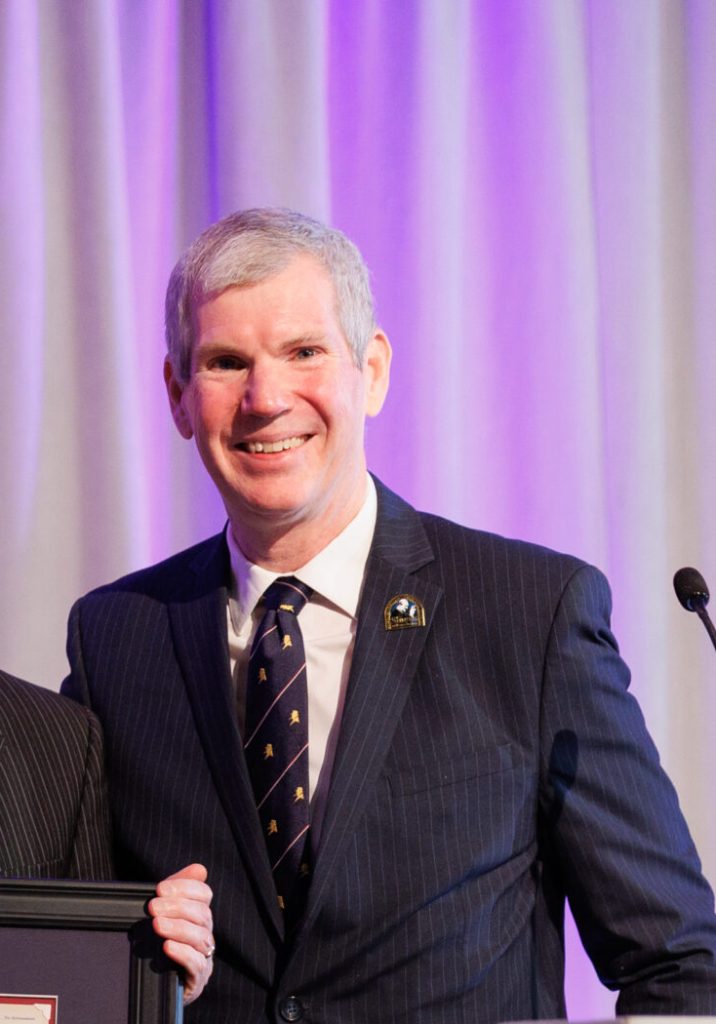
The Hottest Ticket in Town, 1946 By Donald P. Lofe, Jr. President and Chief Transformation Officer and Churchill Fellow, Westminster CollegeDirector, International Churchill Societ...
The armistice to end the First World War was signed on 11 November 1918, and determined a ceasefire at 11am that morning. This is now commemorated as Armistice Day, and each year at the eleventh hour of the eleventh day of the eleventh month there is a two-minute silence for people to pause and remember those who died during the conflict. Read Churchill’s own recollection of the day in , and also Dr Warren Dockter’s consideration of one of the most remarkable aspects of Churchill’s character in .
Shortly after his return from Fulton, Churchill began to write his war memoirs. With a team of researchers working on his behalf, and a very ordered (if somewhat laborious) approach to drafting and editing, he soon had the first volume finished. appeared in six volumes between 1948 and 1954. Churchill never claimed the memoirs were ‘history’; they were rather a contribution to history. Although their very breadth and coverage gave the impression that they were a definitive account, there were omissions, of course. was Churchill’s interpretation of the events, the work of a man seeking to place his role in the war – and in history. The books sold well, with a combined first printing of over 800,000 copies.
Churchill’s desire to play a more important role in the war – and in politics – came a step closer when David Lloyd George toppled Asquith to become Prime Minister of a coalition government in December 1916. By July 1917, his old Liberal ally and mentor was confident enough to take the risk of reintroducing Churchill – now largely exonerated of sole blame for the Dardanelles – into Government. Lloyd George appointed Churchill Minister of Munitions, putting him in charge of forging the weapons of war.
On 18 June 1940, Churchill gave a rousing speech to the British people, announcing: '... the Battle of France is over. The Battle of Britain is about to begin.' Four days later, France surrendered to Germany and Hitler turned his attention to Britain.
On 24 August, German night bombers aiming for the airfields accidentally destroyed several London homes, killing civilians. Churchill retaliated immediately by bombing Berlin the following night. Starting on 7 September 1940, London was bombed by the for 57 consecutive nights, and other British cities were targeted. But a real turning point in Britain’s fortunes in the war occurred on 15 September. In an attempt to shatter British morale, now that an invasion began to seem increasingly unrealistic, Hitler sent two enormous waves of German bombers. But their attacks were scattered by the RAF; the German defeat caused Hitler to order, two days later, the postponement of preparations for the invasion. In the face of mounting losses of men and aircraft, the switched from daylight to night-time bombing and although fighting continued in the air for several more weeks, and British cities continued to be bombed, German tactics to achieve air superiority ahead of an invasion had failed.
Thoughts on Churchill by Richard M Langworth “Sir Winston’s grandson thought...
For much of the war, Churchill lived not at 10 Downing Street, the residence of the Prime Minister, but in ‘the Annexe’, a building nearby in Whitehall. Underneath this, were the Cabinet War Rooms (now a museum called the Churchill War Rooms) – a ‘bunker’ – where he and his government were protected from the worst the German bombers could rain down on London.
1940 was Britain’s first full year of war – and it was a time of enormous challenge as the country faced the very real threat of defeat . It was also Britain’s ‘finest hour’. The events of 1940 shaped the way the war was fought and helped to set Britain on the road to eventual victory – and only an extraordinary leader could guide the country through. Churchill found himself needing all his daring and endurance to face the task ahead.
Churchill had a period of leave and managed to obtain his first assignment as a war correspondent for the newspaper. He was reporting on the rebellion against Spanish rule by guerilla rebels in Cuba when he first came under fire. (It was also in Cuba that he first developed his well-known taste for fine Cuban cigars. He was attached to the Spanish forces as an observer but his writings reveal considerable sympathies for the Cuban rebels.)
Get the Churchill Bulletin delivered to your inbox once a month.
Join the International Churchill Society today! Membership starts at just $29/year.