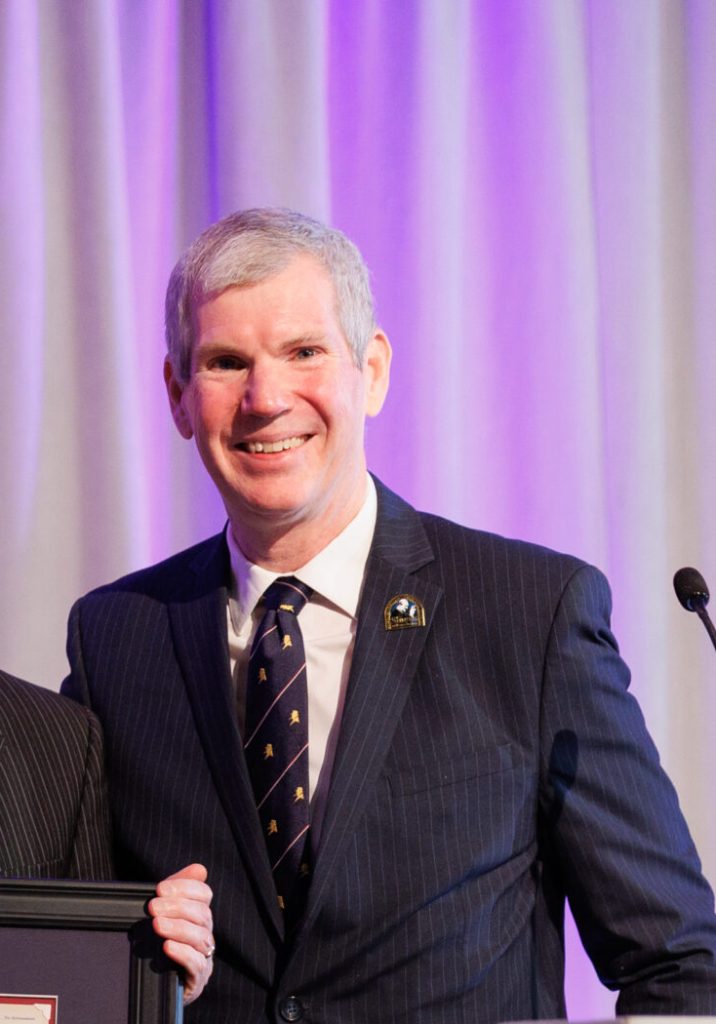
The Hottest Ticket in Town, 1946 By Donald P. Lofe, Jr. President and Chief Transformation Officer and Churchill Fellow, Westminster CollegeDirector, International Churchill Societ...
Review of The Man Within by Dr Warren Dockter...
Sport also played an important role after the Second World War and, under Ludwig Guttman’s care, paralysed patients at the Stoke Mandeville Hospital in Aylesbury were using sport as part of...
Friday 8 May 2015 was the anniversary of VE Day (Victory in Europe Day), marking seventy years since the end of the Second World War in Europe The occasion was commemorated...
But Churchill needed to keep his eye on developments at home, too. Although winning allies and guaranteeing Britain the support it needed if Germany was to be defeated was vital, he also had to keep morale in Britain high. With his usual energy and indefatigable determination, he kept up a relentless tour of troops, dockyards, munitions factories, troop inspections – and surveying bomb damage. Churchill rallied the people of Britain with stirring speeches.
Although Britain had defeated Hitler’s attempts to invade, the Nazi forces continued their march. 1941 was a testing time for the British in the war. Conflict had spread to the Mediterranean and north Africa after Italy entered the war on 10 June 1940. Although the British had counter-attacked in north Africa and pushed on into Libya, the Germans defeated the British in Greece, Yugoslavia surrendered and the initial victories against the Italians in North Africa were reversed when Erwin Rommel, the ‘Desert Fox’ arrived with his German forces. In Asia, Japan advanced in China, occupied French Indo-China (later Vietnam) and were threatening the British colony of Hong Kong. It looked like Germany had the upper hand.
The war ground slowly on. In late 1941 and 1942, disaster followed disaster as Germany and their Japanese allies gained the upper hand. On Christmas Day 1941, Hong Kong surrendered to the Japanese, with Singapore falling only a few weeks later, on 15 February 1942; Rangoon followed soon after. Japan moved on to threaten Australia. In Greece, the Mediterranean and north Africa the situation was no better. Tobruk, in north Africa, fell to the German forces. Churchill flew to Cairo to change Middle East command on 2 August, replacing General Auchinleck with General Alexander, and putting General Montgomery in command of the British Eighth Army. On 12 August 1942, Churchill flew to Moscow for his first meeeting with Stalin, to tell him that the western Allies weren’t in a position to attack in Europe that year – they didn’t have sufficient resources – and would instead focus on forcing German retreat from north Africa. Stalin was always against this strategy and continued to argue that a western, European invasion was the only way to defeat Germany (and to relieve pressure on Soviet forces fighting in the east). It will perhaps seem surprising to future generations to know that Churchill faced two votes of no confidence in his government in January and July 1942. Though he won them easily, they show that Britain was not always united and that Churchill remained answerable to the will of Parliament.
In January 1943, Churchill met up with Roosevelt and de Gaulle. Stalin had declined to attend, citing the ongoing fighting in Stalingrad as the reason he couldn’t get away. This Anglo-American ‘summit’ at Casablanca (in French Morocco) addressed the specifics of tactical procedure, allocation of resources and the broader issues of diplomatic policy. Ultimately, though, what the Casablanca Declaration made clear was that the Allies would accept nothing less than the ‘unconditional surrender’ of Germany. Stalin was reassured.
With the net tightening around Germany, the Allied Leaders regrouped to clarify their plans for the final offensive. Yalta, on the Black Sea coast of the Crimea, was deemed a safe venue for the second meeting of ‘The Big Three’. Stalin, Churchill and Roosevelt gathered on 4 February 1945 and agreed the plans for the final offensive, the occupation policy for Germany and the establishment of the United Nations and its Security Council. Stalin also agreed to enter the war against Japan, something for which Roosevelt was criticized. But in February 1945, the Japanese still seemed a formidable opponent and the the Soviet Union’s vast army might be needed to oppose them. Even more crucially, Roosevelt was criticised for ‘giving’ Eastern Europe to Stalin. However, there was little else he could do. The simple military fact in February 1945 was that the Soviet Union dominated Eastern Europe and that the power of the atomic bomb (that had yet to be tested) clearly couldn’t be relied on as a counter-measure to curb Stalin’s ambitions. Victory had been achieved at great cost – the lives of men, women and children; the destruction of homes and cities; the dislocation of peoples, exhaustion of finances and a weakened British economy. But Britain – led by Churchill, in his and Britain’s ‘finest hour’ – had achieved what it set out to do. Its people had dared and endured and seen victory, ‘in spite of terror’. They – and Churchill – had survived.
When Churchill sailed to India with his regiment, the Queen’s Hussars, in 1896, polo – and winning regimental polo cups – seemed to be the only action he was likely to see. Eager to make his mark, he took matters into his own hands and persuaded the to take him on as a war correspondent. In 1897, he travelled to the North West frontier of India and Pakistan to join the Malakand Field Force fighting against the Afghan tribes in 1897, under the command of Sir Bindon Blood. It took him a total of five uncomfortable weeks (by ship and by train), with the promise of nothing more than a role as ‘correspondent’, to get to the front.
International Churchill Society the preeminent member organization dedicated to preserving the historic legacy of The Rt. Hon. Sir Winston Churchill.
Get the Churchill Bulletin delivered to your inbox once a month.
Join the International Churchill Society today! Membership starts at just $29/year.