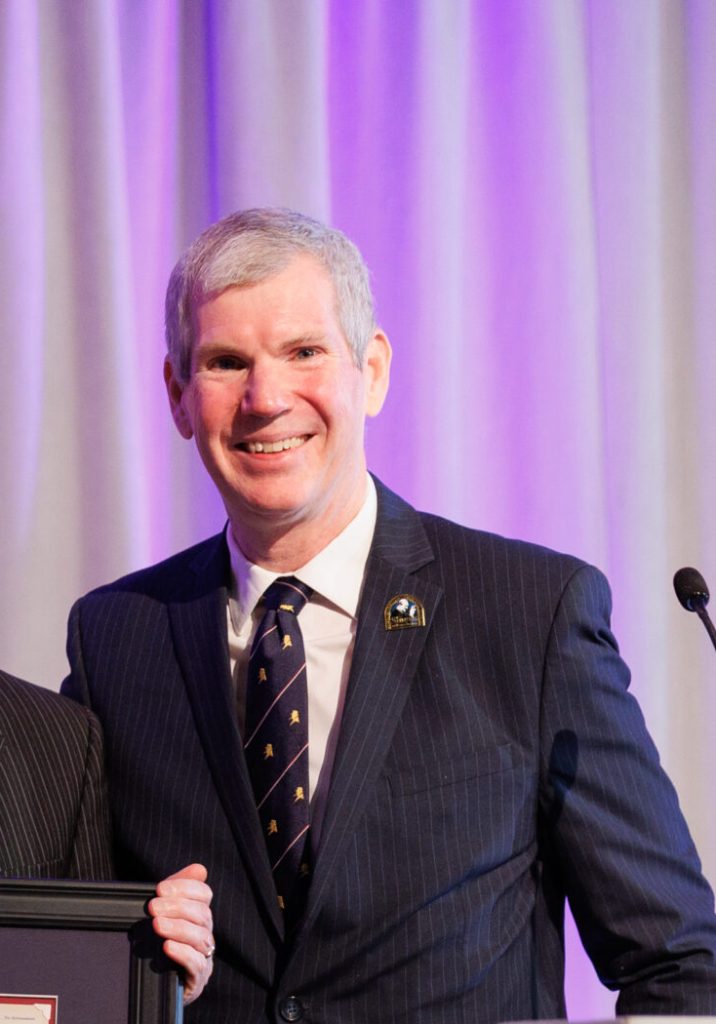
The Hottest Ticket in Town, 1946 By Donald P. Lofe, Jr. President and Chief Transformation Officer and Churchill Fellow, Westminster CollegeDirector, International Churchill Societ...
Finest Hour 170, Fall 2015 Page 38 Review by Richard A McConnell Mike Lepine, Churchill and the Generals , Danann Publishing, 2015, 136 pages, £2999/$5500 ISBN 978-0993016944...
Finest Hour 170, Fall 2015 Page 11 By Fred Glueckstein On 9 December 1905, Winston Churchill was given his first government post by Prime Minister Sir Henry Campbell-Bannerman as the new Under-Secretary for...
The present war has revised all military theories about the field of fire … The question to be solved … is the actual getting across of 100 or 200 yards of open space and wire entanglements.
There is no doubt the charge was an awful gamble and that no normal precautions were possible. The issue as far as I was concerned had to be left to Fortune or to God – or to whatever may decide these things. I am content and shall not complain.
Here was a place where real things were going on. Here was a scene of vital action. Here was a place where anything might happen. Here was a place where something would certainly happen. Here I might leave my bones.
In June 1940, Churchill made two more trips to France to try to persuade the French to fight on But Hitler continued his advance into Paris and France surrendered on 17...
Friday 8 May 2015 was the anniversary of VE Day (Victory in Europe Day), marking seventy years since the end of the Second World War in Europe The occasion was commemorated...
Although he’d sought to delay it as long as he could, at last Churchill had to accept that the invasion of Europe from the French coast was going to take place. Britain had become the minor player in the Anglo-American partnership and Churchill had to face the fact that he no longer had the influence to prevent what he saw as an incredibly risky operation. His walk with ‘Destiny’ was now several paces behind the Americans.
Churchill’s memoirs, contain very little about the Holocaust; his memoirs concentrate on political and military strategy. He’d been aware of the atrocities committed against Jews on the eastern front since 1941 and did speak out, calling for the execution of the guilty after the War. Churchill was strongly in favour of arming the Jews and this eventually led to the creation of a Jewish Brigade. In 1944 he responded to the wholesale deportation of Jews from Hungary to Auschwitz by backing plans to bomb the railways that transported them, though the deportations ceased and the order was not carried out. Some have argued that he could have done more to bomb the camps, though there is little doubt that he saw the total defeat of Nazi Germany as the best way of ending the terror. Did Churchill have knowledge of the Holocaust and do nothing? Find out .
Get the Churchill Bulletin delivered to your inbox once a month.
Δ
Join the International Churchill Society today! Membership starts at just $29/year.