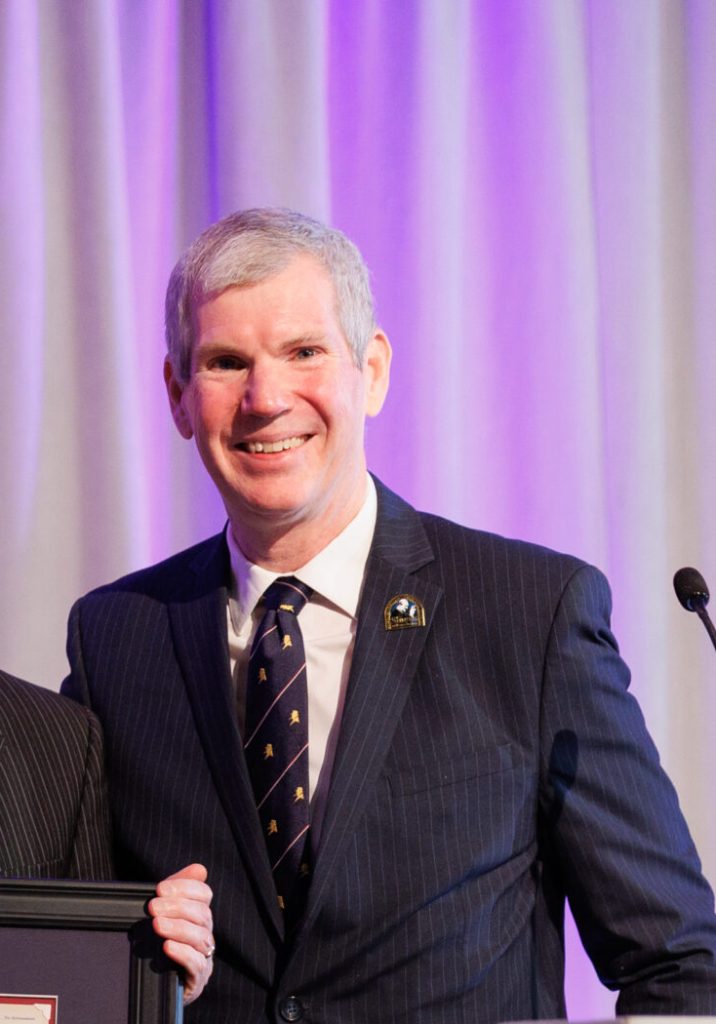
The Hottest Ticket in Town, 1946 By Donald P. Lofe, Jr. President and Chief Transformation Officer and Churchill Fellow, Westminster CollegeDirector, International Churchill Societ...
The summer of 1940 was, as Churchill called it, Britain’s ‘finest hour’. It was also his. When the German armies conquered France, Britain found itself in the line of attack. With German U-boats patrolling the seas and soon to have bases on the Atlantic, and German bombers marshalling on the coast of France, Britain faced its first serious threat of invasion since 1805. The months of June, July, August and September were to prove Churchill’s moment of ‘Destiny’. For more background information, see the Imperial War Museum’s material on 1940 . Many found it difficult to see how Britain could avoid being defeated. Victory seemed impossible. But Churchill was passionately opposed to negotiating with Hitler. The War Cabinet did consider a compromise peace – or at least the offer of mediation, by Italy, between Germany and the allies – but Churchill argued strongly against this. He was convinced that Hitler would renege on any promises or agreement, just as he had done back in 1938. Churchill used words to persuade his country to fight on. He was a great political communicator – he had refined his speechmaking over many years – and his speeches made at this time (most of them in parliament, with some broadcast later on the radio) ‘mobilized the English language and sent it into battle’.
On 18 June, Churchill warned the British people that the ‘battle of France’ was over and the ‘battle of Britain’ was about to begin. His words were proved right. As early summer gave way to July and August, the threat of invasion loomed over Britain. Churchill, seeing that control of the skies was vital, put businessman Lord Beaverbrook in charge of Aircraft Production (as Minister) and encouraged British scientists to improve radar defences and counter German technology. In August, the Royal Air Force managed to inflict heavy casualties on the German and, in September, the German pilots transferred their attention from the coastal airfields and those in south-west England to London, allowing the fighter bases respite from attack but putting British people in the city at much greater risk. In early September a massive series of raids involving nearly four hundred German bombers and more than six hundred fighters targeted docks in London’s East End almost continuously, day and night. Listen to a reporter describing London in the Blitz, with St Paul’s Cathedral, its dome silhouetted against the ‘ruddy sky … almost like the Day of Judgement’. For more on the Battle of Britain, see the BBC collection in their online Archive of programmes and documents (including interviews from some of the battle’s heroes and film footage of the Spitfire and Hawker Hurricane fighter planes in action), . The turning point in Britain’s fortunes in the war was captured by Churchill’s famous speech in praise of the British men of the under-resourced Royal Air Force. But more was still to come.
After failing to defeat the RAF in the Battle of Britain, the turned to night bombing raids against London and other British cities. The ‘Blitz’, as it became known, aimed to disrupt production and break morale. London was the main target and suffered the heaviest bombing but, by the end of the war, there was hardly a large city or town in Britain that had not come under attack. As the winter wore on, the air raids became heavier. But the repeated heavy raids would not crush the morale of the British people. The ‘Blitz’ spirit kept them going. And Churchill played his part in keeping up morale. He made sure he was frequently in the public eye, constantly travelling around the country, visiting ammunition factories, shipyards, the troops.
More action was to beckon. A serious colonial war had begun in South Africa and Churchill managed to secure another lucrative assignment to report on the war for the Morning Post. In this last youthful military adventure, Churchill set off and arrived in Cape Town late on 30 October 1899. He was famously captured only two weeks later by the Boers, when the armoured train on which he was travelling in Boer-occupied territory was ambushed and derailed. The following month, having spent his twenty-fifth birthday imprisoned, Churchill made a dramatic escape by climbing over a wall, riding a freight train, hiding in a coal mine and eventually boarding a train into Portuguese East Africa. He made his way to Durban, with the Boers offering a reward of £25 for the recapture of their well-known prisoner, ‘dead or alive’. For the next six months, he encountered fire, took part in the bloody and unsuccessful battle of Spion Kop in January 1900 and, as the war turned in Britain’s favour, was present at the relief of Ladysmith and the occupation of Pretoria. His brother Jack was wounded and became one of the first patients to be treated by their mother, Lady Randolph, on the hospital ship she had organised. But Churchill’s luck held. Returning to England in July 1900, Churchill was hailed a hero.
All the Churchills supported their father. The children, to varying degrees, served him – and their country – in the Second World War, too. Diana served in the Women’s Royal Naval Service (WRNS), Sarah with the Photographic Interpretation Unit of the Women’s Auxiliary Air Force (WAAF) and Mary served in the armed forces in mixed anti-aircraft (AA) batteries with the Auxiliary Territorial Service (ATS). Mary also attended the Quebec conference of 1943 as an aide to her father, while Sarah played a similar role at Teheran in 1943 and Yalta in 1945. Randolph served as an Intelligence Officer in the Middle East, was attached to the newly formed Special Air Service (SAS), and undertook missions in the Libyan desert and in Yugoslavia.
The onset of the First World War in August 1914 thrust Churchill into the limelight again, but this time at centre stage in an international crisis. For a ‘man of action’, this was the place to be. Eager to emulate the deeds of his ancestor, the Duke of Marlborough, Churchill felt anticipation and excitement – and the promise of glories to come – as the prospect of war became unavoidable. As First Lord of the Admiralty,Churchill issued the order to the Navy to act – to ‘commence hostilities’. The First World War was to be a time of great personal challenge for Churchill; it was to demand personal bravery and resilience in the face of both physical danger and intense mental battles. He did indeed ‘put his head into the lion’s mouth’.
The First World War was to provide the first major setback to Churchill’s political career. In December 1914, at the age of forty, Churchill was eager not just to run the Navy but to manage the war itself. Demonstrating his usual self-confidence, drive and determination, Churchill looked for creative ways to engage the enemy, including an attack on the Dardanelles Straits. The high-risk offensive operation went ahead. It soon became clear that the planning of the operation was beyond the capabilities of the British leaders.
Churchill’s memoirs, contain very little about the Holocaust; his memoirs concentrate on political and military strategy. He’d been aware of the atrocities committed against Jews on the eastern front since 1941 and did speak out, calling for the execution of the guilty after the War. Churchill was strongly in favour of arming the Jews and this eventually led to the creation of a Jewish Brigade. In 1944 he responded to the wholesale deportation of Jews from Hungary to Auschwitz by backing plans to bomb the railways that transported them, though the deportations ceased and the order was not carried out. Some have argued that he could have done more to bomb the camps, though there is little doubt that he saw the total defeat of Nazi Germany as the best way of ending the terror. Did Churchill have knowledge of the Holocaust and do nothing? Find out .
As in the First World War, spectator sports such as football, greyhound racing and horse racing were initially banned. But it was soon recognised by the government that sport played an important role in national morale and this decision was revised. Sportsmen played an important role on the battlefield and eighty professional footballers lost their lives during the course of the war and many more were injured or became prisoners of war (POWs). All three services encouraged football as a way of keeping troops fit, active and entertained. It was also popular amongst POWs of all nationalities and Manchester City’s famous goalkeeper Bert Trautmann came to Britain as a German POW in 1945.
Get the Churchill Bulletin delivered to your inbox once a month.
Join the International Churchill Society today! Membership starts at just $29/year.