
Bulletin #221 - October 2026
History Takes Center Stage in Philadelphia

November 2, 2026
By Adam Howard, Executive Director
If our recent International Churchill Conference in Philadelphia proved anything, it is that history is anything but a spectator sport.
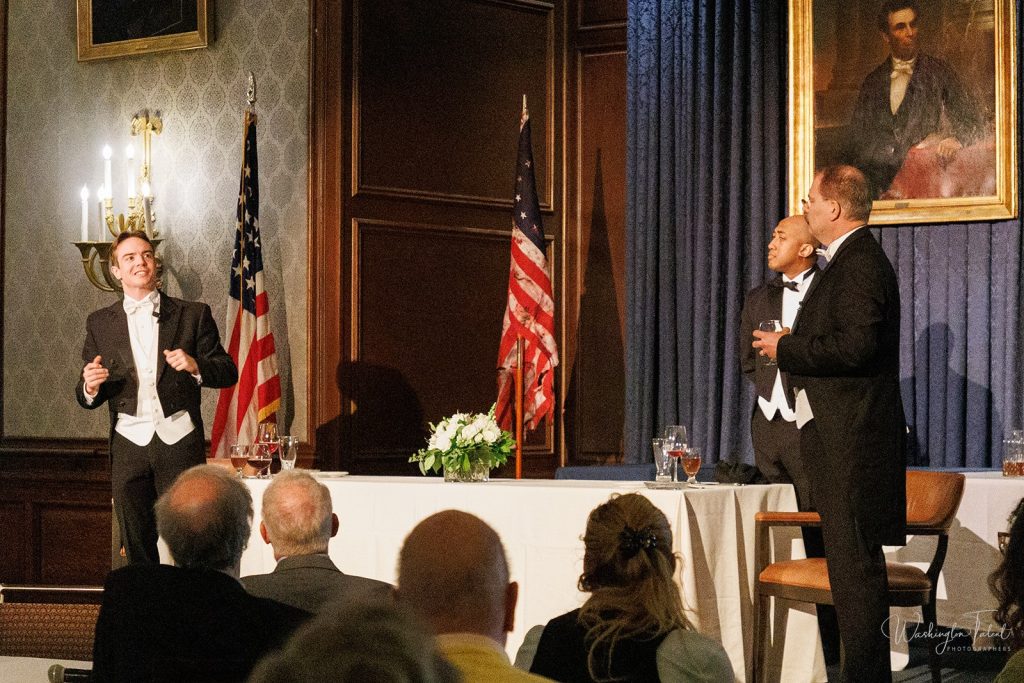
Over three remarkable days, the International Churchill Society brought together historians, authors, scholars, members, and friends to explore Churchill & America. It was a gathering rich in scholarship, spirited conversation, and the friendships that have long defined our organization. And, fittingly, this year’s program even brought history quite literally to the stage, with a theatrical presentation imagining an encounter between a young Winston Churchill and Theodore Roosevelt.
That performance offered a fitting metaphor for the entire conference. History is not simply a collection of dates, documents, and familiar quotations. It is a continuing conversation about individuals, ideas, decisions, and their consequences. Throughout our program, we sought not only to illuminate the past but also to demonstrate its relevance to the world we inhabit today. Churchill’s experiences offer opportunities to consider questions that remain very much with us: how leaders respond to uncertainty, how democracies confront threats, how alliances are built and sustained, and how individual decisions can shape the course of history.
Our role at the International Churchill Society is to keep that conversation alive, informed by rigorous scholarship and enriched by the perspectives of those who continue to study and interpret Churchill’s extraordinary life. We believe that understanding history can sharpen our thinking about contemporary challenges, not because the past offers ready-made answers, but because it provides perspective on the choices, consequences, and complexities of leadership.
Philadelphia was an especially appropriate setting. As the United States celebrates its 250th anniversary, we had an opportunity to explore Churchill’s deeply personal relationship with America, his understanding of its history and founding principles, and the transatlantic partnership that helped shape the modern world. From discussions of his American family roots to examinations of wartime leadership, courage, and diplomacy, our speakers challenged us to consider both the history we know and its continuing significance. At a time when questions about democratic resilience, international cooperation, and America’s role in the world remain prominent, these discussions offered valuable historical perspective without suggesting that the challenges of yesterday and today are identical.
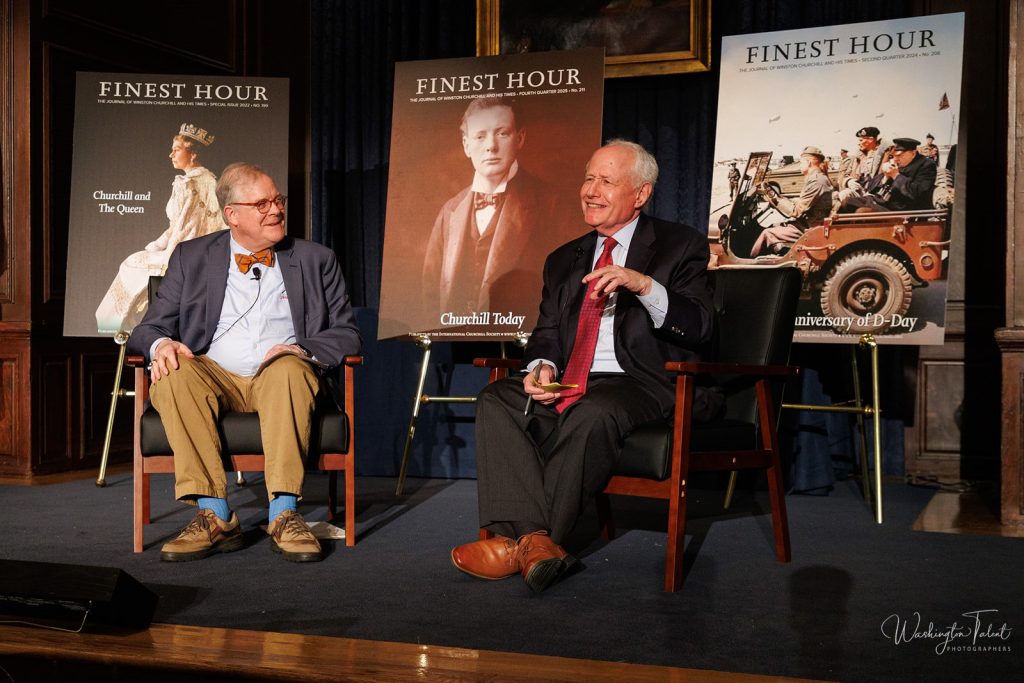
The exceptional scholarship throughout the program was a reminder of why gatherings like these matter. We were privileged to hear from established authorities and compelling voices who brought fresh perspectives to familiar subjects. Whether through formal presentations, panel discussions, or informal conversations, the exchange of ideas demonstrated the value of bringing scholars and an engaged public together. Our aim was to make history both intellectually rigorous and accessible, encouraging participants to draw connections between Churchill’s world and their own while recognizing the important differences between them.
Yet as important as the program was, the conference’s greatest success may have been the community it convened.
There is something particularly rewarding about watching old friendships resume as though no time has passed, welcoming those attending their first Churchill conference, and seeing conversations continue long after a session has ended. Our members come from different places, professions, generations, and perspectives, but share an intellectual curiosity and a belief that history matters. That sense of community is among the Society’s greatest strengths.
I was especially struck by the generosity of spirit that characterized our time together. Our speakers shared not only their expertise but their enthusiasm. Our sponsors and donors made possible an ambitious gathering that extended well beyond the lecture hall. Our partners helped create memorable experiences in some of Philadelphia’s most historic settings. And our Board, conference leadership, volunteers, and staff devoted extraordinary energy to bringing it all together.
To each of them, and to everyone who joined us, I offer my sincere appreciation. The success of this conference belongs to the entire Churchill community.
Of course, our work does not conclude when the final speaker leaves the podium. The scholarship, relationships, and ideas cultivated in Philadelphia will continue to inform our publications, educational programs, partnerships, and outreach throughout the coming year. Our responsibility is not only to preserve Churchill’s memory but to encourage thoughtful engagement with his life and times, including the complexities and enduring questions that make serious historical study so important. If we can help people better understand the past while encouraging them to think more critically about the present, we will have fulfilled an essential part of our mission.
As we look ahead to Miami in 2027, I hope we carry forward the energy and enthusiasm of Philadelphia. We have much to build upon, new audiences to reach, and many more conversations to encourage.

The curtain may have come down on our Philadelphia conference, but the conversation continues…and there is much more of the story to tell.
Thank you for being part of it.
Join ICS, stay connected, and be part of the ongoing work to preserve, interpret, and share Churchill’s legacy for a new generation.




Subscribe
WANT MORE?
Get the Churchill Bulletin delivered to your inbox once a month.