
Bulletin #219 - Aug 2026
Churchill Chapters on the Move: London, Chartwell, and the Places That Bring History to Life
August 31, 2026
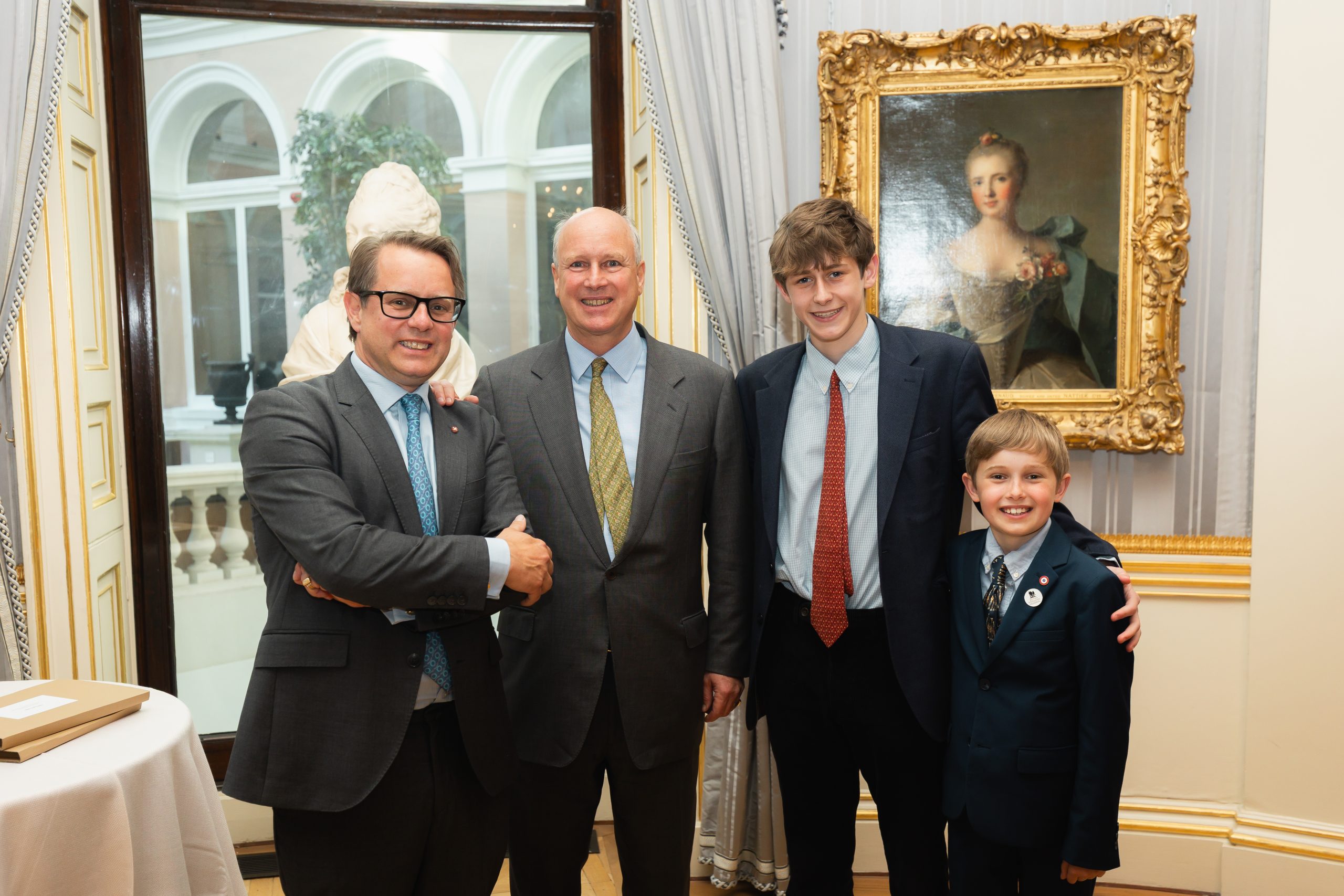
ICS President Randolph Churchill, ICS Board of Director Jack Churchill and family at the ICS UK Wallace Collection Reception.
This summer, members and chapters of the International Churchill Society have been taking Churchill history beyond the page and into the places where it happened.
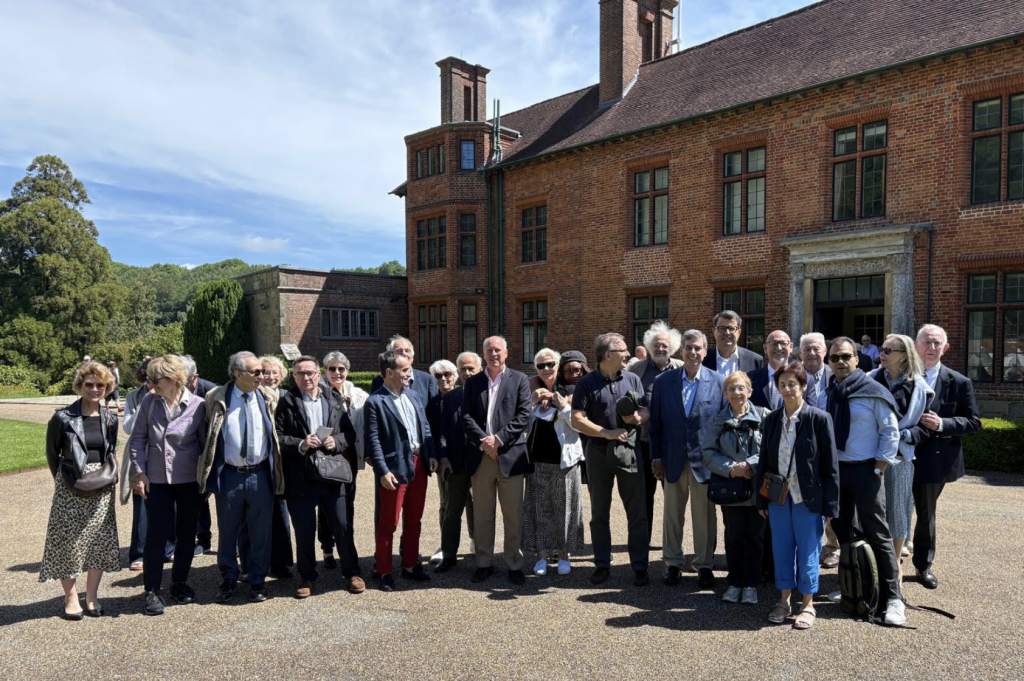

Recent visits by ICS chapters from France and Italy, together with the Society’s own London program, have highlighted one of the great strengths of the international Churchill community: the opportunity not simply to study Churchill, but to experience the homes, collections, and historic spaces that preserve his story.
Members of the International Churchill Society’s French chapter recently made their own journey into Churchill history with a visit to Chartwell, Churchill’s beloved home in Kent.
Churchill purchased Chartwell in 1922, and the house became far more than a residence. It was his family home, his refuge during the political wilderness years, a place where he entertained friends and statesmen, wrote and painted, built walls and ponds, and reflected on events unfolding far beyond the Kent countryside.
Today, Chartwell offers one of the most personal encounters possible with Churchill. Its rooms, books, paintings, photographs, gifts, and possessions reveal dimensions of his life that cannot be captured by speeches and political history alone. For members of the French chapter, the visit provided an opportunity to experience the private world behind the public figure and to connect directly with a place central to Churchill’s life.

Members of the Italian chapter also traveled to Britain this summer, with a London itinerary that included two very different but complementary Churchill sites: the Wallace Collection and the Churchill War Rooms.
At the Wallace Collection, members visited Winston Churchill: The Painter, the major exhibition devoted to Churchill’s artistic life. The exhibition brought together dozens of works and offered visitors the opportunity to consider a side of Churchill often overshadowed by politics and war.
The Churchill War Rooms provided a dramatic contrast.
In the underground corridors and rooms beneath Whitehall, visitors encounter the physical environment from which Churchill and his government directed Britain’s war effort. Taken together, the two visits offered contrasting perspectives on the same man: Churchill the painter, who found restoration and pleasure before an easel, and Churchill the wartime leader working amid maps, telephones, briefing rooms, and the pressure of national survival.
These chapter visits followed the International Churchill Society’s own special program in London centered on Churchill’s artistic legacy.
ICS members gathered in London for a program that included the Wallace Collection exhibition, the Churchill War Rooms, and Chartwell, creating a broader exploration of Churchill’s public and private worlds.
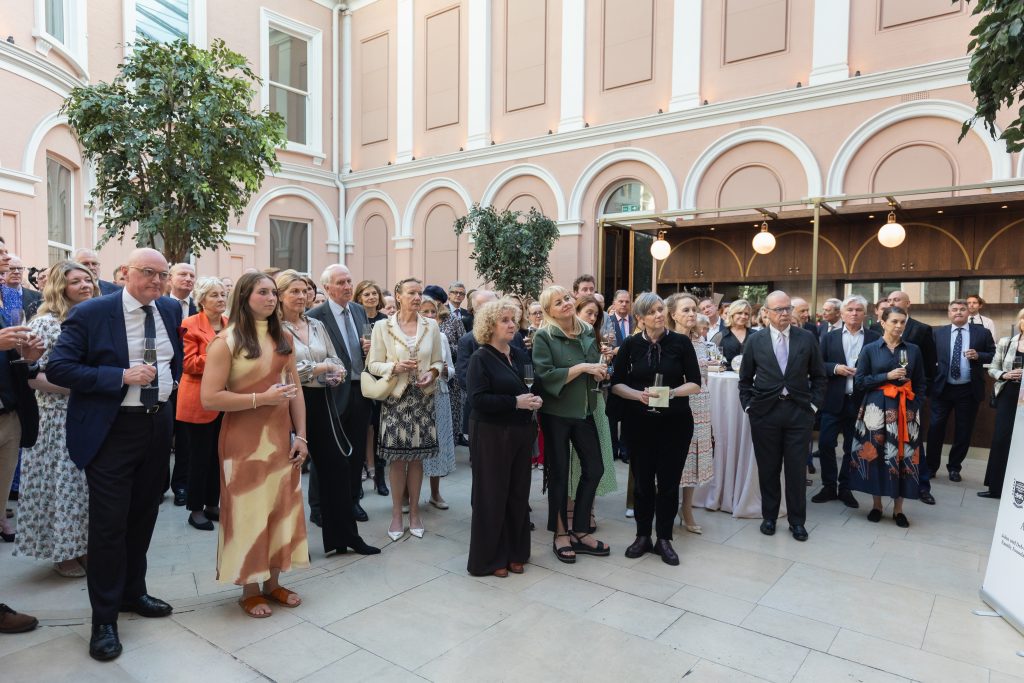
The Society’s UK community also gathered at the Wallace Collection for a special reception and private evening celebrating Churchill the artist. The event provided members and friends with an opportunity to experience the exhibition together and to reflect on the importance of painting throughout Churchill’s life.
Taken together, these visits demonstrate the truly international character of the Churchill community.
French, Italian, British, American, and other Churchillians may approach his life from different national perspectives, but they share a common interest in understanding his leadership, his ideas, his character, and the world in which he lived.
They also demonstrate the important role that place can play in understanding history.
At Chartwell, visitors encounter Churchill the husband, father, writer, painter, host, and private individual.
At the Wallace Collection, they see the importance of painting as both creative expression and personal refuge.
At the Churchill War Rooms, they step into the confined spaces where some of the most consequential decisions of the Second World War were made.
ICS chapters organize lectures, dinners, commemorations, educational programs, and discussions throughout the year, but visits such as these add another dimension to chapter life. They connect local communities to the wider international network of Churchillians and create shared experiences around the history the Society works to preserve.
These journeys are more than sightseeing.
They are part of the work of keeping Churchill’s history active, international, and connected to new generations—and a reminder that one of the best ways to understand history is sometimes simply to go where it happened.
Want to become more involved in the Churchill community where you live? Connect with the ICS chapter in your area to learn about upcoming programs, gatherings, and opportunities to participate. And if there is not yet a chapter near you, consider starting one and helping bring Churchillians together in your own community.
Join ICS, stay connected, and be part of the ongoing work to preserve, interpret, and share Churchill’s legacy for a new generation.




Subscribe
WANT MORE?
Get the Churchill Bulletin delivered to your inbox once a month.