
Bulletin #217 - June 2026
Churchill’s Art at the Wallace Collection: The Catharsis of Leadership
July 4, 2026

By Adam Howard, Executive Director
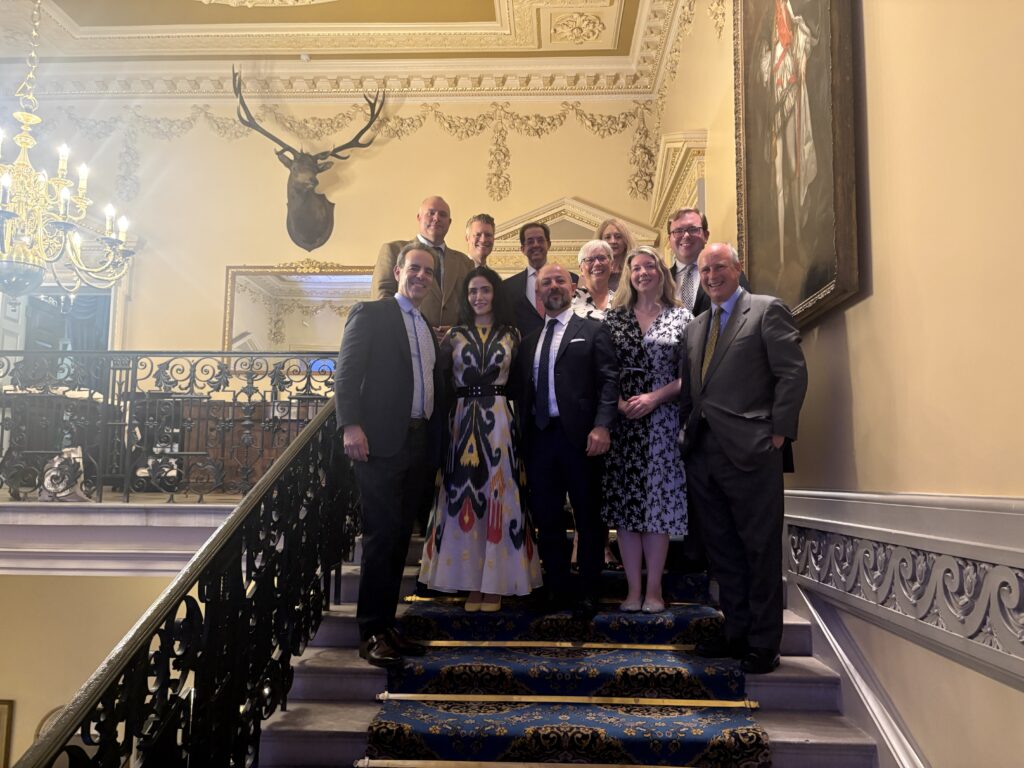
During a recent trip to London, I had the opportunity to visit the Wallace Collection and see Winston Churchill’s paintings firsthand. It was one of the highlights of my visit. Standing before the canvases, I was struck by something that is easy to overlook amid the towering achievements of his public life: Churchill was not simply a statesman who painted…he was a remarkably accomplished artist.
The exhibition reveals far more than an interesting hobby. It offers a rare glimpse into the inner life of a leader who carried extraordinary responsibility. During years marked by political turmoil, personal setbacks, and ultimately the existential struggle of the Second World War, painting became one of Churchill’s greatest sources of renewal. It was both a discipline and a catharsis, a way to quiet the relentless demands of leadership while engaging deeply with beauty, color, and the natural world.
That perspective changes how one looks at the canvases. They are not merely pleasant landscapes or scenes from his travels. They reflect a mind seeking balance amid immense pressure. While Churchill confronted decisions that would determine the fate of nations, he also cultivated the patience required to capture changing light, subtle color, and peaceful landscapes. The contrast is extraordinary. The same man who directed Britain’s war effort found restoration through the careful observation of nature and the disciplined practice of painting.
What impressed me most was the quality of the work itself. Churchill possessed a confident command of color, composition, and atmosphere. His paintings display technical ability, but they also convey optimism, curiosity, and emotional resilience. They reveal an artist who took painting seriously, continually refined his craft, and found genuine fulfillment in the creative process. It is easy to understand why painting became such an important part of his life.
The Wallace Collection provides an especially fitting setting for this exhibition. Learning about the museum’s own wartime history reinforces the connection between Churchill’s art and the civilization he fought to defend. The paintings are displayed not simply in a beautiful museum, but in an institution whose own story reflects endurance, preservation, and cultural resilience during war. Seeing Churchill’s work in that setting underscored that the defense of civilization is about more than military victory. It is also about preserving the culture, beauty, and artistic heritage that give civilization its meaning.
Reflecting on Clementine Churchill’s wartime humanitarian work, particularly her leadership of the Red Cross Aid to Russia Fund, further broadens our understanding of the Churchill family. While Winston shouldered the visible burdens of national leadership, Clementine dedicated herself to relieving suffering on an enormous scale. Together, they remind us that resilience often takes many forms and that public service extends well beyond the battlefield and the cabinet room.
For the International Churchill Society, exhibitions like this provide an invaluable opportunity to introduce Churchill to new audiences. Many people first encounter him through his speeches, his wartime leadership, or his political career. His paintings tell a different story. They reveal the habits that sustained him, the imagination that complemented his leadership, and the humanity behind the historic figure.
Perhaps that is the exhibition’s greatest gift. It reminds us that leadership, especially during moments of existential crisis, requires more than intellect, courage, or determination. It also requires the ability to renew one’s spirit. Churchill found that renewal through painting. His art was not an escape from responsibility, but a source of strength that helped sustain him through the extraordinary burdens of leadership.
Leaving the Wallace Collection, I came away with an even deeper appreciation for Churchill’s complexity. He was a soldier, writer, statesman, Nobel laureate, and one of history’s great wartime leaders. He was also a gifted artist. His paintings are far more than an interesting footnote to an extraordinary life. They reveal a man who understood that creativity and leadership are not opposing forces, but complementary ones. They remind us that beauty can coexist with burden, that art can nurture resilience, and that even in humanity’s darkest hours, the creative spirit endures.

Join ICS, stay connected, and be part of the ongoing work to preserve, interpret, and share Churchill’s legacy for a new generation.



Subscribe
WANT MORE?
Get the Churchill Bulletin delivered to your inbox once a month.