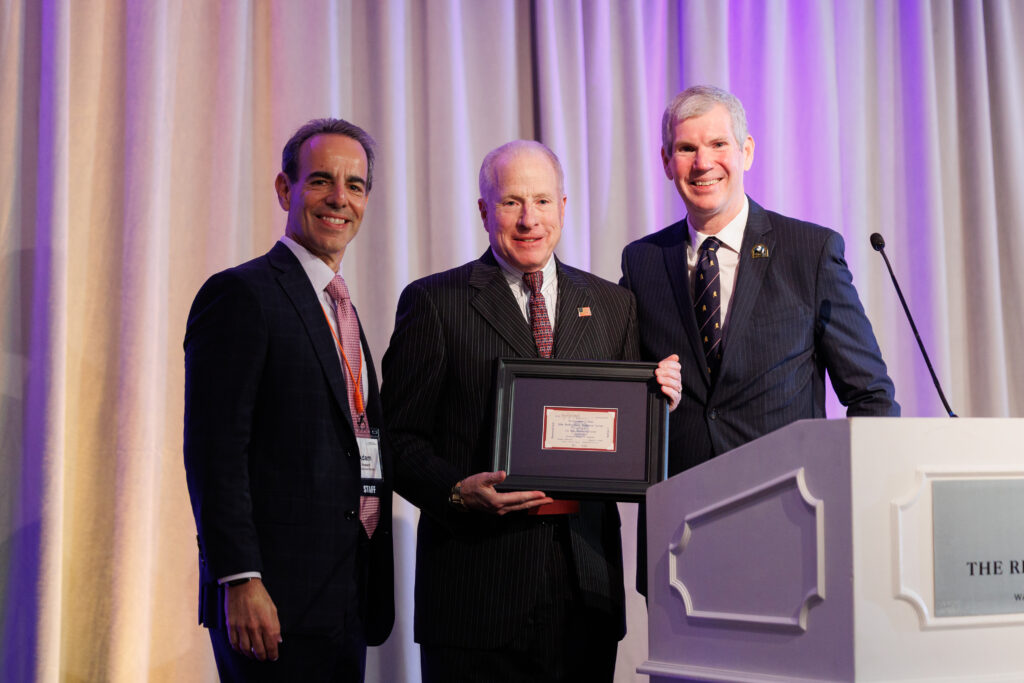
The Hottest Ticket in Town, 1946 By Donald P. Lofe, Jr. President and Chief Transformation Officer and Churchill Fellow, Westminster CollegeDirector, International Churchill Societ...
Follow the links below to listen to the recordings Churchill made of these iconic speeches Most of these key speeches of 1940, with the exception of 18 June’s speech, were given...
Three days after this famous ‘Iron Curtain’ speech at Fulton, Missouri, Churchill travelled to Richmond, Virginia He gave an address to the joint houses of the Virginia General Assembly in the...
Review of The Man Within by Dr Warren Dockter...
Originally published in six volumes in the US, with the ensuing English edition making corrections and adding a few maps, The Second World War was Churchill’s account of the War from...
He also loved Monaco From 1945, he regularly visited Monte-Carlo and stayed at the Hotel de Paris for year-end festivities In the 1960s, he stayed here on the invitation of his...
Although Britain had defeated Hitler’s attempts to invade, the Nazi forces continued their march. 1941 was a testing time for the British in the war. Conflict had spread to the Mediterranean and north Africa after Italy entered the war on 10 June 1940. Although the British had counter-attacked in north Africa and pushed on into Libya, the Germans defeated the British in Greece, Yugoslavia surrendered and the initial victories against the Italians in North Africa were reversed when Erwin Rommel, the ‘Desert Fox’ arrived with his German forces. In Asia, Japan advanced in China, occupied French Indo-China (later Vietnam) and were threatening the British colony of Hong Kong. It looked like Germany had the upper hand.
The war ground slowly on. In late 1941 and 1942, disaster followed disaster as Germany and their Japanese allies gained the upper hand. On Christmas Day 1941, Hong Kong surrendered to the Japanese, with Singapore falling only a few weeks later, on 15 February 1942; Rangoon followed soon after. Japan moved on to threaten Australia. In Greece, the Mediterranean and north Africa the situation was no better. Tobruk, in north Africa, fell to the German forces. Churchill flew to Cairo to change Middle East command on 2 August, replacing General Auchinleck with General Alexander, and putting General Montgomery in command of the British Eighth Army. On 12 August 1942, Churchill flew to Moscow for his first meeeting with Stalin, to tell him that the western Allies weren’t in a position to attack in Europe that year – they didn’t have sufficient resources – and would instead focus on forcing German retreat from north Africa. Stalin was always against this strategy and continued to argue that a western, European invasion was the only way to defeat Germany (and to relieve pressure on Soviet forces fighting in the east). It will perhaps seem surprising to future generations to know that Churchill faced two votes of no confidence in his government in January and July 1942. Though he won them easily, they show that Britain was not always united and that Churchill remained answerable to the will of Parliament.
Churchill was a man of many interests. He took a keen interest in the development of both silent movies and ‘talking pictures’ and turned the dining room at Chartwell into a cinema room so that we could watch movies in the comfort of his own home. He often stayed up late into the night, particularly during the Second World War, relaxing from the tensions of the day. He particularly enjoyed the film ( in the US), Alexander Korda’s 1941 patriotic epic starring Laurence Olivier, as Nelson, and Vivien Leigh as Lady Hamilton. It’s said he watched it seventeen times!
Churchill loved animals, large and small. He had always loved horses – he took part in the last great cavalry charge at Omdurman as a soldier, played polo and, in later life, owned brood mares and racehorses – but he also enjoyed having cats and dogs at his side – and sometimes even on his bed – while at Chartwell. Churchill surrounded himself with a veritable menagerie of animals, including sheep, goats, pigs, cattle, guinea pigs, hens, ducks, swans and goldfish and, of course, cats and dogs (notably two brown poodles, Rufus I and Rufus II). In 1926 during an economy drive – Chartwell and its staff were expensive to run - many of the animals were sold but he couldn’t bear to part with his prized Middle White pigs.
Get the Churchill Bulletin delivered to your inbox once a month.
Join the International Churchill Society today! Membership starts at just $29/year.