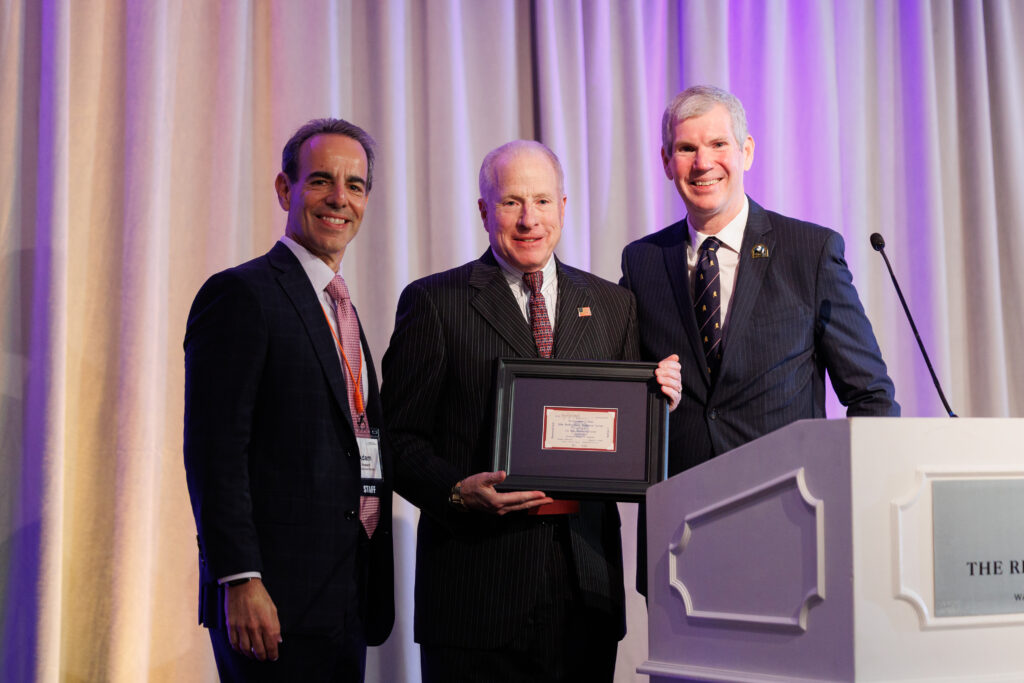
The Hottest Ticket in Town, 1946 By Donald P. Lofe, Jr. President and Chief Transformation Officer and Churchill Fellow, Westminster CollegeDirector, International Churchill Societ...
Churchill is still inspiring today’s leaders and statesmen and women. The Churchill 21 Century Statesmanship Programme is being led by the Winston Churchill Memorial Trust and will run throughout 2015. Various prestigious organisations will host global-strategic themed panel discussions, to try to explore the skills that are required of statesmen and women in the 21 century.
Churchill’s younger brother, Jack, was born in 1880, when Churchill was five. They saw little of their parents and both of them were looked after by a nanny. Mrs Everest (she was in fact a spinster; the ‘Mrs’ was an honorary title) was hired when Winston was only a few months old. The children led a peripatetic life, often travelling with her from their home in Ireland (the ‘Little Lodge’, where the Churchills lived when his grandfather, the 7 Duke of Marlborough, became Viceroy of Ireland), to the Isle of Wight, to Blenheim and to London. Churchill was enormously fond of Mrs Everest and called her ‘Woom’ or ’Woomany’. She exerted a considerable influence on him throughout his childhood until she died when he was a young man of twenty one (he was devastated by her death, and arranged for the erection of a headstone on her grave and paid an annual sum for its upkeep thereafter, a practice which has been continued to this day by The Churchill Centre and the Churchill family). For more about Churchill and his nanny, see the .
With his usual energy and vigour, Churchill threw himself into all aspects of war policy and direction. As the British people waited for air assaults and land battles – a lull in the action known as the ‘phoney war’ – the Navy, for which Churchill was responsible, had initial success on the sea against the ‘pocket battleships’ of the Germans. In this November 12 broadcast speech, Churchill is in aggressive mood. He taunts the ‘boastful and bullying’ Nazis, led by ‘that evil man’, Hitler. In a sarcasm-laden speech, he attacks Goring and Hitler in particular, highlighting what would happen should Britain be conquered – ‘all will be enslaved’. Prophetically, he says that the ‘frenzy of a cornered maniac could drive Herr Hitler into his worst crimes’. The invasion of Denmark and Norway by German forces on 9 April 1940, and the disastrous defence of Norway by the British and their retreat, exposed the inability of the government to manage the war. Rather than weakening Churchill’s position as First Lord of the Admiralty (as similar events had in Gallipoli during the First World War), the failure of the Norway campaign in fact strengthened it. The public felt that Chamberlain was not the man to lead them in war.
Throughout his life, Churchill exhibited a peculiarly individual sense of style, with a love of military uniforms, specially designed zip-up ‘siren suits’ (so called because they could be put on quickly when the air raid sirens sounded), his bow ties and his famous V for Victory hand gestures. Churchill was always drawn to fine clothes. In his younger days, he wore frock coats, trousers and vests as part of his Parliamentary wardrobe, and his suits and overcoats were made by the best tailors in London. As early as 1905, Churchill visited Poole & Co in Savile Row and he returned frequently in the years following, although later in his career a cutter was usually sent to Chartwell to measure Churchill at home. He eventually stopped ordering his suits from them – the expense became too great and he ended up owing them a considerable sum of money – but to celebrate the centenary of Churchill’s first order with them, Henry Poole & Co revived the chalk-striped flannel of the suit they made for him around 1936. See more on the Henry Poole website, .
The summer of 1940 was, as Churchill called it, Britain’s ‘finest hour’. It was also his. When the German armies conquered France, Britain found itself in the line of attack. With German U-boats patrolling the seas and soon to have bases on the Atlantic, and German bombers marshalling on the coast of France, Britain faced its first serious threat of invasion since 1805. The months of June, July, August and September were to prove Churchill’s moment of ‘Destiny’. For more background information, see the Imperial War Museum’s material on 1940 . Many found it difficult to see how Britain could avoid being defeated. Victory seemed impossible. But Churchill was passionately opposed to negotiating with Hitler. The War Cabinet did consider a compromise peace – or at least the offer of mediation, by Italy, between Germany and the allies – but Churchill argued strongly against this. He was convinced that Hitler would renege on any promises or agreement, just as he had done back in 1938. Churchill used words to persuade his country to fight on. He was a great political communicator – he had refined his speechmaking over many years – and his speeches made at this time (most of them in parliament, with some broadcast later on the radio) ‘mobilized the English language and sent it into battle’.
During the Second World War, Churchill had little red labels attached to important documents with the words ‘Action This Day’. It was one of the many ways in which he sought to drive and enthuse those around him. In this section you’ll learn more about Churchill’s lifelong desire to be at the centre of the action.
Not satisfied with only Austria, Hitler began demanding parts of Czechoslovakia, too. In September 1938, with war against Germany seeming increasingly likely, Prime Minister Neville Chamberlain flew to Munich (according to a British Pathe newsreel, his first trip in an aeroplane), to meet the German leader. His aim of this ‘mission of peace’ was to secure a guarantee that there’d be no further German aggression.
Churchill spent much of the 1930s warning his political colleagues about the dangers of the new Nazi regime in Germany but initially his pleas fell on deaf ears Following the blunders of these ’wilderness years’ – with his judgement seriously in doubt as a result of his position on India and Edward VIII’s abdication – Churchill’s views on Hitler and the hopelessness of the appeasement policy were generally ignored.
The day after France fell to the Germans, Churchill made perhaps his finest speech of this period – commonly known now by its most famous phrase, ‘This was their Finest Hour’...
Get the Churchill Bulletin delivered to your inbox once a month.
Join the International Churchill Society today! Membership starts at just $29/year.