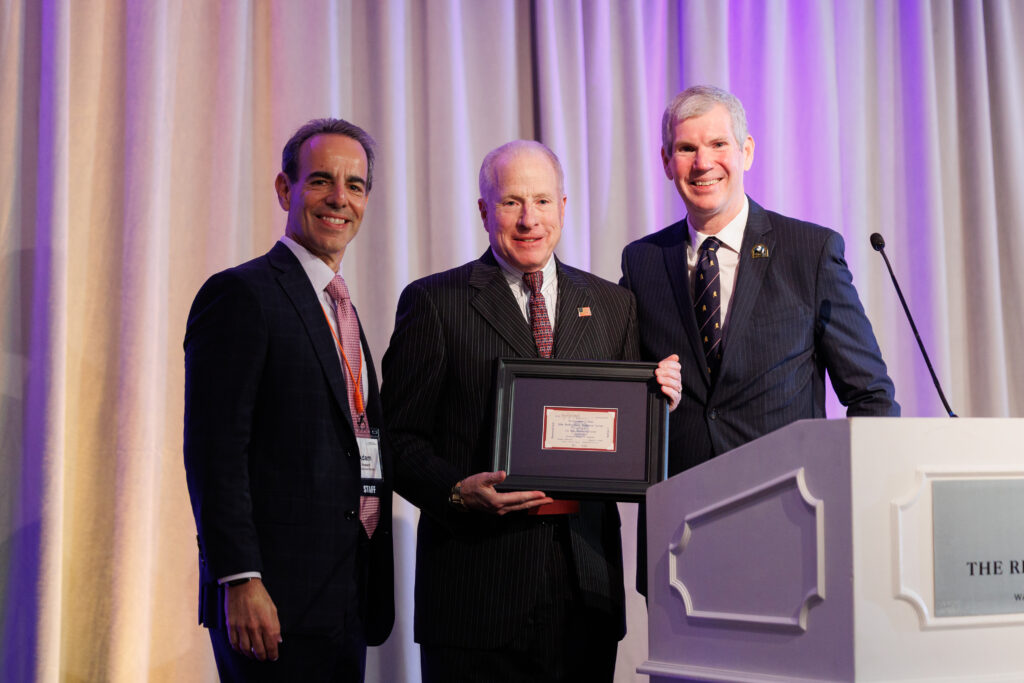
The Hottest Ticket in Town, 1946 By Donald P. Lofe, Jr. President and Chief Transformation Officer and Churchill Fellow, Westminster CollegeDirector, International Churchill Societ...
On 18 June 1940, Churchill gave a rousing speech to the British people, announcing: '... the Battle of France is over. The Battle of Britain is about to begin.' Four days later, France surrendered to Germany and Hitler turned his attention to Britain.
Chartwell, both the house and its land, were to become Churchill’s passions and a haven for him and his family in the years to come. At great expense, he engaged architects, designers and builders to rebuild and expand the house and its accompanying buildings, even undertaking some of the work himself. Although Clementine never liked the house as much as Churchill and never got over the fact that he’d been less than honest in his dealings with her over the purchase of the house, she put all her efforts into ensuring it was a comfortable family home for the children.
Churchill died in 1965 and yet his name – and his legacy – lives on, in the educational organisations that he established in his lifetime and in the initiatives set up after his death, to promote excellence, innovation and leadership in education and research in science, technology, health and welfare and the arts. Churchill cared passionately about the future of his country and believed strongly in the importance of education and research in securing success and leadership in the years ahead.
Churchill’s historic legacy is almost certainly his contribution to the survival of democracy in Western Europe during the Second World War. He is commemorated in many statues, sculptures, street names and buildings. Different aspects of his life can be investigated at many of the sites associated with him.
1940 was Britain’s first full year of war – and it was a time of enormous challenge as the country faced the very real threat of defeat . It was also Britain’s ‘finest hour’. The events of 1940 shaped the way the war was fought and helped to set Britain on the road to eventual victory – and only an extraordinary leader could guide the country through. Churchill found himself needing all his daring and endurance to face the task ahead.
Although he’d sought to delay it as long as he could, at last Churchill had to accept that the invasion of Europe from the French coast was going to take place. Britain had become the minor player in the Anglo-American partnership and Churchill had to face the fact that he no longer had the influence to prevent what he saw as an incredibly risky operation. His walk with ‘Destiny’ was now several paces behind the Americans.
Churchill later claimed, in that embarking on a military career ‘was entirely due to my collection of soldiers’, although the influence of Blenheim and his ancestor’s glories on the battlefield, as well as Churchill’s determination to follow his father into politics (for which he regarded the army as a great training ground), probably also played key roles. His toy soldier collection, based on the toy army he played with at Blenheim, was set up as an infantry division and he and his brother Jack, even in their teens, played out famous battles, with Jack’s soldiers playing the enemy.
Randolph, the Churchill’s second child and only son, born two years after Diana (in 1911), was spoiled by his father, who – not wishing to repeat the mistakes of his father – lavished affection on the boy. Churchill had great ambitions for his son, hoping he might carry on the family line into politics.
A collection of lesser-seen video clips showing Winston Churchill addressing the public.
Get the Churchill Bulletin delivered to your inbox once a month.
Join the International Churchill Society today! Membership starts at just $29/year.