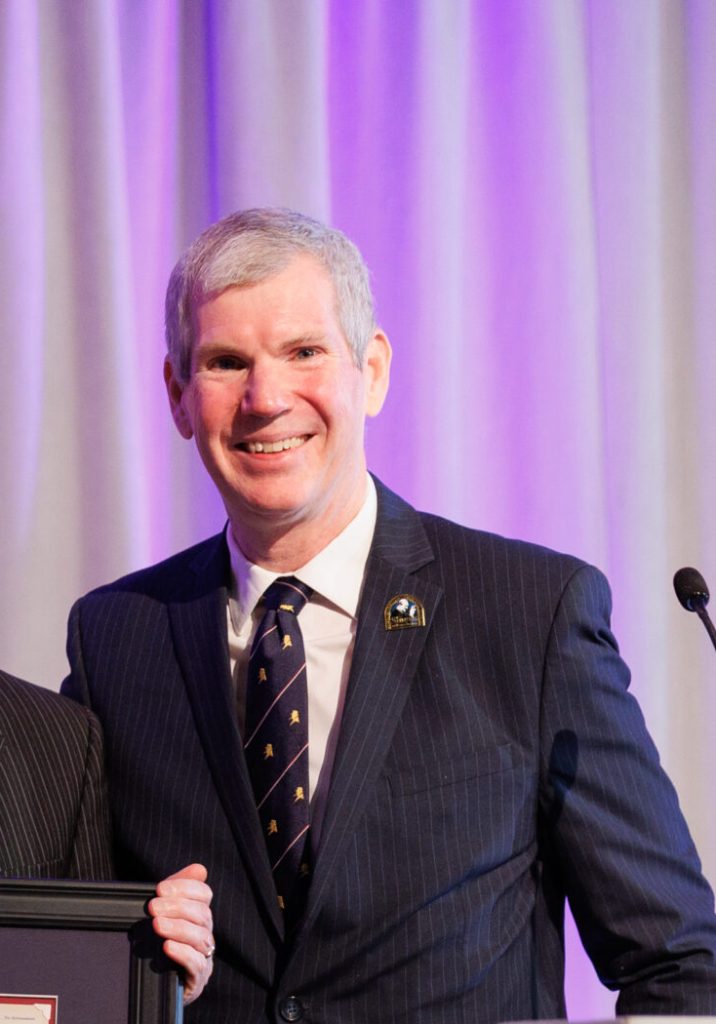
The Hottest Ticket in Town, 1946 By Donald P. Lofe, Jr. President and Chief Transformation Officer and Churchill Fellow, Westminster CollegeDirector, International Churchill Societ...
In his last youthful military adventure, Churchill joined British forces in the Boer War. Churchill set off, armed with the important things in life – sixty bottles of spirits, twelve bottles of Rose’s Lime Juice and a supply of claret – and arrived in Cape Town late on 30 October 1899. He was famously captured only two weeks later by the Boers, when the armoured train on which he was travelling in Boer-occupied territory was ambushed and derailed. He made a dramatic escape the following month, making his way to Durban, with the Boers offering a reward of £25 for the recapture of their well-known prisoner, ‘dead or alive’. His dispatches from the Boer War were republished as two books, (1900) and (1900).
Churchill had a period of leave and managed to obtain his first assignment as a war correspondent for the newspaper. He was reporting on the rebellion against Spanish rule by guerilla rebels in Cuba when he first came under fire. (It was also in Cuba that he first developed his well-known taste for fine Cuban cigars. He was attached to the Spanish forces as an observer but his writings reveal considerable sympathies for the Cuban rebels.)
All the Churchills supported their father. The children, to varying degrees, served him – and their country – in the Second World War, too. Diana served in the Women’s Royal Naval Service (WRNS), Sarah with the Photographic Interpretation Unit of the Women’s Auxiliary Air Force (WAAF) and Mary served in the armed forces in mixed anti-aircraft (AA) batteries with the Auxiliary Territorial Service (ATS). Mary also attended the Quebec conference of 1943 as an aide to her father, while Sarah played a similar role at Teheran in 1943 and Yalta in 1945. Randolph served as an Intelligence Officer in the Middle East, was attached to the newly formed Special Air Service (SAS), and undertook missions in the Libyan desert and in Yugoslavia.
Churchill later claimed, in that embarking on a military career ‘was entirely due to my collection of soldiers’, although the influence of Blenheim and his ancestor’s glories on the battlefield, as well as Churchill’s determination to follow his father into politics (for which he regarded the army as a great training ground), probably also played key roles. His toy soldier collection, based on the toy army he played with at Blenheim, was set up as an infantry division and he and his brother Jack, even in their teens, played out famous battles, with Jack’s soldiers playing the enemy.
The Cabinet War Rooms (now a museum called the Churchill War Rooms) – a ‘bunker’ – was where Churchill and his government were protected from the worst the German bombers could...
Finest Hour 174, Autumn 2016 Page 34 By Andrew Roberts Andrew Roberts is the author of many books, including, most recently, the major new biography Napoleon His next book will be a full-scale biography...
Finest Hour 173, Summer 2016 Page 38 Roger Hermiston, All Behind You, Winston: Churchill’s Great Coalition, 1940–45, Aurum Press, 406 pages, £20 ISBN 978–1781313312 Review by John Campbell John Campbell’s books include major biographies of F...
Finest Hour 172, Spring 2016 Page 46 Review by Kevin D McCranie Jonathan Dimbleby, The Battle of the Atlantic: How the Allies Won the War, Viking, 2015, 560 pages, £17 ISBN 978-0241186602...
Finest Hour 172, Spring 2016 Page 41 Review by Chris Sterling Leon Bennett, Churchill’s War Against the Zeppelin 1914–18: Men, Machines and Tactics, Helion, 2015, 406 pages, $5995 ISBN 978-1909982840...
Get the Churchill Bulletin delivered to your inbox once a month.
Δ
Join the International Churchill Society today! Membership starts at just $29/year.