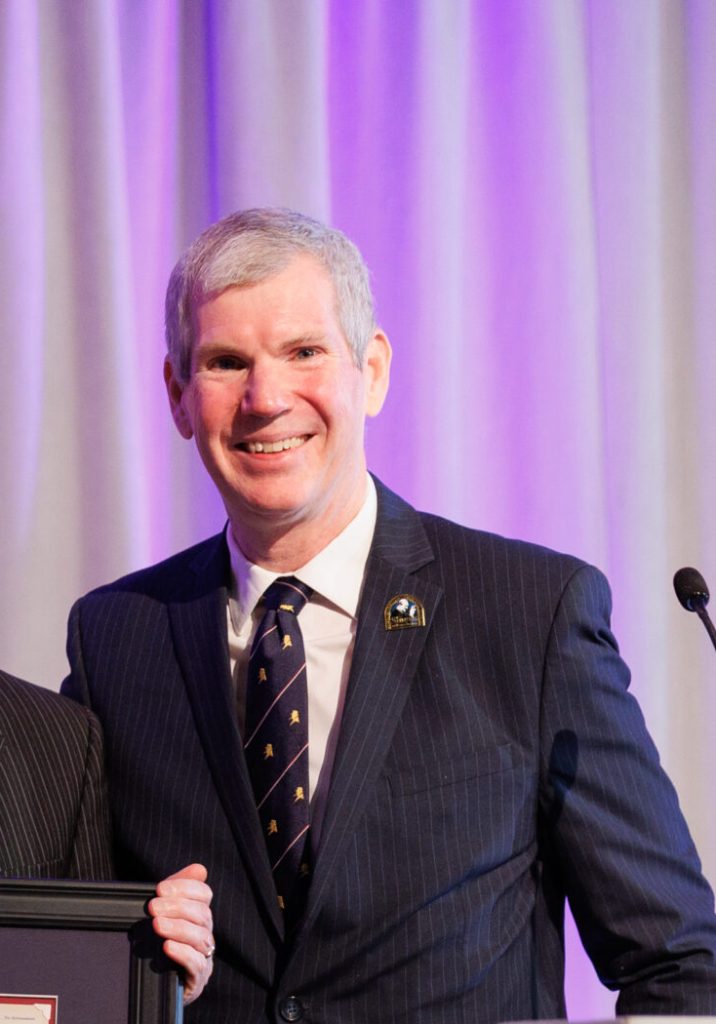
The Hottest Ticket in Town, 1946 By Donald P. Lofe, Jr. President and Chief Transformation Officer and Churchill Fellow, Westminster CollegeDirector, International Churchill Societ...
Churchill spent much of his leisure time at Chartwell, the house and grounds he bought in 1922 set in the rolling countryside of Kent. When he wasn’t bricklaying, building tree houses for the children or feeding his menagerie of animals, he spent much of his time painting, particularly in his ‘wilderness years’. His studio at Chartwell is today much as it was when he was alive and many of his paintings can be seen on its walls. He generally preferred light and colour and, when the weather wouldn’t comply and he couldn’t paint out of doors, he often resorted to still-life studies of fruit, bottles and glassware (hence ‘Bottlescape’, his painting of a range of drinks and glasses, both full and empty.) His nephew Peregrine has said that Churchill, on receiving a large bottle of brandy for Christmas, sent his children round the house looking for other bottles to put alongside it, for a still life. Peregrine told Richard M. Langworth, the editor of , that Churchill said: ‘Fetch me associate and fraternal bottles to form a bodyguard to this majestic container’ ().
Churchill sought and accepted constructive criticism – in the art of painting, at least – and enjoyed experimenting with new media and techniques. Sir John Lavery and his wife Hazel were not the only influences on Churchill’s painting style. During the 1920s, when he was Chancellor of the Exchequer, Churchill took advice on painting from Walter Sickert, who passed on his enthusiasm for Degas, Corot and Constable. As well as scrutinising the works of these painters, Churchill also carefully studied and absorbed the work of others; J. M. W. Turner, Camille Pissarro (whom Clementine had met in Paris), Paul Maze (the Anglo-French painter whom the Churchills called ‘Cher Maître’), John Singer Sargent (who had painted his mother’s portrait), the sea painter Julius Olsson and William Nicholson. Many of them visited Chartwell, where he did much of his ‘daubing’, and Paul Maze accompanied him on many of his painting trips.
Churchill’s articles on the pleasures of painting appeared in the in 1921 and 1922, netting him the handsome sum of £1000 (considerably more than his paintings would earn him in his lifetime, of course). Clementine was cautious: ‘I expect the professionals would be vexed & say you do not yet know enough about Art’. Mary, his daughter, later wrote that Clementine was ‘in principle opposed to Winston’s writing what she regarded as “pot-boilers” to boost their domestic economy’. But Churchill, the professional writer (and now passionate painter), prevailed; his articles were a great success, explaining vividly why such pleasure was to be found in painting. Painting also provided consolation and peace in times of despair and grief.
In 1915, during the First World War, Churchill helped orchestrate the disastrous Dardanelles naval campaign and the related military landings on Gallipoli, both of which saw enormous losses of life. As a result, Churchill found himself publicly and politically discredited. He was demoted to the token post of Chancellor of the Duchy of Lancaster. It seemed his political career was at an end. Devastated and despairing, Churchill retreated to a rented house, Hoe Farm, near Godalming, Surrey, with Clementine and the children. One day in June, his sister-in-law, Gwendeline (or ‘Goonie’), was painting in the garden and, seeing Churchill’s interest, suggested he try it himself. She loaned him her young son’s paint-box. So began one of his life’s passions. Churchill took to painting, at the age of forty, with his customary gusto, seeing it as his salvation from despair – ‘the Muse of Painting came to my rescue’. He continued to paint for the next forty years.
Finest Hour 173, Summer 2016 Page 50 Seventy years ago at Zurich University Winston Churchill delivered one of his most important post-war speeches (see pages 7, 31, and 41) Although given the...
Finest Hour 173, Summer 2016 Page 41 Werner Vogt, Winston Churchill und die Schweiz: Vom Monte Rosa zum Triumphzug durch Zürich,Verlag Neue Zürcher Zeitung, 2015, 231 pages ISBN 978–3038100867 Review by Jochen Burgtorf Jochen Burgtorf is...
Finest Hour 173, Summer 2016 Page 40 Gabriel Gorodetsky, ed, The Maisky Diaries, Red Ambassador to the Court of St James’s 1932–1943, Yale University Press, 2015, 632 pages, $40 ISBN 978–0300180671 Review by D Craig...
Finest Hour 173, Summer 2016 Page 28 By Werner Vogt Werner Vogt wrote his PhD dissertation about Churchill’s pictures in Switzerland’s leading daily Neue Zürcher Zeitung The author of numerous newspaper articles and books,...
Finest Hour 173, Summer 2016 Page 10 By Antoine Capet Antoine Capet is Professor Emeritus of British Studies at the University of Rouen...
Get the Churchill Bulletin delivered to your inbox once a month.
Δ
Join the International Churchill Society today! Membership starts at just $29/year.