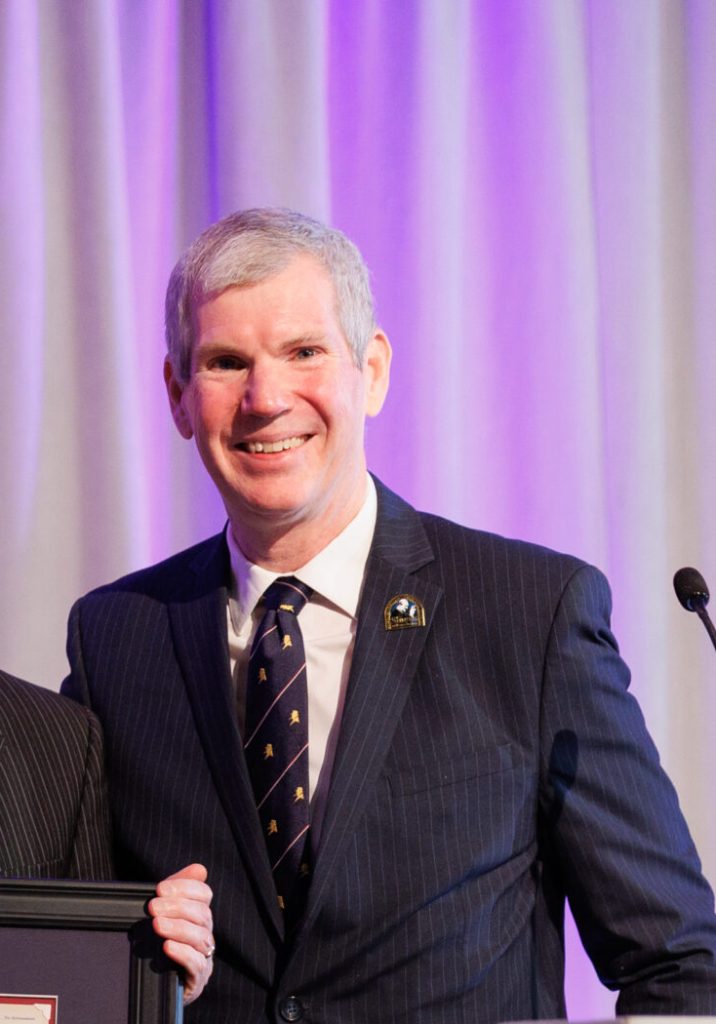
The Hottest Ticket in Town, 1946 By Donald P. Lofe, Jr. President and Chief Transformation Officer and Churchill Fellow, Westminster CollegeDirector, International Churchill Societ...
Winston Churchill swimming in Monte Carlo copyright: Churchill Archives, Broadwater Collection...
In 1905, Prime Minister Balfour resigned and Sir Henry Campbell-Bannerman formed a government pending a January election, appointing Churchill as Under-Secretary of State for the Colonies, assisting Lord Elgin. And in the Liberal Party’s landslide election victory in early 1906, Churchill was elected as the Liberal MP for North-West Manchester. Churchill, the ambitious, shining ‘glow-worm’, was on his way.
Churchill won his first 'seat' in Parliament in 1900, when he was elected by a small majority to become Conservative MP for Oldham, Lancashire. This was the beginning of a political career that would last over sixty years.
On his arrival in Durban in December 1899, Churchill was hailed a war hero. His new fame allowed him to override the objections of the War Office and he continued to assume the dual role of officer – with a local volunteer unit, the South African Light Horse – and war correspondent. For the next six months, he encountered fire, took part in the bloody and unsuccessful battle of Spion Kop in January 1900 and, as the war turned in Britain’s favour, was present at the relief of Ladysmith and the occupation of Pretoria. Returning to England in July 1900, Churchill was feted on the streets of Oldham. Having been defeated there in the by-election of 1899, he now prepared to contest the seat again as a celebrity. Now a well-known and celebrated figure, he won a seat in the next election and was elected to the House of Commons, for the Conservatives, in October 1900 just before his twenty-sixth birthday. Victory was followed by a speaking tour of the United Kingdom and North America. Although he was of course to return to the front lines of war in later life, his youthful career as a soldier was over.
Churchill left Harrow School in 1892 and went to a ‘crammer’ to help him pass the entrance exam into the Royal Military College at Sandhurst, which he eventually did on the third attempt in 1893. He found life at Sandhurst much more suited to his temperament and talents than school life. Military topics such as tactics and fortifications were far more appealing to him than mathematics and he was a skilled horseman. The practical nature of the course appealed to him and he passed with credit in December 1894, twentieth out of a class of one hundred and thirty. In February 1985, Churchill joined the 4 (Queen’s Own) Hussars, a fashionable cavalry regiment, as a 2 Lieutenant, as a way of gaining some experience before working his way into politics. Churchill’s regiment, the 4th Queen’s Own Hussars, amalgamated with the 8th King’s Royal Irish Hussars in 1958 to form the Queen’s Royal Irish Hussars. After further cuts in 1993 the Queen’s Royal Irish Hussars amalgamated with the Queen’s Own Hussars (formerly the 3rd King’s Own Hussars and 7th Queen’s Hussars) to form the . As much as Churchill enjoyed soldiering, he regarded it as a means to an end – the making of a reputation that would allow him to enter the House of Commons – and he took every opportunity to make his mark on the world.
When Churchill was eighty eight he was asked by the Duke of Edinburgh how he’d like to be remembered. He reportedly replied that he’d like a scholarship named after him. A Foundation was created as a vehicle for the Churchill Scholarship in July 1959. Now called the Winston Churchill Foundation of the US, it’s a reminder of Anglo–US cooperation and friendship.
Paintings by Churchill are still being discovered. In 2012, a previously unknown oil entitled ‘Still Life with Orchids’ materialised, having been in the Sandys family ever since Churchill presented it to Margot Sandys, the young wife of his daughter’s father-in-law. It was put up for sale with an . Churchill’s paintings were reproduced during his lifetime in various publications and many of these originals have yet to be traced (these include those that accompanied his articles in the in 1921, 1922 and 1946, in the of 1954 and, most surprisingly perhaps, those that illustrated the catalogue of his Royal Academy Exhibition in 1959). And the whereabouts of those six paintings apparently sold in Paris following his first exhibition, at the Galerie Druet in Paris in 1921, remain unknown. After the Second World War, Churchill gave two paintings of the Pyramids near Cairo to Field Marshal Jan Smuts; the painting here remained with his family in South Africa but the other was stolen and has never been traced.
In the winter of 1935, on the recommendation of Sir John Lavery and other artist friends, Churchill travelled to Morocco for the first time for a painting holiday. He was inspired by the light and colours. He referred to the pink Atlas mountains as ‘paintaceous’ and painted some of his most refined watercolours – and one particularly skilled oil painting – here. He was entranced by the exotic, desert landscape and the colours – the pinks, whites and ochres contrasting with the brilliant blue of the desert sky. He gathered a large number of photographs on this and subsequent visits which still remain in the Studio archives at Chartwell.
Churchill didn’t only paint at Chartwell. His easel, brushes and paints accompanied him everywhere - while staying at homes of friends and family (at Hever Castle in Kent where he painted the colonnaded gardens, Breccles in Norfolk, the home of Clementine’s cousin where he painted the woods); on his holidays to the French Riviera (the Churchills rented a house in Cannes for six months in 1922); in Cairo (where he tackled painting the Pyramids), in Morocco, in America and Canada’s Rocky Mountains. Wherever he went, he took his painting paraphernalia. Churchill also painted at one of his favourite places, Blenheim Palace, where he was born and to which he regularly returned throughout his life. Churchill’s early skill with the brush can be seen in paintings completed at Mimizan in Les Landes, south of Bordeaux in France – an area protected from the Atlantic by massive sand dunes and pinewoods – where he stayed as the guest of his friend the Duke of Westminster who had a house there. Lavery, who later stayed at Mimizan with Churchill, painted the same scenes.
Get the Churchill Bulletin delivered to your inbox once a month.
Δ
Join the International Churchill Society today! Membership starts at just $29/year.