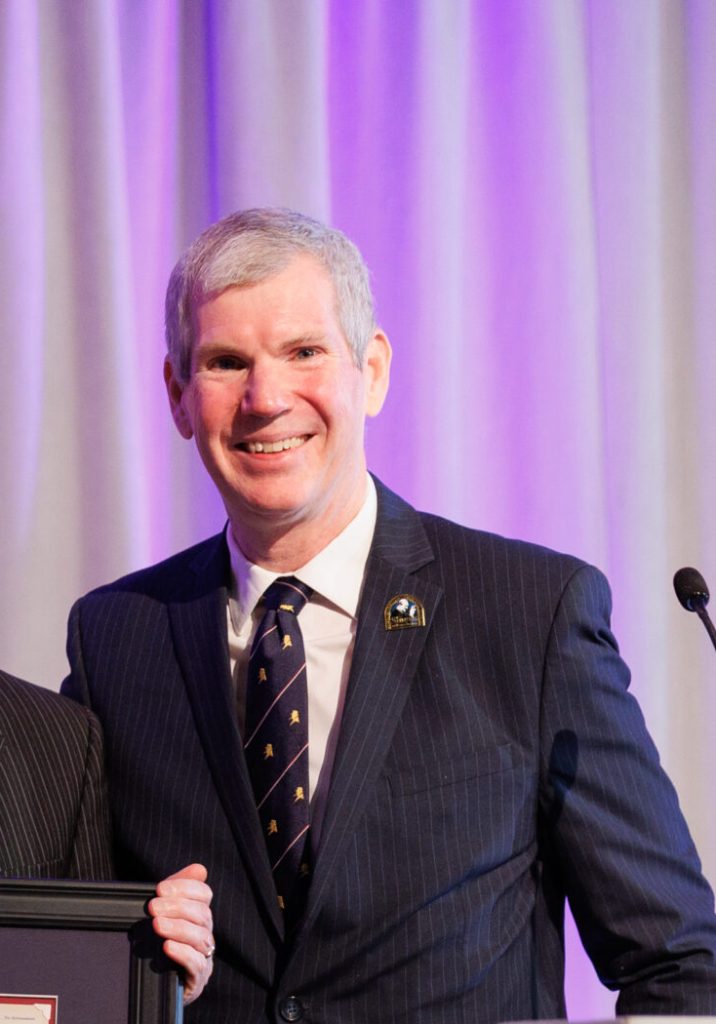
The Hottest Ticket in Town, 1946 By Donald P. Lofe, Jr. President and Chief Transformation Officer and Churchill Fellow, Westminster CollegeDirector, International Churchill Societ...
...
Hitler became Chancellor of Germany on 30 January 1933 At the time, Churchill felt the Nazi party were ‘the most formidable people in the world’ In 1935, Churchill said: ‘We are faced,...
Originally published in six volumes in the US, with the ensuing English edition making corrections and adding a few maps, The Second World War was Churchill’s account of the War from...
The contract he negotiated with the Morning Post, for his assignment in 1899 to report on the Boer War, paid him £250 a month (about £10,000 today!), with all expenses covered...
By his twenty-fifth birthday, in November 1899, Churchill had published two books based on his newspaper assignments (The Story of the Malakand Field Force and The River War), had a novel...
The American novelist was, in fact, famous earlier and much better known than his British counterpart; his novel Richard Carvel (1899) sold around two million copies Later novels, The...
Much of the 1930s was devoted to travel and writing. Some of the former was for pleasure; Churchill had always relished travelling and enjoyed his time away from Britain. He spent many months on the continent – at expensive hotels, at the chateaux of friends and acquaintances, always with his easel and paints at hand Churchill used these long periods abroad, in the sunshine and among those who respected him, to recharge his batteries and restore his energy. His favourite holiday destination was the French Riviera, where he enjoyed the hospitality of wealthy American hostesses like Maxine Elliott and Consuelo Balsan, all of whom had genuine affection for Churchill and played host to him in their villas, providing him with much-needed relaxation. But Churchill could also earn money while travelling, too, supplementing the family’s meagre income by taking on paid lecture tours, writing books and popular newspaper articles (he had, after all, been one of the highest paid war correspondents in the world).
When Churchill sailed to India with his regiment, the Queen’s Hussars, in 1896, polo – and winning regimental polo cups – seemed to be the only action he was likely to see. Eager to make his mark, he took matters into his own hands and persuaded the to take him on as a war correspondent. In 1897, he travelled to the North West frontier of India and Pakistan to join the Malakand Field Force fighting against the Afghan tribes in 1897, under the command of Sir Bindon Blood. It took him a total of five uncomfortable weeks (by ship and by train), with the promise of nothing more than a role as ‘correspondent’, to get to the front.
Shortly after his return from Fulton in 1946, Churchill began to write his war memoirs. With a team of researchers beavering away on his behalf, he had a very ordered (if somewhat laborious) approach to drafting and editing. He would pull together all his documents (or get his researchers to pull them together) – minutes, telegrams, letters – and then would track down material from other sources, too. Churchill would then begin to draft the text which would link all the documents together, dictating to a team of secretaries, often late into the night. Just as he did with all his speeches, he’d check drafts, check proofs, marking them up at each stage with copious corrections, determined to get the right word, the right phrase. Despite such a laborious process (or perhaps because of it), appeared relatively quickly, in six volumes, between 1948 and 1954. Churchill never claimed the memoirs were ‘history’; they were rather a contribution to history. Although their very breadth and coverage gave the impression that they were a definitive account, there were omissions, of course. was Churchill’s interpretation of the events, the work of a man seeking to place his role in the war – and in history. The books sold well, with a combined first printing of over 800,000 copies.
International Churchill Society the preeminent member organization dedicated to preserving the historic legacy of The Rt. Hon. Sir Winston Churchill.
Get the Churchill Bulletin delivered to your inbox once a month.
Join the International Churchill Society today! Membership starts at just $29/year.