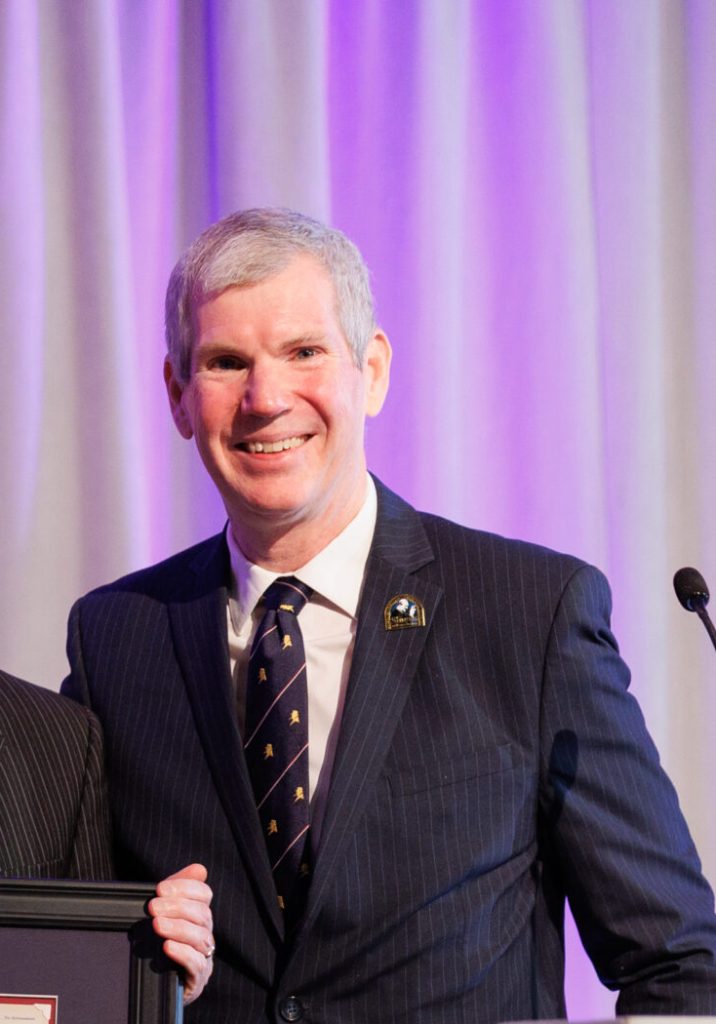
The Hottest Ticket in Town, 1946 By Donald P. Lofe, Jr. President and Chief Transformation Officer and Churchill Fellow, Westminster CollegeDirector, International Churchill Societ...
Here are the general guidelines governing copyright to Sir Winston Churchill’s works, images and audio recordings found on or linked to this website Exceptions to copyright...
The Art of Being Winston Churchill: 40th Anniversary Readings By BARRY SINGER “Winston Churchill was 40 today,” Margot Asquith noted in her...
Finest Hour 193, Third Quarter 2021 Page 50 In The Birth of Britain, the first volume of A History of...
Perhaps there is no greater theme upon which to reflect during one’s study of Winston Churchill than “Education,” for it begins to address the endlessly fascinating question of how...
Churchill knew that the fastest way to political advancement lay in active service – ‘the glittering gateway to distinction’. He bemoaned the fact that the world was growing so ‘sensible and pacific’. There weren’t any battles close to home – as yet – so he had to look further afield to find action. For the moment, though, there was action to be found on a far-distant island – Cuba – and, through his mother’s contacts, Churchill managed to wangle a commission as a war correspondent for the Off he went, spirits high, to see some action. In late 1895, he and a friend Reginald Barnes were given leave to travel to Cuba, to observe the military campaign by the Spanish government troops against Cuban guerrilla rebels. Churchill spent some of his twenty first birthday under fire when the column he was travelling with was attacked. Despite only being in Cuba for sixteen days, he was recommended for the Spanish Cross of the Order of Military Merit.
When Churchill sailed to India with his regiment, the Queen’s Hussars, in 1896, polo – and winning regimental polo cups – seemed to be the only action he was likely to see. Eager to make his mark, he took matters into his own hands and persuaded the to take him on as a war correspondent. In 1897, he travelled to the North West frontier of India and Pakistan to join the Malakand Field Force fighting against the Afghan tribes in 1897, under the command of Sir Bindon Blood. It took him a total of five uncomfortable weeks (by ship and by train), with the promise of nothing more than a role as ‘correspondent’, to get to the front.
Churchill’s reputation as an orator is based principally on his speeches and broadcasts as Prime Minister during the summer of 1940 during a particularly vital point in the Second World War, when Britain was under the threat of invasion. You'll probably know lots of famous phrases or quotes from these speeches: ‘We shall fight on the beaches’, ‘This was their finest hour' and 'Never in the field of human conflict was so much owed by so many to so few’. His most well-known and most quoted speeches are those known usually as ‘Blood, toil, tears and sweat’ (13 May), ‘We Shall Fight on the Beaches’ (4 June) and ‘This was their Finest Hour’ (18 June), all of which were delivered in the House of Commons, though Churchill also broadcast the ‘Finest Hour’ speech over the BBC. He only made a total of five broadcasts to the nation during this vital stage of the Second World War (19 May, 17 June, 18 June, 14 July, 11 September), but these speeches conveyed Churchill’s determination and commitment, and they gave his country confidence. Did Winston's Words Win the War?
Churchill had a great gift with words. His speeches clearly demonstrate that. But he was also a prolific writer of books and articles; in his lifetime, he published more than forty books in sixty volumes, as well as hundreds of articles. The total now stands at fifty one individual works (eleven posthumous) in eighty volumes (twenty one posthumous). During his lifetime, he was a celebrated – and very well-paid – journalist and a very successful author. In 1953 he was awarded the Nobel Prize for Literature for his contribution to the written and spoken word. How did someone who purportedly wasn’t much of a student at school, manage to become so well known, so widely read and so highly regarded as a writer? For 'trivia' about Churchill’s literary life, see the Churchill Centre site . For a full list of all Churchill’s books, and a brief description of each, see the same site . A comprehensive selection of Churchill’s books – first editions, quality second-hand – as well as books about Churchill, visit , the independent bookstore in New York, the only physical bookshop devoted to his writings.
Contrary to popular opinion (an opinion encouraged by Churchill himself in his autobiography,), he was actually quite good at some subjects at school. He was particularly good at English and history, both subjects in which he showed considerable promise. This early promise was borne out when he became a war correspondent, sending dispatches back to London from far-flung parts of the Empire for newspapers. He was determined to get himself noticed and to get himself into politics – and, for an adventurous, reckless young man on a mission, this seemed as good a way as any. Between 1897 and 1900, with the help of his mother’s lobbying, he fought in three of Queen Victoria’s wars while doubling up as a war correspondent. He quickly turned all three experiences into books. His literary career was off to a flying start.
Get the Churchill Bulletin delivered to your inbox once a month.
Δ
Join the International Churchill Society today! Membership starts at just $29/year.