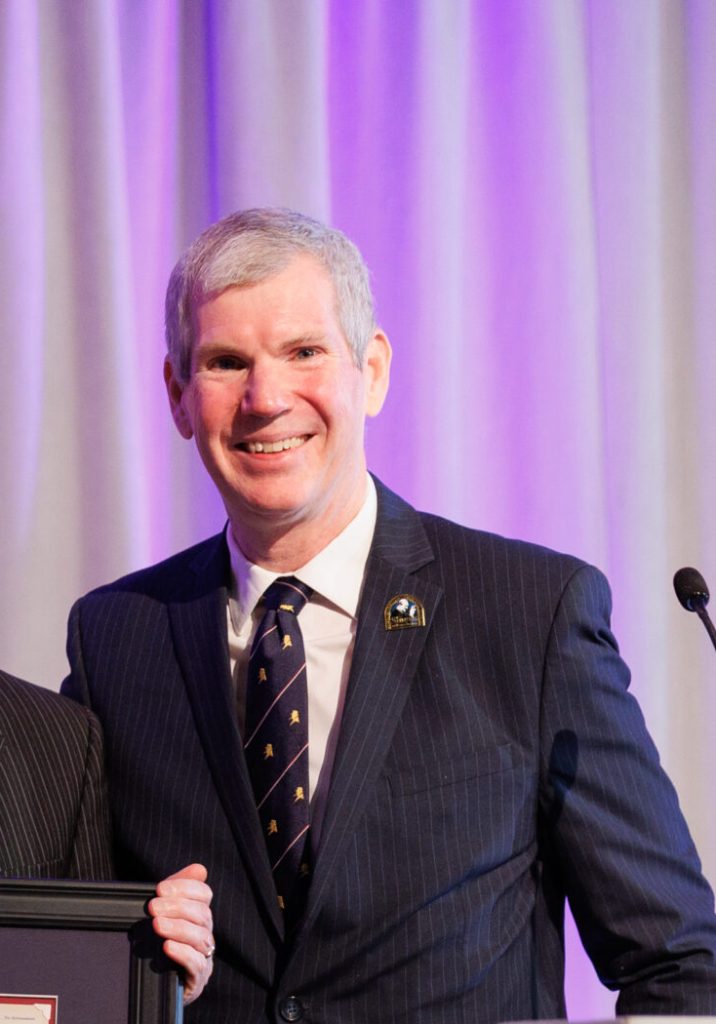
The Hottest Ticket in Town, 1946 By Donald P. Lofe, Jr. President and Chief Transformation Officer and Churchill Fellow, Westminster CollegeDirector, International Churchill Societ...
Churchill’s first public speech was an impromptu one, when – in his last term at Sandhurst and on a visit to the Empire Theatre in Leicester Square – he called for makeshift barriers between the sexes, erected to prevent prostitutes from mingling with theatre-goers in the bar, to be pulled down (an unlikely cause for a nineteen-year old young man): ‘Ladies of the Empire, I stand for Liberty!’.
Out of office in the 1930s, Churchill’s could spend more time travelling and writing. Much of the former was for pleasure but he knew he could make money out of writing and he took every opportunity to turn his travels into much-needed cash. Despite being born in a palace, an independent financial base was essential (MPs only got a tiny salary in those days) and he needed funds to ensure he could live in the manner to which he’d become accustomed. He also had a growing family to support and a rundown house, Chartwell, to restore.
A collection of lesser-seen video clips showing Winston Churchill addressing the public.
Churchill drafted his speeches several times and wrote them out in a way that would help him deliver them effectively. He rehearsed passages again and again, pacing his rooms, repeating them out loud, learning whole speeches by heart. He developed a unique oratorical style that both covered up and employed his speech difficulties so that his ‘lisp’ – or ‘stammer’, which could occasionally seem like a groping for words – became a prop, not a hindrance. Until old age, Churchill wrote every speech himself, usually by dictating to a secretary and then revising on the typed copy. He would then ask them to present the words on the page in ‘speech form’, in the style of a poem, with staggered lines and breaks in the text (referred to by others as ‘psalm style’), so that he could see at a glance where to pause, hesitate or add emphasis, when delivering the lines. He was a relentless reviser of his speeches – as he was with his books, too – and made numerous drafts. The final version would be retyped on smaller sheets, the size of notepaper, and even these would show last-minute changes to the text, with crossings-out and added scribbled words.
Churchill was a great orator. While he led Britain to victory in the Second World War, it’s for his wartime speeches – ‘never in the field of human conflict was so much owed by so many to so few’ – that he is now justly remembered. Whether warning of the dangers of fascism, rallying the British nation against attack or wrestling with the problems of the Cold War, ‘he mobilised the English language and sent it into battle’. Today, the English-Speaking Union, founded in 1918, brings together and empowers people of different languages and cultures to gain the skills and confidence in communicating to others in order to reach their full potential. Churchill was the Chairman of the ESU from 1921 to 1925. The Churchill Lecture, which Ronald Reagan, Dr Henry Kissinger and HRH The Princess Royal have all given in the past, has been a prestigious event in their annual programme.
Churchill’s speech-making didn’t always go well. Even great speakers ‘dry up’. Although he had a phenomenal memory (he’d won a prize at school for reciting great reams of poetry), learning speeches by heart clearly wasn’t enough. Even though he meticulously rehearsed them beforehand, there was always the possibility of forgetting his lines. In the spring of 1904, making a speech in the House of Commons, he’d been speaking for forty-five minutes when – without notes to hand – he forgot his words. He struggled for ‘the most embarrassing 3 minutes of my life’, trying to remember the rest of his speech, and then sat down in silence, humiliated. So even great speakers can find public speaking difficult and stressful. After this confidence-shattering experience, Churchill nearly always prepared full notes – and had them to hand – to prevent this happening again. And thanks to this, the Churchill Archives Centre contains lots of Churchill’s speeches notes. (No wonder ‘presentation skills’ experts encourage the use of those small cards with speaking notes or handy PowerPoint slides as prompts...)
On 18 June, Churchill warned the British people that the ‘battle of France’ was over and the ‘battle of Britain’ was about to begin. His words were proved right. As early summer gave way to July and August, the threat of invasion loomed over Britain. Churchill, seeing that control of the skies was vital, put businessman Lord Beaverbrook in charge of Aircraft Production (as Minister) and encouraged British scientists to improve radar defences and counter German technology. In August, the Royal Air Force managed to inflict heavy casualties on the German and, in September, the German pilots transferred their attention from the coastal airfields and those in south-west England to London, allowing the fighter bases respite from attack but putting British people in the city at much greater risk. In early September a massive series of raids involving nearly four hundred German bombers and more than six hundred fighters targeted docks in London’s East End almost continuously, day and night. Listen to a reporter describing London in the Blitz, with St Paul’s Cathedral, its dome silhouetted against the ‘ruddy sky … almost like the Day of Judgement’. For more on the Battle of Britain, see the BBC collection in their online Archive of programmes and documents (including interviews from some of the battle’s heroes and film footage of the Spitfire and Hawker Hurricane fighter planes in action), . The turning point in Britain’s fortunes in the war was captured by Churchill’s famous speech in praise of the British men of the under-resourced Royal Air Force. But more was still to come.
Churchill’s reputation as an orator is based principally on his speeches and broadcasts as Prime Minister during the summer of 1940 during a particularly vital point in the Second World War, when Britain was under the threat of invasion. You'll probably know lots of famous phrases or quotes from these speeches: ‘We shall fight on the beaches’, ‘This was their finest hour' and 'Never in the field of human conflict was so much owed by so many to so few’. His most well-known and most quoted speeches are those known usually as ‘Blood, toil, tears and sweat’ (13 May), ‘We Shall Fight on the Beaches’ (4 June) and ‘This was their Finest Hour’ (18 June), all of which were delivered in the House of Commons, though Churchill also broadcast the ‘Finest Hour’ speech over the BBC. He only made a total of five broadcasts to the nation during this vital stage of the Second World War (19 May, 17 June, 18 June, 14 July, 11 September), but these speeches conveyed Churchill’s determination and commitment, and they gave his country confidence. Did Winston's Words Win the War?
In November 1945, Churchill was invited to give one of a series of annual lectures at Westminster College, Fulton, Missouri. The letter of invitation was annotated by President Truman who offered to introduce Churchill, and therefore guaranteed a high profile event. Churchill’s speech, given on 5 March 1946, was to prove enormously influential. Originally entitled ‘The Sinews of Peace’, it became better known as the ‘Iron Curtain’ speech because of his use of a phrase now in common use. This was Churchill’s first public declaration of the Cold War, in which he warned the western world about the ‘iron curtain’that was descending over Europe, drawn down by the Russians, and called for greater Anglo-US cooperation, in what he called a ‘special relationship’, in the battle against Soviet expansionism. Click to see Churchill give this speech in the presence of US President Harry S. Truman. The speech drew the world's attention to the threat of a powerful Soviet Union and the potential ‘cold war’ between the East and the West. Although the ‘iron curtain’ phrase had been used before, Churchill gave it common currency and in so doing, increased awareness and influenced world policy. Some Russian historians have even dated the beginning of the Cold War from this speech. Read more about Churchill and his role in the Cold War .
International Churchill Society the preeminent member organization dedicated to preserving the historic legacy of The Rt. Hon. Sir Winston Churchill.
Get the Churchill Bulletin delivered to your inbox once a month.
Join the International Churchill Society today! Membership starts at just $29/year.