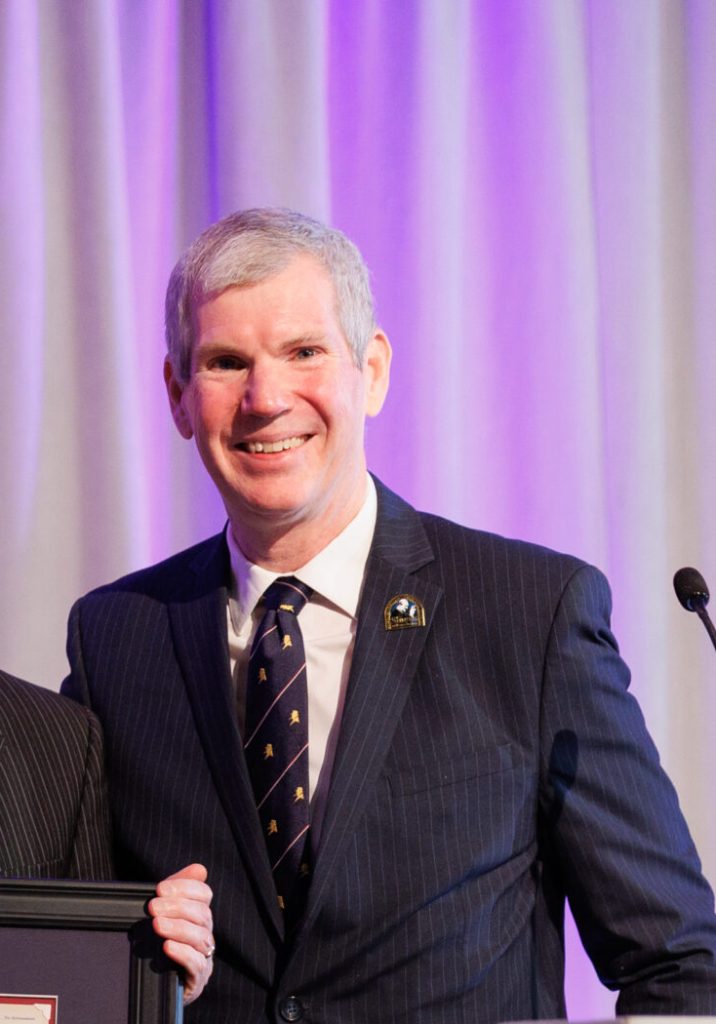
The Hottest Ticket in Town, 1946 By Donald P. Lofe, Jr. President and Chief Transformation Officer and Churchill Fellow, Westminster CollegeDirector, International Churchill Societ...
It has been claimed that an actor read Churchill’s wartime speeches over the radio (when, it was said, Churchill refused to repeat them, having already given the speeches in the House...
No It’s been suggested that some of the famous recordings (not those on this site) aren’t actually the work of Churchill at all, but of an actor mimicking his voice Although...
Follow the links below to listen to the recordings Churchill made of these iconic speeches Most of these key speeches of 1940, with the exception of 18 June’s speech, were given...
Three days after this famous ‘Iron Curtain’ speech at Fulton, Missouri, Churchill travelled to Richmond, Virginia He gave an address to the joint houses of the Virginia General Assembly in the...
On 19 September 1946, Churchill spoke at the University of Zurich in favour of the creation of a ‘kind of United States of Europe’ against the threat of Soviet danger This...
Churchill later gave an impromptu speech to a vast crowd from the balcony of the Ministry of Health at the lower end of Whitehall, telling the crowds, 'This is your victory!' to which they responded loudly: ‘No – it is yours!’ Later that evening, Churchill went out again on to the balcony to speak to the crowds. The last official event of VE Day was a broadcast to the nation by George VI at 9.00pm. Buckingham Palace was lit up by floodlights for the first time since the country had been forced into ‘blackout’ at the start of the War and two searchlights arced over St Paul’s Cathedral, which had withstood the German’s bombing, in a giant ‘V for Victory. In the early hours of 9 May, the celebratory lights were extinguished. The war against Japan was still to be won. Victory had been achieved at great cost – the lives of men, women and children; the destruction of homes and cities; the dislocation of peoples, exhaustion of finances and a weakened British economy. But Britain – led by Churchill, in his and Britain’s ‘finest hour’ – had achieved what it set out to do. Its people had dared and endured and seen victory, ‘in spite of terror’. They – and Churchill – had survived. And for one glorious day, VE Day, they could celebrate.
Churchill is perhaps now best remembered for his powerful speeches and broadcasts, particularly those delivered during the Second World War – ‘a series of speeches that rank with the greatest in British history’ (Simon Jenkins, in , 2011). He used his great skill with the written word, and his dedication to rehearsing its delivery, to influence a national and an international audience. His speeches were carefully crafted both to raise morale at home and to act as political and diplomatic weapons abroad, sending messages of defiance to the enemy and calls to arms to allies. Learn more about Churchill’s development as a speaker, in an exhibition showcasing relevant . And this review of the exhibition in the .
Churchill had an incredibly quick mind, a sharp tongue and a very large vocabulary. He loved playing with words – creating new ones, adapting old ones – and using words to his advantage, quite often at the expense of others (although sometimes at his own, too!) Many of his speeches – and quotes from those speeches – are very well known, but his witticisms, , jokes and puns are perhaps less well recorded (or often misattributed). Churchill had a mischievous sense of wit. This couldn’t really be called ‘humour’; he wasn’t usually trying to be funny or make people laugh; nor did he tell bawdy or ribald jokes; this wasn’t in his nature. But he did enjoy the neatness and cleverness of a well-placed and carefully judged retort. He didn’t hesitate to use his particular talent with words on others. He had certain ‘sparring partners’ (as Richard Langworth puts it) who prompted him to fire off a quick riposte. Although these might have seemed off the cuff and spontaneous, they were generally carefully rehearsed, words carefully selected for punning potential, stored in his prodigious memory and then released on their unsuspecting recipient at the right moment. In 2013, he topped a poll of ‘history’s funniest insults’. Read more – and see the full list – . In the there’s a Churchill quote on nearly every page. As this journalist said, he’s the last word in political wit.
Churchill had a great gift with words. His speeches clearly demonstrate that. But he was also a prolific writer of books and articles; in his lifetime, he published more than forty books in sixty volumes, as well as hundreds of articles. The total now stands at fifty one individual works (eleven posthumous) in eighty volumes (twenty one posthumous). During his lifetime, he was a celebrated – and very well-paid – journalist and a very successful author. In 1953 he was awarded the Nobel Prize for Literature for his contribution to the written and spoken word. How did someone who purportedly wasn’t much of a student at school, manage to become so well known, so widely read and so highly regarded as a writer? For 'trivia' about Churchill’s literary life, see the Churchill Centre site . For a full list of all Churchill’s books, and a brief description of each, see the same site . A comprehensive selection of Churchill’s books – first editions, quality second-hand – as well as books about Churchill, visit , the independent bookstore in New York, the only physical bookshop devoted to his writings.
International Churchill Society the preeminent member organization dedicated to preserving the historic legacy of The Rt. Hon. Sir Winston Churchill.
Get the Churchill Bulletin delivered to your inbox once a month.
Join the International Churchill Society today! Membership starts at just $29/year.