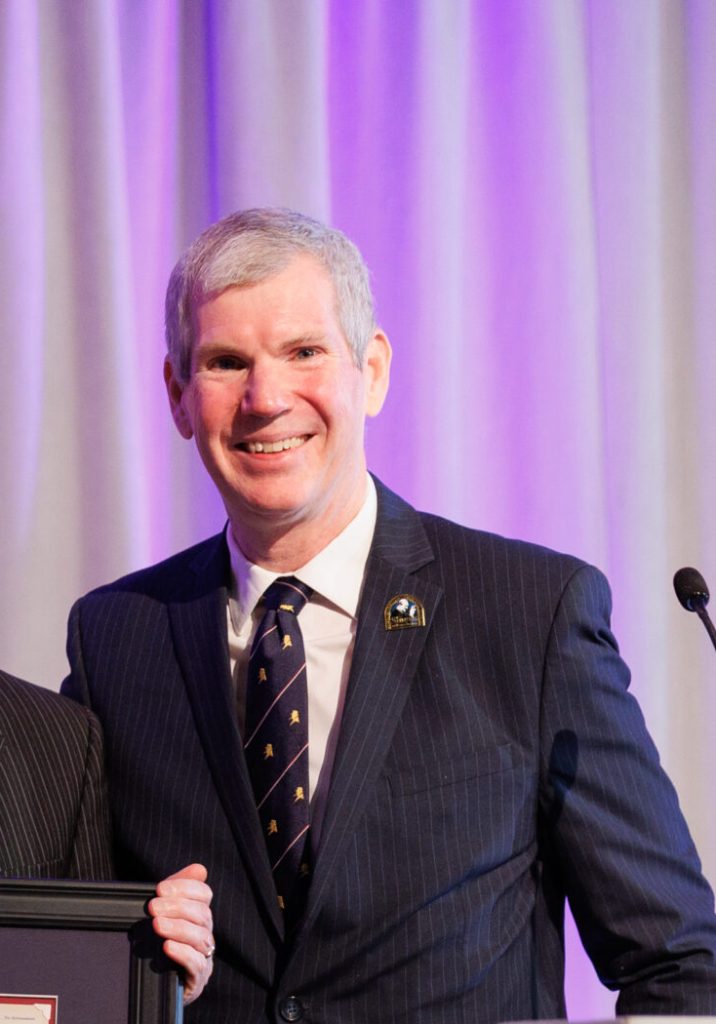
The Hottest Ticket in Town, 1946 By Donald P. Lofe, Jr. President and Chief Transformation Officer and Churchill Fellow, Westminster CollegeDirector, International Churchill Societ...
Not satisfied with only Austria, Hitler began demanding parts of Czechoslovakia, too. In September 1938, with war against Germany seeming increasingly likely, Prime Minister Neville Chamberlain flew to Munich (according to a British Pathe newsreel, his first trip in an aeroplane), to meet the German leader. His aim of this ‘mission of peace’ was to secure a guarantee that there’d be no further German aggression.
In 1905, Prime Minister Balfour resigned and Sir Henry Campbell-Bannerman formed a government pending a January election, appointing Churchill as Under-Secretary of State for the Colonies, assisting Lord Elgin. And in the Liberal Party’s landslide election victory in early 1906, Churchill was elected as the Liberal MP for North-West Manchester. Churchill, the ambitious, shining ‘glow-worm’, was on his way.
Churchill spent much of the 1930s warning his political colleagues about the dangers of the new Nazi regime in Germany but initially his pleas fell on deaf ears Following the blunders of these ’wilderness years’ – with his judgement seriously in doubt as a result of his position on India and Edward VIII’s abdication – Churchill’s views on Hitler and the hopelessness of the appeasement policy were generally ignored.
Churchill was appointed Home Secretary following the January 1910 election, when the Liberal party was again returned to power. It was during this time that he most clearly demonstrated that strange mix of his nature - of the radical reformer and the reactionary. While he helped introduce reforms to the prison system, reducing sentencing for younger people and improving conditions, he also opposed strikers and refused to support votes for women.
Churchill won his first 'seat' in Parliament in 1900, when he was elected by a small majority to become Conservative MP for Oldham, Lancashire. This was the beginning of a political career that would last over sixty years.
Churchill felt strongly that Britain had a key role to play in world politics; it was ‘the only country in the world which had an important interest in all ‘three great circles among the free nations and democracies’ (the Commonwealth, the English-speaking world and Europe). He believed he could help Britain play its role in all three and this was one of the main reasons why he refused to retire. He continued to exert his influence and express his views about the need for a new approach to diplomacy in the face of post-war reality. Churchill’s speech at Fulton in 1946 was followed by a similarly important speech on the state of Europe later that year. Churchill’s power, influence and prestige internationally meant that his speeches were taken seriously and widely reported, and he became regarded as a leading figure in the European movement. But he wasn’t, as some have said, a committed ‘European’; he always felt that Britain should not be subsumed within a federal Europe. He always remained a British nationalist. His speeches must also be seen in the context of the time. He didn’t see a conflict between greater co-operation with the United States and greater European union; they were both ways of resisting Soviet expansion. See the European Commission’s leaflet about Churchill’s role as the ‘driving force behind European integration’ .
By the early 1930s, Churchill no longer had a Government position. He opposed plans to give greater independence to India and seemed out of touch. Based at his beloved house at Chartwell in Kent, he continued to write books and newspaper articles, but many thought his political career was over. It was his vocal opposition to Hitler’s new Nazi dictatorship in Germany, and his calls for British rearmament, that gradually brought him back to public notice.
In 1922, Churchill found himself out of Parliament for the first time in twenty-two years, after losing his seat in the General Election. He retired to the South of France to take up writing but couldn't stay away from politics for long.
1 December 2015: The Legatum Institute was pleased to host the Churchill 21st Century Leadership Programme and King’s Think Tank for a debate with the Chair of the Intelligence and Security...
Get the Churchill Bulletin delivered to your inbox once a month.
Join the International Churchill Society today! Membership starts at just $29/year.