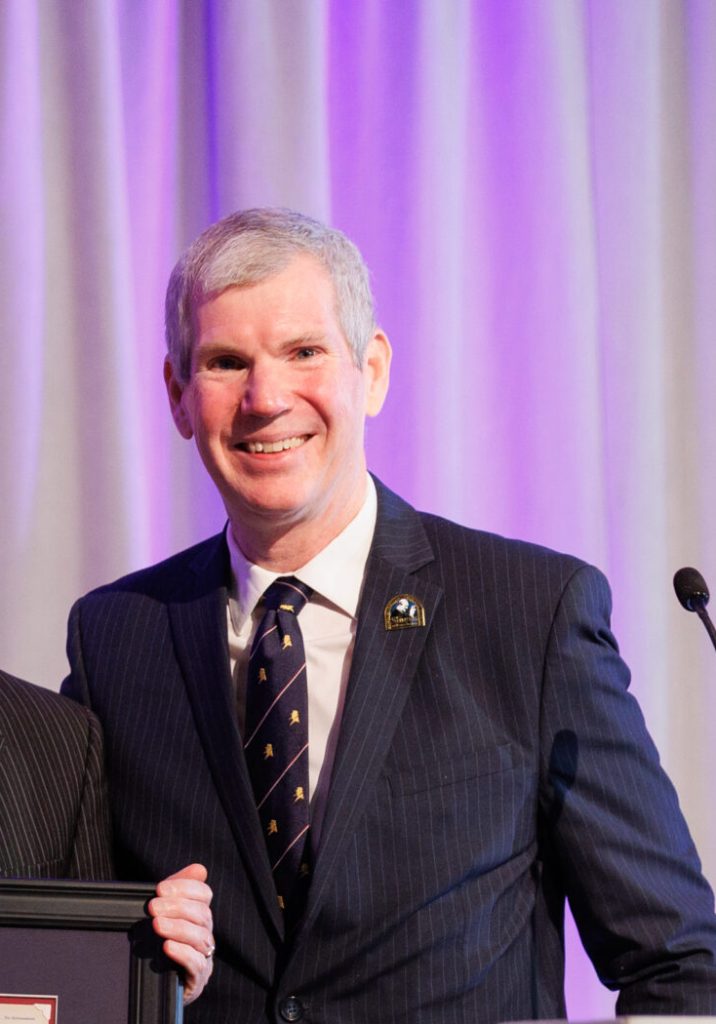
The Hottest Ticket in Town, 1946 By Donald P. Lofe, Jr. President and Chief Transformation Officer and Churchill Fellow, Westminster CollegeDirector, International Churchill Societ...
Churchill was a man of many interests. He took a keen interest in the development of both silent movies and ‘talking pictures’ and turned the dining room at Chartwell into a cinema room so that we could watch movies in the comfort of his own home. He often stayed up late into the night, particularly during the Second World War, relaxing from the tensions of the day. He particularly enjoyed the film ( in the US), Alexander Korda’s 1941 patriotic epic starring Laurence Olivier, as Nelson, and Vivien Leigh as Lady Hamilton. It’s said he watched it seventeen times!
Churchill loved animals, large and small. He had always loved horses – he took part in the last great cavalry charge at Omdurman as a soldier, played polo and, in later life, owned brood mares and racehorses – but he also enjoyed having cats and dogs at his side – and sometimes even on his bed – while at Chartwell. Churchill surrounded himself with a veritable menagerie of animals, including sheep, goats, pigs, cattle, guinea pigs, hens, ducks, swans and goldfish and, of course, cats and dogs (notably two brown poodles, Rufus I and Rufus II). In 1926 during an economy drive – Chartwell and its staff were expensive to run - many of the animals were sold but he couldn’t bear to part with his prized Middle White pigs.
Chartwell “Manor” In the latest issue of Finest Hour, STEFAN BUCKZACKI examines a common misconception about Chartwell A trap that people often fall...
Although not often thought of as a sportsman, Churchill was a fine fencer in his schooldays, becoming English Public Schools Champion at fencing during his time at Harrow School...
Throughout his life, Churchill exhibited a peculiarly individual sense of style, with a love of military uniforms, specially designed zip-up ‘siren suits’ (so called because they could be put on quickly when the air raid sirens sounded), his bow ties and his famous V for Victory hand gestures. Churchill was always drawn to fine clothes. In his younger days, he wore frock coats, trousers and vests as part of his Parliamentary wardrobe, and his suits and overcoats were made by the best tailors in London. As early as 1905, Churchill visited Poole & Co in Savile Row and he returned frequently in the years following, although later in his career a cutter was usually sent to Chartwell to measure Churchill at home. He eventually stopped ordering his suits from them – the expense became too great and he ended up owing them a considerable sum of money – but to celebrate the centenary of Churchill’s first order with them, Henry Poole & Co revived the chalk-striped flannel of the suit they made for him around 1936. See more on the Henry Poole website, .
Although he was given presents of more cigars than he could ever smoke, Churchill also spent a considerable amount of money on Havana cigars Churchill’s fondness...
A few weeks before his eighth birthday, in 1882, Churchill – like many other children of his class and background – was sent away to boarding school. It was at his second school in Brighton (after two unhappy years at St George’s, Ascot where ‘floggings’ were common) that he learnt things that interested him; not just French and history, but riding a horse and swimming. Both riding and swimming were to feature heavily in his life. At Harrow he represented his house at swimming competitions, but it was at fencing that he excelled. In 1889, Churchill wrote to his ‘Darling Mummy’ asking her to allow him to take up fencing. Churchill went on to become an accomplished fencer and even became Public Schools Fencing Champion in 1892.
Typically adventurous, Churchill learnt to fly in 1913 when he was First Lord of the Admiralty, only ten years after the first aeroplane flight. At the time, the Royal Navy only had about a dozen aircraft and accidents were common. Planes weren’t very substantial; many of them couldn’t carry heavy loads, with some barely able to lift the pilot, never mind a co-pilot. Their engines were unreliable and even a modest wind could impede a flight. Flying these fragile planes required considerable skill as well as a great deal of luck.
While ‘the man of action’ perhaps more accurately describes Churchill in time of battle, demanding action from others and of himself, he was always a restless man, fearful of inaction. In his quieter years, he was always determined to keep himself busy (perhaps to keep the ‘black dog’ of depression at bay). Although his favourite pastime was painting, he continued to travel, ride and swim, as well as write books during his ‘wilderness years’ – he only gave up playing polo when he was fifty-two – and into his sixties and seventies. Even when elderly, after the Second World War, he continued to travel (to the US, to give lectures and speeches, to Europe for holidays). Despite having suffered heart attacks, strokes and pneumonia, he was far more active – and physically resilient – than most his age.
Get the Churchill Bulletin delivered to your inbox once a month.
Δ
Join the International Churchill Society today! Membership starts at just $29/year.