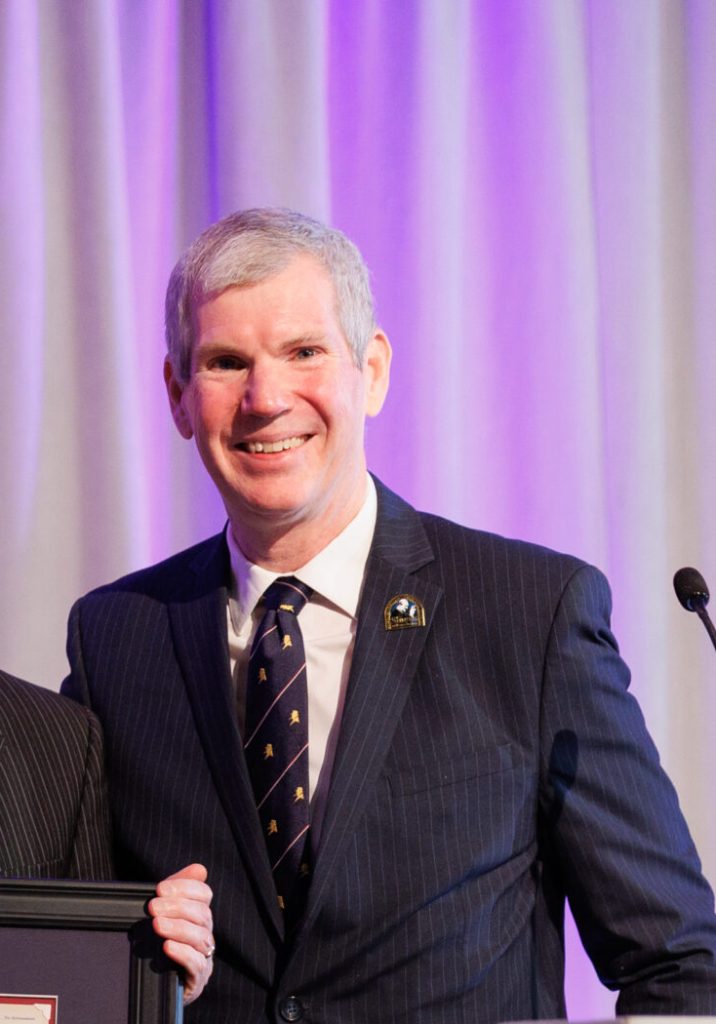
The Hottest Ticket in Town, 1946 By Donald P. Lofe, Jr. President and Chief Transformation Officer and Churchill Fellow, Westminster CollegeDirector, International Churchill Societ...
On 24 August, German night bombers aiming for the airfields accidentally destroyed several London homes, killing civilians. Churchill retaliated immediately by bombing Berlin the following night. Starting on 7 September 1940, London was bombed by the for 57 consecutive nights, and other British cities were targeted. But a real turning point in Britain’s fortunes in the war occurred on 15 September. In an attempt to shatter British morale, now that an invasion began to seem increasingly unrealistic, Hitler sent two enormous waves of German bombers. But their attacks were scattered by the RAF; the German defeat caused Hitler to order, two days later, the postponement of preparations for the invasion. In the face of mounting losses of men and aircraft, the switched from daylight to night-time bombing and although fighting continued in the air for several more weeks, and British cities continued to be bombed, German tactics to achieve air superiority ahead of an invasion had failed.
We will mete out to the Germans the measure and more than the measure that they have meted out to us. We will have no truce or parley with you, or the grisly gang who work your wicked will. You do your worst and we will do our best.
Danger gathers upon our path. We cannot afford – we have no right – to look back. We must look forward
Here he writes to his brother, Jack, who was with the forces in the Dardanelles, saying ‘the vital thing is not to break off because of losses but to persevere This...
Churchill ‘during one of his darkest hours’, 1916, by Sir William Newenham Montague Orpen, oil on canvas copyright: Lent by the Churchill Chattels Trust; Image National Portrait Gallery, London...
The Government encouraged the British people to ‘dig for victory’ – planting their own fruit and vegetables – and to keep chickens and pigs to supplement their diet copyright: IWM...
copyright: IWM...
After Germany’s surrender in May 1945, Churchill wanted his wartime coalition government to continue until the defeat of Japan which wasn’t anticipated for another year at least. But Labour and the majority of the Liberals refused and pulled out of the coalition. Churchill headed a Conservative ‘caretaker’ government for a brief period until Parliament was dissolved and the first general election for ten years was held.
Those who had felt Churchill’s career had reached its limit when the Conservatives were defeated in 1929 now felt vindicated. Even some of his own party thought Churchill was out of date and out of touch. Rather than weakening Baldwin’s position (as leader), as some thought he’d intended, Churchill – by endeavouring to ‘marshal British opinion’ for a lost cause – in fact weakened his own position. When Baldwin and MacDonald joined forces to form a National Government in 1931, bringing together leading figures from the Conservative, Labour and Liberal parties, Churchill’s views on India meant he was excluded from office. With his standing and credibility seriously damaged, this ‘personal crusade without restraint or care for the consequences’ (Ball, ) meant his later warnings about the dangers of Nazism went largely unheeded. Finding himself increasingly isolated politically, with seemingly little influence, Churchill had time on his hands. He also needed a steady income. Chartwell was an expensive home to run – and he had four children and a wife to support, as well as his ever-lavish lifestyle . He turned his attentions, and prodigious energies, elsewhere.
Get the Churchill Bulletin delivered to your inbox once a month.
Δ
Join the International Churchill Society today! Membership starts at just $29/year.