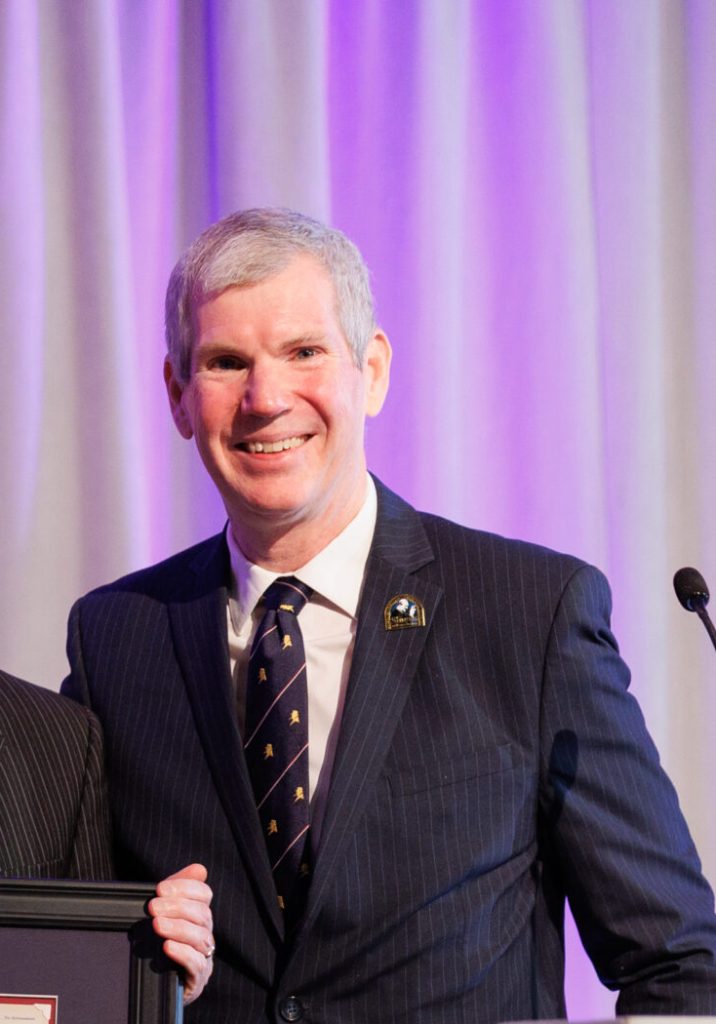
The Hottest Ticket in Town, 1946 By Donald P. Lofe, Jr. President and Chief Transformation Officer and Churchill Fellow, Westminster CollegeDirector, International Churchill Societ...
copyright: Reproduced from the Baroness Spencer Churchill Papers with the permission of Curtis Brown Group Ltd, London, on behalf of the Master, Fellows and Scholars of Churchill College, Cambridge...
Here you can see the marked-up typescript of the first draft of one of Churchill’s most famous speeches, with the most iconic phrase at the bottom of the page: ‘this was...
Here he writes to his brother, Jack, who was with the forces in the Dardanelles, saying ‘the vital thing is not to break off because of losses but to persevere This...
Churchill writes to Unity Mitford on 12 March 1938, of Herr Hitler’s fear of ‘the free expression of opinion’ and the resulting ‘dastardly outrage’ copyright: Churchill Archives Centre...
copyright: Churchill Archives Centre...
In fact, Churchill was more than ready for retirement. Only a year after his resignation, days before his eighty-second birthday, he finally admitted that he was not the man he was; he could not be Prime Minister now. Only a week after his last cabinet meeting, he and Clemmie went on holiday to Syracuse. Even though he was not the man he was, and despite his failing health, Churchill began his ‘retirement’ with some of his old vigour and energy. For an elderly man, he was remarkably resilient and determined. He embarked on holidays, painting tours and new writing projects. The first two volumes of his were published in 1956 and the remaining two volumes over the next two years; quite an achievement for a man in his eighties, even with the help of various historians and research assistants. As well as painting and writing, he devoted his energies to supporting causes that would improve Britain’s standing in the world. If he couldn’t do it through politics, he could do it through education. See Parliament's on Churchill's retirement, death and lying-in-state.
Shortly after his return from Fulton, Churchill began to write his war memoirs. With a team of researchers working on his behalf, and a very ordered (if somewhat laborious) approach to drafting and editing, he soon had the first volume finished. appeared in six volumes between 1948 and 1954. Churchill never claimed the memoirs were ‘history’; they were rather a contribution to history. Although their very breadth and coverage gave the impression that they were a definitive account, there were omissions, of course. was Churchill’s interpretation of the events, the work of a man seeking to place his role in the war – and in history. The books sold well, with a combined first printing of over 800,000 copies.
Much of the 1930s was devoted to travel and writing. Some of the former was for pleasure; Churchill had always relished travelling and enjoyed his time away from Britain. He spent many months on the continent – at expensive hotels, at the chateaux of friends and acquaintances, always with his easel and paints at hand Churchill used these long periods abroad, in the sunshine and among those who respected him, to recharge his batteries and restore his energy. His favourite holiday destination was the French Riviera, where he enjoyed the hospitality of wealthy American hostesses like Maxine Elliott and Consuelo Balsan, all of whom had genuine affection for Churchill and played host to him in their villas, providing him with much-needed relaxation. But Churchill could also earn money while travelling, too, supplementing the family’s meagre income by taking on paid lecture tours, writing books and popular newspaper articles (he had, after all, been one of the highest paid war correspondents in the world).
Get the Churchill Bulletin delivered to your inbox once a month.
Δ
Join the International Churchill Society today! Membership starts at just $29/year.