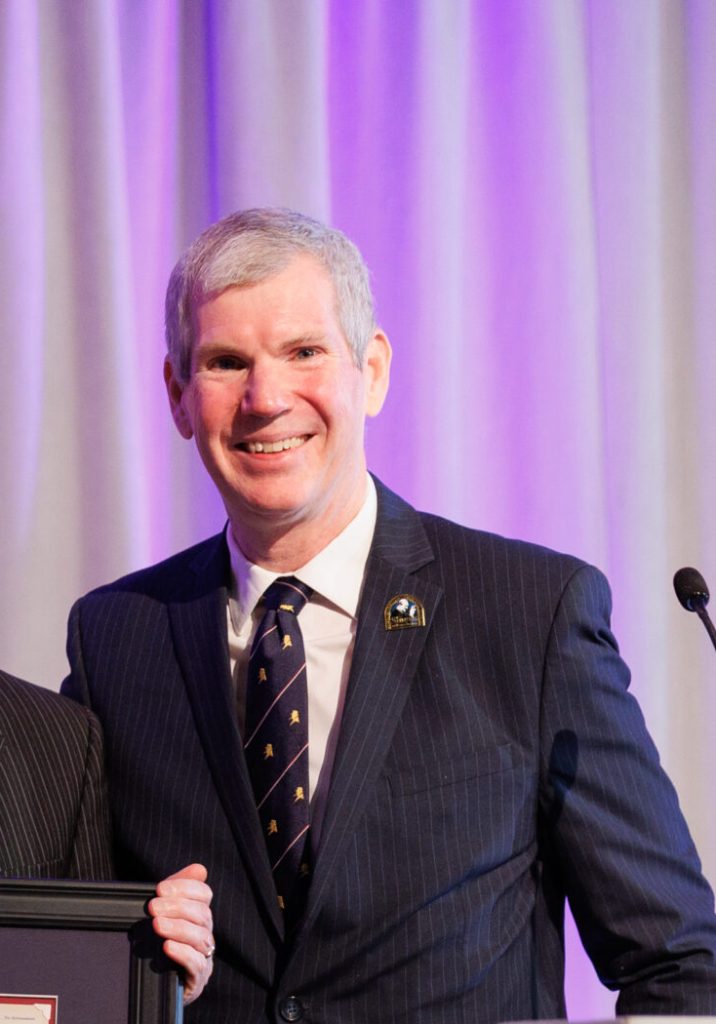
The Hottest Ticket in Town, 1946 By Donald P. Lofe, Jr. President and Chief Transformation Officer and Churchill Fellow, Westminster CollegeDirector, International Churchill Societ...
We will mete out to the Germans the measure and more than the measure that they have meted out to us. We will have no truce or parley with you, or the grisly gang who work your wicked will. You do your worst and we will do our best.
Churchill knew that the fastest way to political advancement lay in active service – ‘the glittering gateway to distinction’. He bemoaned the fact that the world was growing so ‘sensible and pacific’. There weren’t any battles close to home – as yet – so he had to look further afield to find action. For the moment, though, there was action to be found on a far-distant island – Cuba – and, through his mother’s contacts, Churchill managed to wangle a commission as a war correspondent for the Off he went, spirits high, to see some action. In late 1895, he and a friend Reginald Barnes were given leave to travel to Cuba, to observe the military campaign by the Spanish government troops against Cuban guerrilla rebels. Churchill spent some of his twenty first birthday under fire when the column he was travelling with was attacked. Despite only being in Cuba for sixteen days, he was recommended for the Spanish Cross of the Order of Military Merit.
When Churchill sailed to India with his regiment, the Queen’s Hussars, in 1896, polo – and winning regimental polo cups – seemed to be the only action he was likely to see. Eager to make his mark, he took matters into his own hands and persuaded the to take him on as a war correspondent. In 1897, he travelled to the North West frontier of India and Pakistan to join the Malakand Field Force fighting against the Afghan tribes in 1897, under the command of Sir Bindon Blood. It took him a total of five uncomfortable weeks (by ship and by train), with the promise of nothing more than a role as ‘correspondent’, to get to the front.
The onset of the First World War in August 1914 thrust Churchill into the limelight again, but this time at centre stage in an international crisis. For a ‘man of action’, this was the place to be. Eager to emulate the deeds of his ancestor, the Duke of Marlborough, Churchill felt anticipation and excitement – and the promise of glories to come – as the prospect of war became unavoidable. As First Lord of the Admiralty,Churchill issued the order to the Navy to act – to ‘commence hostilities’. The First World War was to be a time of great personal challenge for Churchill; it was to demand personal bravery and resilience in the face of both physical danger and intense mental battles. He did indeed ‘put his head into the lion’s mouth’.
More action was to beckon. A serious colonial war had begun in South Africa and Churchill managed to secure another lucrative assignment to report on the war for the Morning Post. In this last youthful military adventure, Churchill set off and arrived in Cape Town late on 30 October 1899. He was famously captured only two weeks later by the Boers, when the armoured train on which he was travelling in Boer-occupied territory was ambushed and derailed. The following month, having spent his twenty-fifth birthday imprisoned, Churchill made a dramatic escape by climbing over a wall, riding a freight train, hiding in a coal mine and eventually boarding a train into Portuguese East Africa. He made his way to Durban, with the Boers offering a reward of £25 for the recapture of their well-known prisoner, ‘dead or alive’. For the next six months, he encountered fire, took part in the bloody and unsuccessful battle of Spion Kop in January 1900 and, as the war turned in Britain’s favour, was present at the relief of Ladysmith and the occupation of Pretoria. His brother Jack was wounded and became one of the first patients to be treated by their mother, Lady Randolph, on the hospital ship she had organised. But Churchill’s luck held. Returning to England in July 1900, Churchill was hailed a hero.
Contrary to popular opinion (an opinion encouraged by Churchill himself in his autobiography,), he was actually quite good at some subjects at school. He was particularly good at English and history, both subjects in which he showed considerable promise. This early promise was borne out when he became a war correspondent, sending dispatches back to London from far-flung parts of the Empire for newspapers. He was determined to get himself noticed and to get himself into politics – and, for an adventurous, reckless young man on a mission, this seemed as good a way as any. Between 1897 and 1900, with the help of his mother’s lobbying, he fought in three of Queen Victoria’s wars while doubling up as a war correspondent. He quickly turned all three experiences into books. His literary career was off to a flying start.
Finest Hour 186, Fourth Quarter 2019 Page 04 By David Freeman, November 2019 Thirty years ago the Berlin Wall “came tumblin’ down” The largely peaceful end to the Cold War came “quite suddenly...
Finest Hour 186, Fourth Quarter 2019 Page 23 By Kevin Ruane Kevin Ruane is Professor of Modern History at Canterbury Christ Church University, an Archives By-Fellow of Churchill College, Cambridge,...
Finest Hour 186, Fourth Quarter 2019 Page 08 By Timothy Riley In July 1945, while on a fishing holiday on Minnesota’s North Star Lake, Westminster College President Franc L...
Get the Churchill Bulletin delivered to your inbox once a month.
Δ
Join the International Churchill Society today! Membership starts at just $29/year.