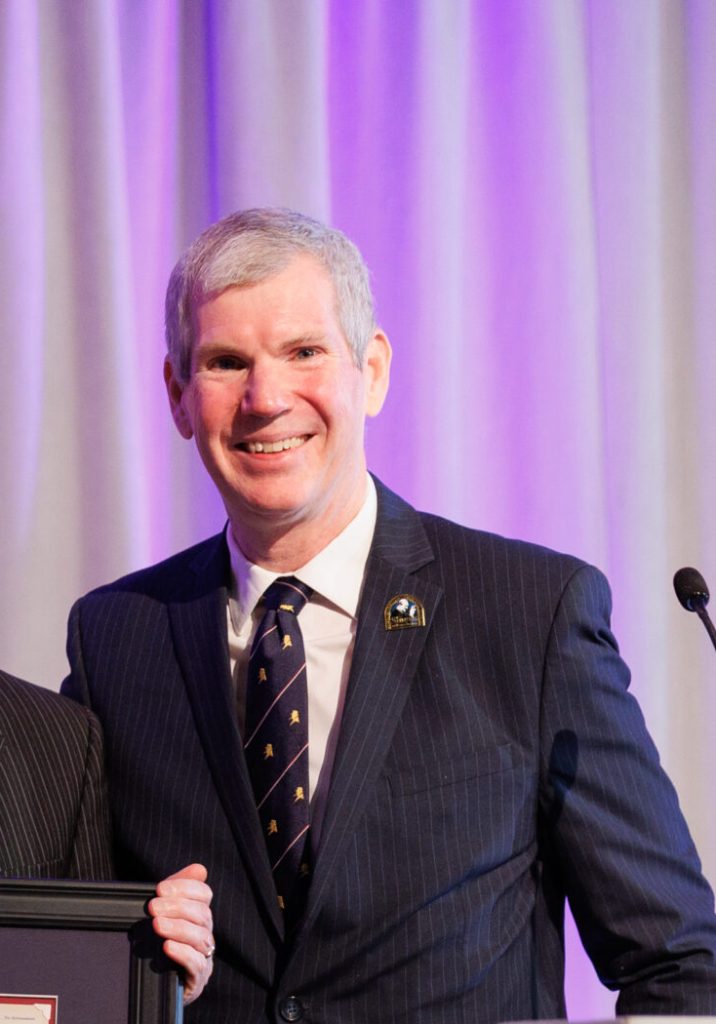
The Hottest Ticket in Town, 1946 By Donald P. Lofe, Jr. President and Chief Transformation Officer and Churchill Fellow, Westminster CollegeDirector, International Churchill Societ...
Professor Richard Toye (University of Exeter) and Dr Warren Dockter (University of Cambridge) discuss President Roosevelt’s relationship with Winston Churchill during the Second World War https://wwwyoutubecom/embed/HqKWO6viisw copyright: Dr Warren...
Churchill, wanting to inspect the recently bombed areas, travelled by launch as the threat of unexploded bombs in the city made it dangerous to travel by road; Clementine went with him...
Churchill uses a telescope to watch an assault against enemy positions north of Florence, Italy, from an observation post, 20 August 1944 copyright: IWM (NA 17912)...
copyright: Reproduced from The Broadwater Collection with the permission of Curtis Brown Group Ltd, London, on behalf of The Broadwater Collection Original held at The Churchill Archives Centre, Churchill...
We must be careful not to assign to this deliverance the attributes of a victory. Wars are not won by evacuations.
We should lay aside every hindrance and endeavour by uniting the whole force and spirit of our people to raise again a great British nation standing up before all the world; for such a nation, rising in its ancient vigour, can even at this hour save civilization.
War is mainly a catalogue of blunders.
Introduced by Richard M Langworth...
With the net tightening around Germany, the Allied Leaders regrouped to clarify their plans for the final offensive. Yalta, on the Black Sea coast of the Crimea, was deemed a safe venue for the second meeting of ‘The Big Three’. Stalin, Churchill and Roosevelt gathered on 4 February 1945 and agreed the plans for the final offensive, the occupation policy for Germany and the establishment of the United Nations and its Security Council. Stalin also agreed to enter the war against Japan, something for which Roosevelt was criticized. But in February 1945, the Japanese still seemed a formidable opponent and the the Soviet Union’s vast army might be needed to oppose them. Even more crucially, Roosevelt was criticised for ‘giving’ Eastern Europe to Stalin. However, there was little else he could do. The simple military fact in February 1945 was that the Soviet Union dominated Eastern Europe and that the power of the atomic bomb (that had yet to be tested) clearly couldn’t be relied on as a counter-measure to curb Stalin’s ambitions. Victory had been achieved at great cost – the lives of men, women and children; the destruction of homes and cities; the dislocation of peoples, exhaustion of finances and a weakened British economy. But Britain – led by Churchill, in his and Britain’s ‘finest hour’ – had achieved what it set out to do. Its people had dared and endured and seen victory, ‘in spite of terror’. They – and Churchill – had survived.
Get the Churchill Bulletin delivered to your inbox once a month.
Δ
Join the International Churchill Society today! Membership starts at just $29/year.