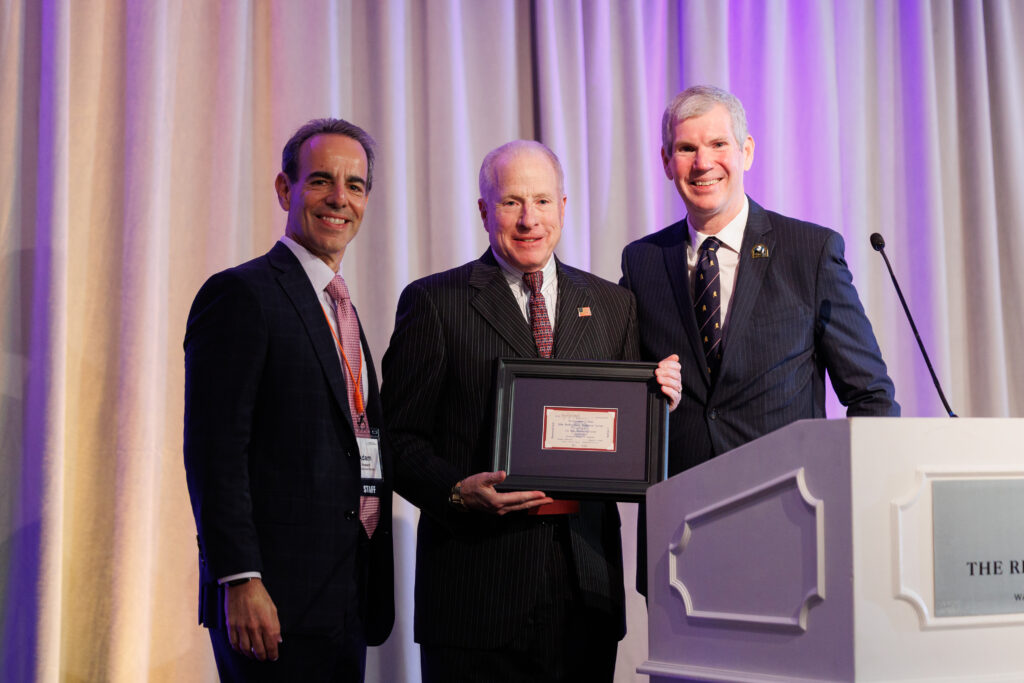
The Hottest Ticket in Town, 1946 By Donald P. Lofe, Jr. President and Chief Transformation Officer and Churchill Fellow, Westminster CollegeDirector, International Churchill Societ...
Churchill’s reputation as an orator is based principally on his speeches and broadcasts as Prime Minister during the summer of 1940 during a particularly vital point in the Second World War, when Britain was under the threat of invasion. You'll probably know lots of famous phrases or quotes from these speeches: ‘We shall fight on the beaches’, ‘This was their finest hour' and 'Never in the field of human conflict was so much owed by so many to so few’. His most well-known and most quoted speeches are those known usually as ‘Blood, toil, tears and sweat’ (13 May), ‘We Shall Fight on the Beaches’ (4 June) and ‘This was their Finest Hour’ (18 June), all of which were delivered in the House of Commons, though Churchill also broadcast the ‘Finest Hour’ speech over the BBC. He only made a total of five broadcasts to the nation during this vital stage of the Second World War (19 May, 17 June, 18 June, 14 July, 11 September), but these speeches conveyed Churchill’s determination and commitment, and they gave his country confidence. Did Winston's Words Win the War?
Churchill’s memoirs, contain very little about the Holocaust; his memoirs concentrate on political and military strategy. He’d been aware of the atrocities committed against Jews on the eastern front since 1941 and did speak out, calling for the execution of the guilty after the War. Churchill was strongly in favour of arming the Jews and this eventually led to the creation of a Jewish Brigade. In 1944 he responded to the wholesale deportation of Jews from Hungary to Auschwitz by backing plans to bomb the railways that transported them, though the deportations ceased and the order was not carried out. Some have argued that he could have done more to bomb the camps, though there is little doubt that he saw the total defeat of Nazi Germany as the best way of ending the terror. Did Churchill have knowledge of the Holocaust and do nothing? Find out .
During the Second World War, Churchill had little red labels attached to important documents with the words ‘Action This Day’. It was one of the many ways in which he sought to drive and enthuse those around him. In this section you’ll learn more about Churchill’s lifelong desire to be at the centre of the action.
Not satisfied with only Austria, Hitler began demanding parts of Czechoslovakia, too. In September 1938, with war against Germany seeming increasingly likely, Prime Minister Neville Chamberlain flew to Munich (according to a British Pathe newsreel, his first trip in an aeroplane), to meet the German leader. His aim of this ‘mission of peace’ was to secure a guarantee that there’d be no further German aggression.
Churchill took up painting in 1915 at the age of forty after his sudden fall from office over the disastrous Dardanelles campaign. He hoped it would provide a distraction, and he threw himself into it wholeheartedly.
As in the First World War, spectator sports such as football, greyhound racing and horse racing were initially banned. But it was soon recognised by the government that sport played an important role in national morale and this decision was revised. Sportsmen played an important role on the battlefield and eighty professional footballers lost their lives during the course of the war and many more were injured or became prisoners of war (POWs). All three services encouraged football as a way of keeping troops fit, active and entertained. It was also popular amongst POWs of all nationalities and Manchester City’s famous goalkeeper Bert Trautmann came to Britain as a German POW in 1945.
A more unexpected ally had already been found in the form of the Soviet Union: an uncomfortable ally, certainly, but Churchill couldn’t afford to be choosy and realized the necessity of the relationship. When Hitler invaded Russia on 22 June 1941, Germany had unwittingly played into the hands of the Allies. Churchill seized on the advantage. And so the ‘grand alliance’ – of ‘The Big Three’ – was established. It was Churchill who kept the ‘big three’ together throughout the remaining years of the war and did most of the travelling to ensure they continued to talk, negotiate, and plan. He established the first of his ‘summit’ meetings – with Teheran, Yalta and Potsdam – and these have remained a feature of international diplomacy and foreign affairs ever since. Relations were often tense and uneasy and the ‘Big Three’ often argued over the direction the war should take – what tactics should be used, how various strategies should be implemented – and of course the three countries had very different interests and aims. But Churchill, at some cost to his health (he suffered at least one minor heart condition and a severe bout of pneumonia during the War; he was in his late sixties, after all), kept talking. It was one of his great skills, of course.
Back in August 1941, and the signature of the Atlantic Charter, Roosevelt hadn’t been ready or able to enter the war. But the situation changed dramatically on 7 December 1941. Churchill was at Chequers (the Prime Minister’s official country residence) with the American Ambassador and Averell Harriman when news of the Japanese attack on the American fleet at Pearl Harbor came on the radio. Churchill immediately called the President to confirm the news and then on 8 December, Britain declared war on Japan. The partial involvement of the US and the Pearl Harbor attack led Hitler to declare war on the US three days later. Did Churchill (and Roosevelt) know of the impending Japanese attack on Pearl Harbor? Find out .
By the early 1930s, Churchill no longer had a Government position. He opposed plans to give greater independence to India and seemed out of touch. Based at his beloved house at Chartwell in Kent, he continued to write books and newspaper articles, but many thought his political career was over. It was his vocal opposition to Hitler’s new Nazi dictatorship in Germany, and his calls for British rearmament, that gradually brought him back to public notice.
Get the Churchill Bulletin delivered to your inbox once a month.
Join the International Churchill Society today! Membership starts at just $29/year.