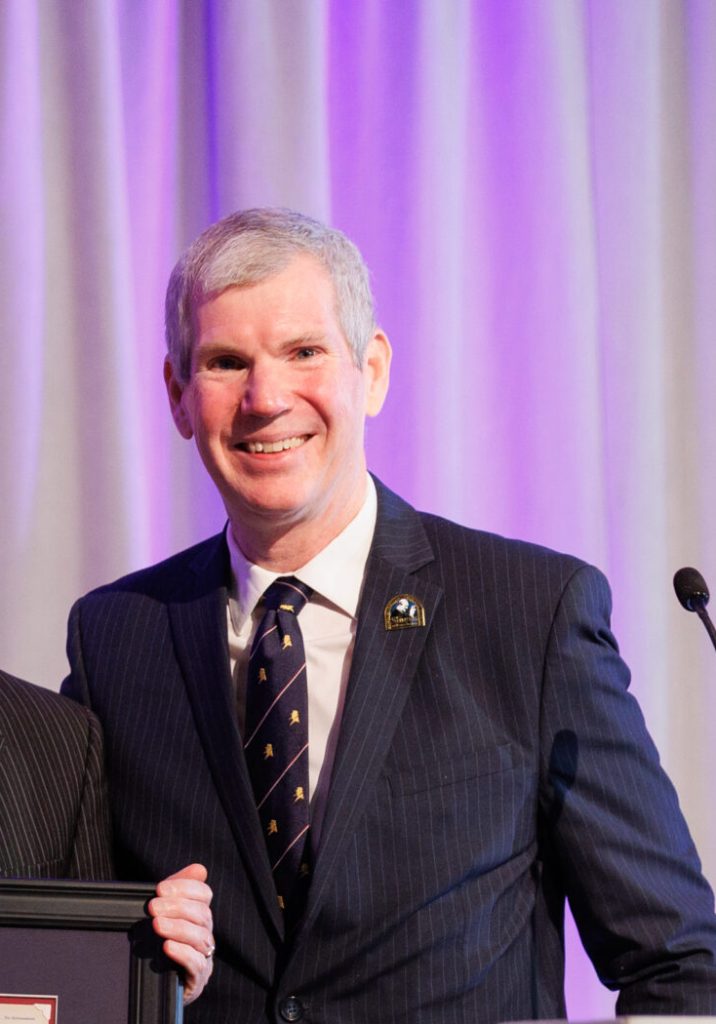
The Hottest Ticket in Town, 1946 By Donald P. Lofe, Jr. President and Chief Transformation Officer and Churchill Fellow, Westminster CollegeDirector, International Churchill Societ...
In fact, Churchill was more than ready for retirement. Only a year after his resignation, days before his eighty-second birthday, he finally admitted that he was not the man he was; he could not be Prime Minister now. Only a week after his last cabinet meeting, he and Clemmie went on holiday to Syracuse. Even though he was not the man he was, and despite his failing health, Churchill began his ‘retirement’ with some of his old vigour and energy. For an elderly man, he was remarkably resilient and determined. He embarked on holidays, painting tours and new writing projects. The first two volumes of his were published in 1956 and the remaining two volumes over the next two years; quite an achievement for a man in his eighties, even with the help of various historians and research assistants. As well as painting and writing, he devoted his energies to supporting causes that would improve Britain’s standing in the world. If he couldn’t do it through politics, he could do it through education. See Parliament's on Churchill's retirement, death and lying-in-state.
Much of the 1930s was devoted to travel and writing. Some of the former was for pleasure; Churchill had always relished travelling and enjoyed his time away from Britain. He spent many months on the continent – at expensive hotels, at the chateaux of friends and acquaintances, always with his easel and paints at hand Churchill used these long periods abroad, in the sunshine and among those who respected him, to recharge his batteries and restore his energy. His favourite holiday destination was the French Riviera, where he enjoyed the hospitality of wealthy American hostesses like Maxine Elliott and Consuelo Balsan, all of whom had genuine affection for Churchill and played host to him in their villas, providing him with much-needed relaxation. But Churchill could also earn money while travelling, too, supplementing the family’s meagre income by taking on paid lecture tours, writing books and popular newspaper articles (he had, after all, been one of the highest paid war correspondents in the world).
Paintings by Churchill are still being discovered. In 2012, a previously unknown oil entitled ‘Still Life with Orchids’ materialised, having been in the Sandys family ever since Churchill presented it to Margot Sandys, the young wife of his daughter’s father-in-law. It was put up for sale with an . Churchill’s paintings were reproduced during his lifetime in various publications and many of these originals have yet to be traced (these include those that accompanied his articles in the in 1921, 1922 and 1946, in the of 1954 and, most surprisingly perhaps, those that illustrated the catalogue of his Royal Academy Exhibition in 1959). And the whereabouts of those six paintings apparently sold in Paris following his first exhibition, at the Galerie Druet in Paris in 1921, remain unknown. After the Second World War, Churchill gave two paintings of the Pyramids near Cairo to Field Marshal Jan Smuts; the painting here remained with his family in South Africa but the other was stolen and has never been traced.
£100,000? £250,000? £700,000? £1 million? Churchill’s paintings can now command a considerable sale price, particularly if they have impeccable provenance (as in the case of the painting given to Truman). The Truman gift, ‘Marrakech’, (according to the auction house, Sotheby’s, ‘arguably superior’ to ‘View of Tinherir’ ‘in both composition and provenance’) was sold in December 2007 with a guide price of £300, 000–£500,000, achieving £468,700. At the time of the sale, the Sotheby’s specialist in twentieth century British art said: ‘The rise of Churchill through the art market over the past few years has been remarkable and we are thrilled to be bringing another of his most important and accomplished works to the saleroom at a time when interest in his amazing ‘pastime’ is stronger than ever ... ‘Marrakech’ ... is a superb example of Churchill at his very best’ (). (The less ‘superior’ painting entitled ‘View of Tinherir’ given by Churchill in 1953 as a gift to US General George Marshall, was sold at auction in 2006 by his granddaughter, for £612,800. It had been expected to fetch about £250,000.) A July 2007 auction saw a record £1,000,000 for a Churchill painting, ‘Chartwell Landscape with Sheep’, originally presented to Clare Booth Luce.
Churchill gave many of his paintings away as gifts (so although there are around five hundred-plus paintings by him known to exist, there are almost certainly more than this as records of these gifts weren’t always kept – and paintings still keep coming to light. President Roosevelt was only one such recipient. Presidents Truman and Eisenhower all received paintings from him, as did Viscount Montgomery, David Lloyd-George and US General George C. Marshall – as well as several young women in his family and social circle.
In the winter of 1935, on the recommendation of Sir John Lavery and other artist friends, Churchill travelled to Morocco for the first time for a painting holiday. He was inspired by the light and colours. He referred to the pink Atlas mountains as ‘paintaceous’ and painted some of his most refined watercolours – and one particularly skilled oil painting – here. He was entranced by the exotic, desert landscape and the colours – the pinks, whites and ochres contrasting with the brilliant blue of the desert sky. He gathered a large number of photographs on this and subsequent visits which still remain in the Studio archives at Chartwell.
Churchill didn’t only paint at Chartwell. His easel, brushes and paints accompanied him everywhere - while staying at homes of friends and family (at Hever Castle in Kent where he painted the colonnaded gardens, Breccles in Norfolk, the home of Clementine’s cousin where he painted the woods); on his holidays to the French Riviera (the Churchills rented a house in Cannes for six months in 1922); in Cairo (where he tackled painting the Pyramids), in Morocco, in America and Canada’s Rocky Mountains. Wherever he went, he took his painting paraphernalia. Churchill also painted at one of his favourite places, Blenheim Palace, where he was born and to which he regularly returned throughout his life. Churchill’s early skill with the brush can be seen in paintings completed at Mimizan in Les Landes, south of Bordeaux in France – an area protected from the Atlantic by massive sand dunes and pinewoods – where he stayed as the guest of his friend the Duke of Westminster who had a house there. Lavery, who later stayed at Mimizan with Churchill, painted the same scenes.
While supremely confident and self-assured in most fields of life, Churchill was generally modest about his achievements as a painter; he didn’t aspire to create masterpieces – he never claimed he had ever painted one – and didn’t intend to earn money from his pastime (unlike his other craft of writing). But he did have a certain ambition for his art. In 1921, only six years after he’d first tried his hand with a brush, he is said to have sold up to six paintings he’d exhibited in Paris under the pseudonym Charles Morin at Galerie Druet for the princely sum of £30.00 each. In 1947 he successfully submitted two paintings to the Royal Academy Summer Exhibition under the name David Winter (including ‘Winter Sunshine, Chartwell’, which had won a prize in 1927).
Churchill spent much of his leisure time at Chartwell, the house and grounds he bought in 1922 set in the rolling countryside of Kent. When he wasn’t bricklaying, building tree houses for the children or feeding his menagerie of animals, he spent much of his time painting, particularly in his ‘wilderness years’. His studio at Chartwell is today much as it was when he was alive and many of his paintings can be seen on its walls. He generally preferred light and colour and, when the weather wouldn’t comply and he couldn’t paint out of doors, he often resorted to still-life studies of fruit, bottles and glassware (hence ‘Bottlescape’, his painting of a range of drinks and glasses, both full and empty.) His nephew Peregrine has said that Churchill, on receiving a large bottle of brandy for Christmas, sent his children round the house looking for other bottles to put alongside it, for a still life. Peregrine told Richard M. Langworth, the editor of , that Churchill said: ‘Fetch me associate and fraternal bottles to form a bodyguard to this majestic container’ ().
Get the Churchill Bulletin delivered to your inbox once a month.
Δ
Join the International Churchill Society today! Membership starts at just $29/year.