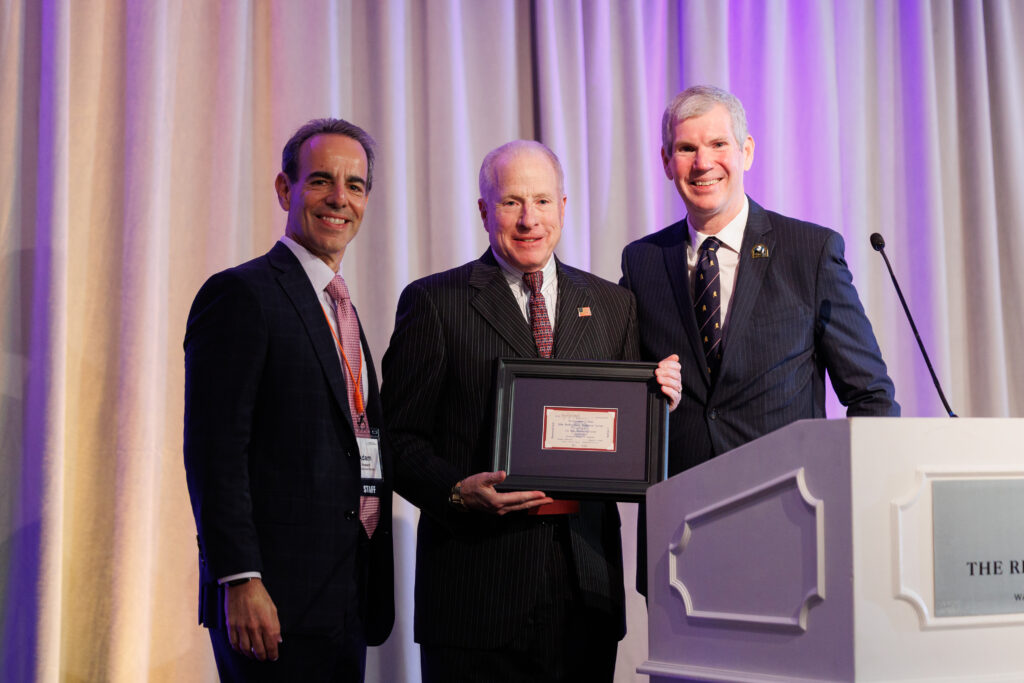
The Hottest Ticket in Town, 1946 By Donald P. Lofe, Jr. President and Chief Transformation Officer and Churchill Fellow, Westminster CollegeDirector, International Churchill Societ...
Churchill spent much of his leisure time at Chartwell, the house and grounds he bought in 1922 set in the rolling countryside of Kent. When he wasn’t bricklaying, building tree houses for the children or feeding his menagerie of animals, he spent much of his time painting, particularly in his ‘wilderness years’. His studio at Chartwell is today much as it was when he was alive and many of his paintings can be seen on its walls. He generally preferred light and colour and, when the weather wouldn’t comply and he couldn’t paint out of doors, he often resorted to still-life studies of fruit, bottles and glassware (hence ‘Bottlescape’, his painting of a range of drinks and glasses, both full and empty.) His nephew Peregrine has said that Churchill, on receiving a large bottle of brandy for Christmas, sent his children round the house looking for other bottles to put alongside it, for a still life. Peregrine told Richard M. Langworth, the editor of , that Churchill said: ‘Fetch me associate and fraternal bottles to form a bodyguard to this majestic container’ ().
In the early twentieth century, ‘popular’ culture was still a fairly novel concept. Prior to this, culture was considered primarily the domain of the elite classes: art forms such as poetry, fine art, operas and ballet reflected the refined tastes of the aristocracy.
In fact, Churchill was more than ready for retirement. Only a year after his resignation, days before his eighty-second birthday, he finally admitted that he was not the man he was; he could not be Prime Minister now. Only a week after his last cabinet meeting, he and Clemmie went on holiday to Syracuse. Even though he was not the man he was, and despite his failing health, Churchill began his ‘retirement’ with some of his old vigour and energy. For an elderly man, he was remarkably resilient and determined. He embarked on holidays, painting tours and new writing projects. The first two volumes of his were published in 1956 and the remaining two volumes over the next two years; quite an achievement for a man in his eighties, even with the help of various historians and research assistants. As well as painting and writing, he devoted his energies to supporting causes that would improve Britain’s standing in the world. If he couldn’t do it through politics, he could do it through education. See Parliament's on Churchill's retirement, death and lying-in-state.
While rock and roll emerged as a distinct category of music in the United States in the 1950s, its roots can be traced back to the 1920s and the influence of earlier genres such as jazz, rhythm and blues and gospel and country music. Prior to the 1950s televisions were still considered a luxury; not every household owned one and most people listened to music on the radio. As the television became a mainstream commodity, music fans could watch their favourite musicians performing live, encouraging the idolisation of pop stars and their lifestyles. In the aftermath of the Second World War teenagers were questioning the ‘proper’ ideals of their parents, and the rebellious youth culture represented by figures such as James Dean grew in force. Rock and roll music was the ideal outlet for young people’s sense of disillusionment and desire not to conform
During Churchill’s lifetime, sport developed from amateurism to professionalism moving from the public schools to the terraces. Amateurs like Lottie Dod and W.G. Grace soon gave way to professionals like Fred Perry and Sir Jack Hobbs as participation expanded from the wealthy to the working classes. Out of the factories sprung football teams like Arsenal FC and West Ham and, with the development of new stadiums and radio, sport soon became something that people listened to and watched as well as played. Aided by the rise of television, the improvement of sporting facilities and the emergence of the Paralympics, sport continued to grow in popularity throughout the twentieth century.
Throughout his life, Churchill exhibited a peculiarly individual sense of style, with a love of military uniforms, specially designed zip-up ‘siren suits’ (so called because they could be put on quickly when the air raid sirens sounded), his bow ties and his famous V for Victory hand gestures. Churchill was always drawn to fine clothes. In his younger days, he wore frock coats, trousers and vests as part of his Parliamentary wardrobe, and his suits and overcoats were made by the best tailors in London. As early as 1905, Churchill visited Poole & Co in Savile Row and he returned frequently in the years following, although later in his career a cutter was usually sent to Chartwell to measure Churchill at home. He eventually stopped ordering his suits from them – the expense became too great and he ended up owing them a considerable sum of money – but to celebrate the centenary of Churchill’s first order with them, Henry Poole & Co revived the chalk-striped flannel of the suit they made for him around 1936. See more on the Henry Poole website, .
No longer governed by cabinet meetings and appearances in the House of Commons, Churchill left Britain for months at a time to enjoy the sunshine on the continent – at various expensive luxury hotels, at Beaverbrook’s villa, La Capponcina, at Cap D’Ail and at Emery Reves’ villa at La Pausa near Roquebrune above Cap Martin. He made friends with the Greek millionaire ship-owner Aristotle Onassis and stayed on his yacht, ‘Christina’, eight times between 1958 and 1963. Ever since the early years of the First World War, and through the dark days of his career, painting had always provided solace and Churchill took to his pastime once again, now that he had more time to spare. He was drawn to the light and sunshine of the Riviera and the south of France became a favoured haunt of his in later years, where he could relax in the warmth, comfort and company of friends, paints at hand. In 1957, he spent as much time as possible in the south of France, staying for a month at La Pausa where he painted nearly every day. He sent Clemmie, who rarely accompanied him on these extended holidays, handwritten letters. Despite the sunshine and the pleasures of painting, old age was clearly taking its toll.
Many aspects of American popular culture we recognise today originated in the ‘roaring twenties,’ when America experienced an economic boom; the country’s wealth almost doubled within the decade. The age of consumerism had begun. Popular culture was represented not just by art forms such as music and cinema but also in material goods, which could now be mass-produced like never before. The first assembly line, created by car manufacturer Henry Ford in 1913 to create Ford’s T-Model, revolutionised the world of manufacture. Products like radios, washing machines, vacuum cleaners and automobiles were mass-produced, fuelling the booming advertising industry. The legacy of Henry Ford is satirised in Aldous Huxley’s dystopian novel (1932), in which Ford is worshipped like a god.
While supremely confident and self-assured in most fields of life, Churchill was generally modest about his achievements as a painter; he didn’t aspire to create masterpieces – he never claimed he had ever painted one – and didn’t intend to earn money from his pastime (unlike his other craft of writing). But he did have a certain ambition for his art. In 1921, only six years after he’d first tried his hand with a brush, he is said to have sold up to six paintings he’d exhibited in Paris under the pseudonym Charles Morin at Galerie Druet for the princely sum of £30.00 each. In 1947 he successfully submitted two paintings to the Royal Academy Summer Exhibition under the name David Winter (including ‘Winter Sunshine, Chartwell’, which had won a prize in 1927).
Get the Churchill Bulletin delivered to your inbox once a month.
Join the International Churchill Society today! Membership starts at just $29/year.