
Bulletin #214 - March 2026
Regal Relations
March 18, 2026
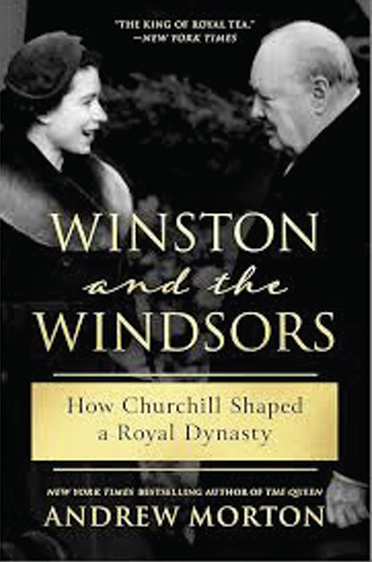
Andrew Morton, Winston and the Windsors: How Churchill Shaped a Royal Dynasty, Hanover Square Press, 2024, 400 pages, $32 / £25. ISBN 978–1335250995
Review by Mina Raj
In an era of heightened political polarization, divisive culture wars, and antimonarchical sentiment closely tied to intergenerational divides, Andrew Morton’s Winston and the Windsors: How Churchill Shaped a Royal Dynasty offers an opportunity for leaders and politically minded citizens alike to reflect on Britain’s relationship between its elected leaders and hereditary monarchs. In penning the story of the efforts of Britain’s most revered Prime Minister to uphold the nation’s monarchical tradition, Morton tackles these modern challenges by promoting a comparative lens between the past and the present. Most of this comparison is implicit, yet occasionally he draws explicit connections, notably when he compares the necessary intervention by Prime Minister Winston Churchill in impressing
upon Prince Philip the duties of the Queen’s husband to that by Prime Minister Boris Johnson “when Prince Harry decided to step down as a senior royal.”
As a self-proclaimed “leading authority on modern celebrity,” Morton contributes to the nowfamiliar conversations around royal duty and the relationship between premier and sovereign by tracing how images around Winston Churchill and the monarchy were mutually reinforcing. Morton’s previous books chronicle the life and celebrity of prominent British and American figures, including Princess Diana, Meghan Markle, Tom Cruise, and Wallis Simpson. Morton’s newest book chronologically traces Churchill’s hot and cold relationship with the British monarchy, arguing that Churchill’s political career was initially bolstered by his intimate relationship with the monarchy, while subsequently utilizing his own acquired power to bolster the monarchy in turn.
Churchill, even compared with other aristocrats of his time, had a uniquely intimate connection with the Royal Family. Morton emphasizes this by first charting the intimacy between Winston’s mother Jennie and “Bertie,” the Prince of Wales, who later became King Edward VII. They “picked up a private relationship,” Morton notes, which became “a secret friendship that raised eyebrows at Court.” Meanwhile, Winston’s father, Lord Randolph Churchill, also enjoyed a close friendship with “Bertie.” Through these familial connections, Winston grew up in proximity to the Prince of Wales and later developed his own close relationship with “Bertie,” who “would take on, so consistently, the role of personal tutor [to Winston]…with fatherly indulgence.” This relationship later developed into one akin to a prodigal son and father, with the old King harboring a “soft spot for young Churchill,” while the future Prime Minister pursued his more radical beliefs, including suggesting abolition of the House of Lords.
The bulk of Morton’s text naturally covers Churchill’s relationship with the Windsors during and after the Second World War, when Churchill served King George VI and then Queen Elizabeth II as Prime Minister. Nevertheless, Morton argues that it was King Edward VII’s affection for Churchill that emboldened the young politician to take the actions he did, thereby securing his reputation as a dashing leader with strong convictions. This image, acquired at an early age, later helped Churchill secure his position as Prime Minister in 1940. Churchill’s ability to transmogrify professional relationships with reigning monarchs into close personal friendships became a hallmark of his political career. Morton tactfully suggests that these close personal ties facilitated Churchill’s pushing of boundaries and confidences to intervene in crises that had the potential to undermine Britain and the monarchy, from King Edward VIII’s abdication in 1936 and the acquisition of the Cullinan Diamond (still the largest ever found) in 1907 to the libel case against Edward Mylius (a journalist imprisoned in 1911 for accusing George V of bigamy) and the postponed publication of the Windsor File, which suggested that the Duke of Windsor (formerly Edward VIII) possessed Nazi sympathies.
What is surprising is the significant role that the Duke of Windsor plays in these chapters. While the abdication crisis and its aftermath warrant considerable attention— especially given the outsized impact it had on Churchill’s career—given the duke’s lack of power following his abandonment of the throne, Morton places too much emphasis on the aftermath of the crisis. In any case, through all these great events in the House of Windsor, Churchill is portrayed as a man adept at handling crises. This statesmanlike conduct at critical junctures facilitated his personal relationships with reigning monarchs. A dynamic of shared trust developed between sovereign and loyal monarchist.
Morton’s version of events is supported primarily by secondary sources. He consistently draws upon reliable authorities such as Andrew Roberts, Randolph Churchill, Martin Gilbert, and Roy Jenkins to forge his argument. Although Morton does pull evidence from the Churchill Archives, contemporary newspaper articles in The Times, and Winston Churchill’s own writings, his heavy reliance on secondary sources, evident in his footnotes, borrows too heavily from other literature, rather than offering new analyses. This approach is perhaps most noticeable in the final chapters, which take up Churchill’s relationship with the late Queen Elizabeth II, especially since these accounts are now well-trodden in the popular imagination after the broadcasting of The Crown and its recollection of this relationship.
I highlight the popular imagination here because the conversational style of the book suggests that Morton intends it for a general audience. In line with the tone of his previous works—which The Guardian has described as “gossipy”— Morton crafts an easily understandable narrative, rife with foreshadowing, wit, and cunning transitions, while often referring to events mentioned earlier. His dramatic prose captures the tension of every event and crisis, even if he does sensationalize at times to captivate his audience further. If Morton does not explore new topics, he does provide an entertaining presentation well suited to the modern political climate in the United States and Britain.
Mina Raj is a senior at Harvard University. This review appears in the latest issue of The Finest Hour.





Subscribe
WANT MORE?
Get the Churchill Bulletin delivered to your inbox once a month.