
Bulletin #214 - March 2026
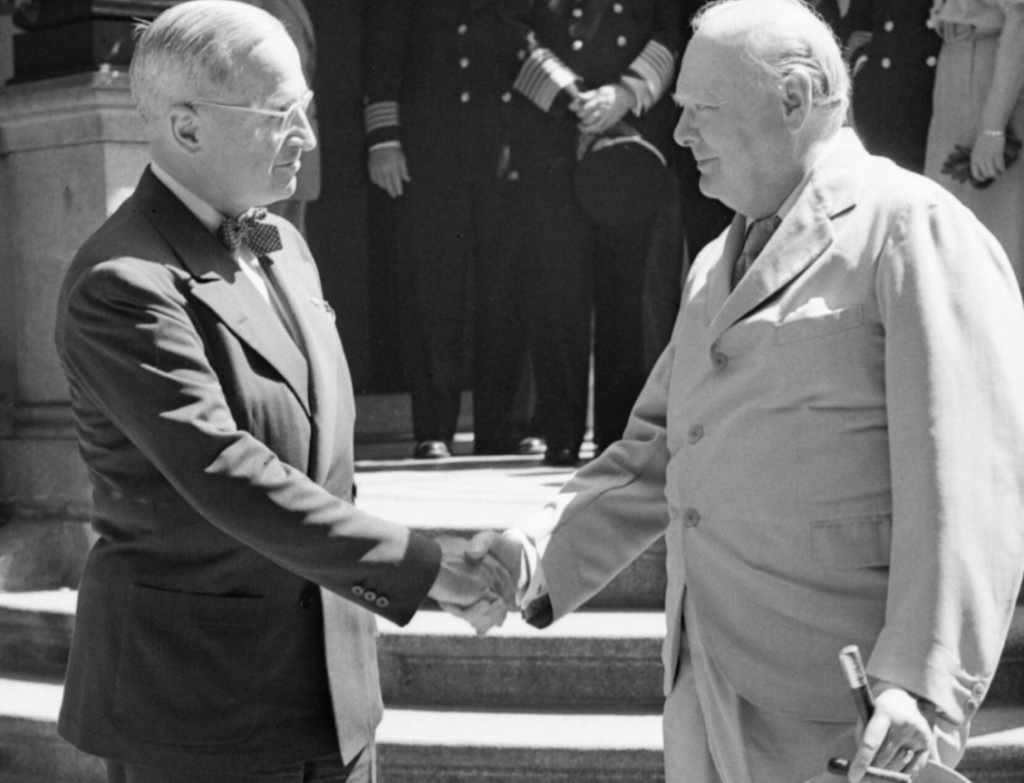
Churchill and Truman: A Special Relationship
March 18, 2026
By ADAM HOWARD, ICS Executive Director
Eighty years after Winston Churchill delivered his famous Sinews of Peace address at Westminster College, the speech more commonly known as the “Iron Curtain” speech, it continues to resonate as a defining moment in the early Cold War. To mark both the anniversary and the warm relationship between Churchill and President Harry S. Truman, the International Churchill Society will partner later in March with the Truman Library Institute for panel discussions reflecting on the speech and its enduring impact.
Two conversations among historians will take place; one on March 26 at the National Churchill Leadership Center at George Washington University and another on March 28 at the annual meeting of the Society for Military History. The panels will be available in April on YouTube, Spotify, and Apple Podcasts through the Society’s podcast program, The End of the Beginning.
While the speech itself has become one of the most quoted statements of the twentieth century, the anniversary also provides an opportunity to reflect on something equally important: the personal and political relationship between Churchill and Truman. Their partnership, forged during the final months of the Second World War and strengthened in the uncertain years that followed, helped shape the foundations of the transatlantic alliance that defined the Cold War era.
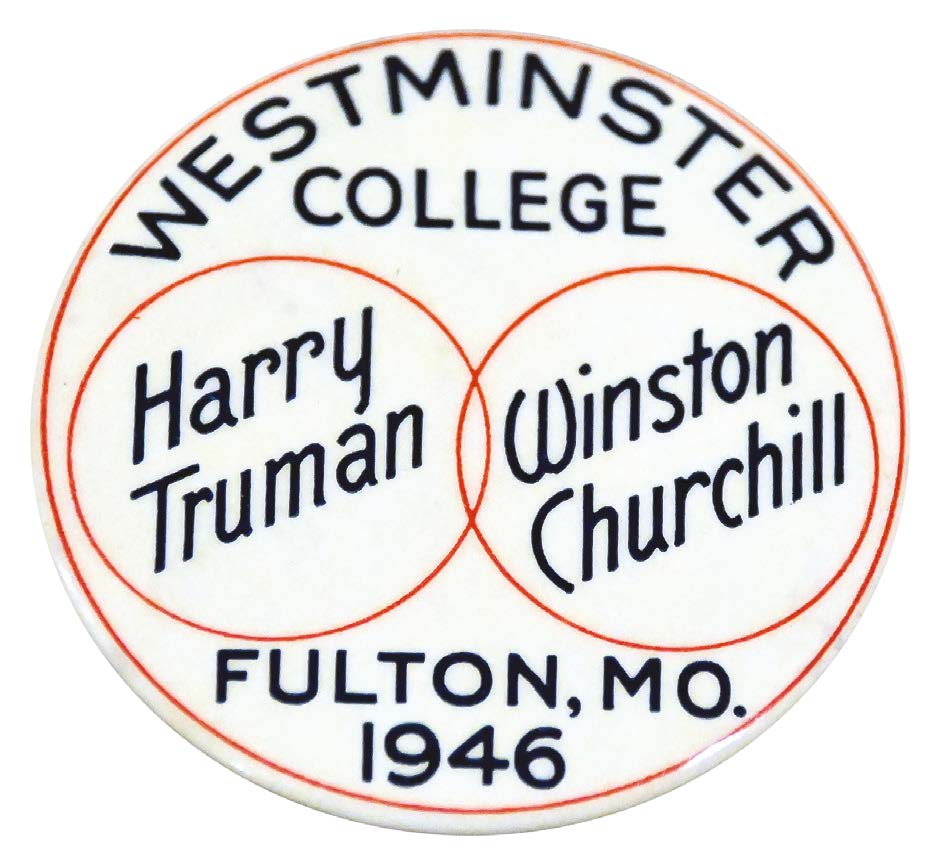
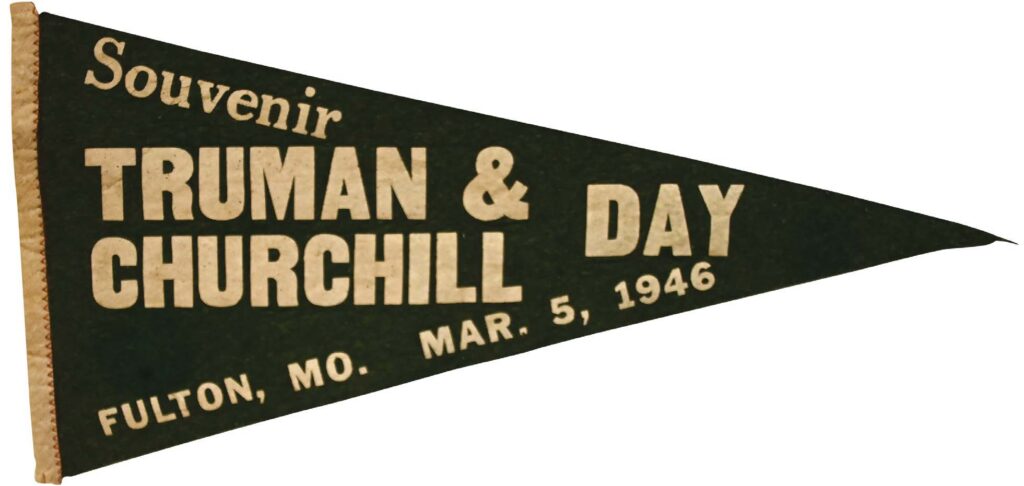
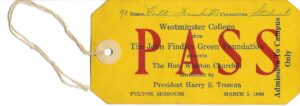
Churchill’s appearance in Fulton owed much to Truman personally. The invitation from Westminster College gained decisive momentum when Truman added a handwritten note urging Churchill to accept and promising that he would introduce him. With the encouragement of the U.S. president, Churchill agreed to travel to the small college in Missouri, an unlikely setting for what would become one of the most famous speeches of the twentieth century.
When Churchill arrived in March 1946, the wartime alliance between Britain, the United States, and the Soviet Union was already showing signs of strain. Europe lay devastated, and the Soviet Union was consolidating its influence across much of Eastern Europe. Churchill’s speech famously warned that “from Stettin in the Baltic to Trieste in the Adriatic an iron curtain has descended across the Continent,” a phrase that quickly entered the political vocabulary of the Cold War.
Yet the speech did not initially receive the universal acclaim it later achieved. Many Americans in 1946 still hoped for continued cooperation with the Soviet Union, and some critics feared Churchill was encouraging confrontation with a recent wartime ally. Editorial reaction was mixed, and in many quarters the speech was received coolly. Only as tensions with the Soviet Union deepened in the late 1940s did Churchill’s warning come to be widely viewed as prescient.
The deeper significance of the moment lay in Truman’s presence on the platform. By inviting Churchill and introducing him to the audience, the American president signaled that Churchill’s warnings about the postwar world were part of a broader conversation already emerging among Western leaders.
Churchill and Truman had come to know each other during the closing months of the Second World War. When Truman unexpectedly became president following the death of Franklin D. Roosevelt in April 1945, he inherited not only the responsibilities of wartime leadership but also the delicate management of relations among the Allied powers. Churchill, still serving as Britain’s prime minister, quickly recognized Truman as Roosevelt’s successor in guiding the Western alliance.
In many ways the two men could hardly have been more different. Churchill was the aristocratic British statesman whose soaring oratory had rallied Britain during its darkest hours. Truman was the plainspoken former senator from Independence, Missouri, who had risen unexpectedly to the presidency. Yet despite their contrasting personalities and backgrounds, the two leaders developed a strong mutual respect.
Both men shared an instinctive skepticism about Soviet intentions in postwar Europe. Churchill tended to express these concerns in grand historical language, drawing on his deep sense of the long sweep of European history. Truman, by contrast, approached the issue with characteristic bluntness and practicality. But their strategic instincts increasingly aligned as events unfolded in 1945 and 1946.
The Fulton address emerged from this growing understanding. By inviting Churchill to speak, Truman allowed a respected international figure to articulate concerns about Soviet expansion that American policymakers were themselves beginning to recognize. Churchill, for his part, understood that the significance of his message depended in part on the quiet endorsement implied by Truman’s presence.
Their partnership continued throughout Truman’s presidency. Churchill lost office in Britain’s 1945 election but remained leader of the opposition until returning to the premiership in 1951. During those years, he continued to advocate close Anglo-American cooperation and maintained frequent contact with U.S. officials. Truman, meanwhile, presided over the development of the policies that would define the early Cold War, including the Truman Doctrine, the Marshall Plan, and the creation of the North Atlantic Treaty Organization.
Churchill supported these initiatives enthusiastically, viewing them as practical expressions of the transatlantic partnership he had long championed. The alignment between Churchill’s vision and Truman’s policies helped establish the political and strategic architecture that would guide the Western alliance for decades.
Yet the relationship between Churchill and Truman was not defined solely by public speeches or international strategy. It was also marked by genuine personal warmth and mutual admiration. Truman respected Churchill’s courage and rhetorical brilliance, while Churchill admired Truman’s decisiveness and moral clarity in moments of crisis.
Their friendship endured even after both men had left office. One memorable example occurred in 1956, when Truman traveled to visit Churchill at Chartwell, Churchill’s beloved country home. The visit brought together two aging statesmen who had helped guide the Western world through the uncertain early years of the Cold War.
By the time of Truman’s visit, the strategic framework that had begun to take shape in the late 1940s was firmly established. NATO had become the cornerstone of Western security, Western Europe was recovering economically, and the United States had embraced a long-term leadership role in defending democratic nations. The partnership between Churchill and Truman had helped guide this transformation from wartime alliance to Cold War strategy.
Eighty years after Churchill spoke in Fulton, the Iron Curtain speech remains a powerful symbol of the early Cold War. But it also serves as a reminder that international history is shaped not only by institutions and policies but also by relationships between leaders. The special relationship between Churchill and Truman helped define the character of the transatlantic alliance at a pivotal moment in world history.




Subscribe
WANT MORE?
Get the Churchill Bulletin delivered to your inbox once a month.