
Bulletin #213 - Feb 2026
Winston Churchill: The First Rock Star
February 23, 2026
By ADAM HOWARD, ICS Executive Director
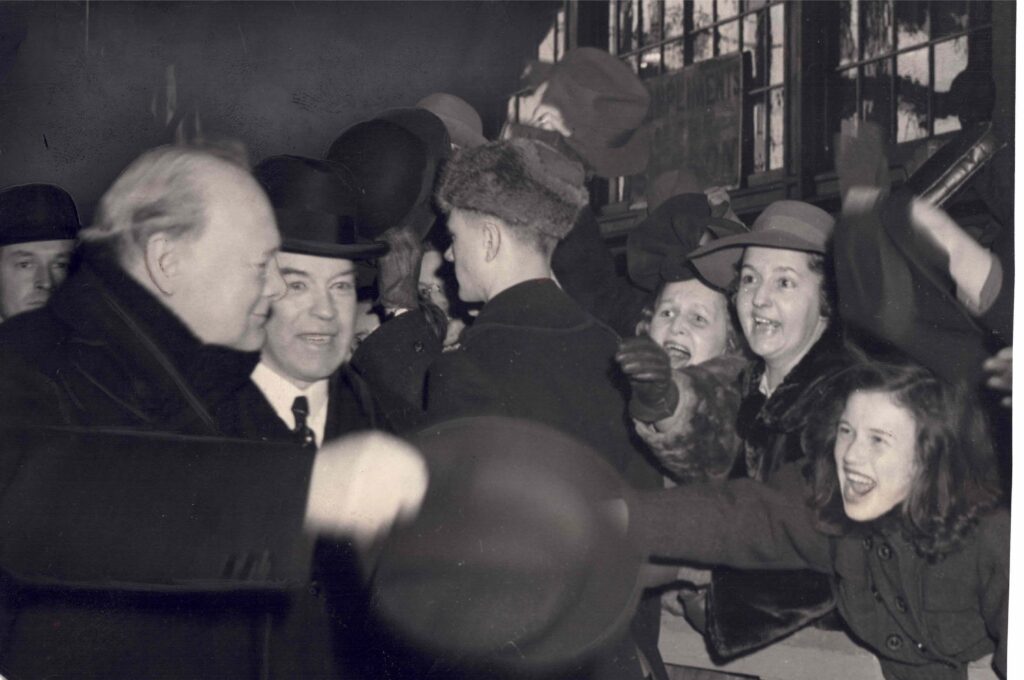
When people think of “rock stars,” they imagine figures who live on the edge, create art that resonates far beyond their generation, and cultivate a mythos rooted in hardship, rebellion, and resilience. Long before Elvis Presley, the Beatles, or Nirvana, Winston Churchill embodied many of these qualities. Though remembered primarily as the statesman who rallied Britain during its darkest hours in World War II, Churchill’s life reads uncannily like that of a rock star. From the harsh emotional treatment he received from his parents to his reckless brushes with death, and his artistic output as both a writer and painter, Churchill’s biography contains all the raw material of a life lived at full volume. Calling him the first rock star is more than metaphorical; it underscores the depth of his charisma, the performative edge of his public persona, and the enduring cultural resonance of his life story.
Tough Beginnings: The Distant Parents of a Rock Star Childhood
The mythology of many rock icons begins with difficult family lives, marked by emotional neglect, tough love, or outright rejection. Churchill’s childhood fits this pattern. His father, Lord Randolph Churchill, was a brilliant but volatile politician whose emotional severity and unpredictability denied his son the affirmation he desperately sought. His mother, Jennie Jerome, an American socialite, dazzled high society but was often distant from the daily realities of her son’s upbringing. Letters reveal young Winston’s repeated pleas for attention, often unanswered.
In rock lore, childhood neglect fuels the hunger for recognition and the rebellious independence that define a star’s rise. Churchill, like so many later cultural icons, learned early that approval would not come easily. His parents’ emotional absence hardened him, leaving him both insecure and determined to prove himself. He compensated by cultivating a larger-than-life persona, a pattern echoed by countless artists who transform early pain into the drive for greatness. Churchill’s sense of destiny, his conviction that he was meant to achieve remarkable things despite neglect, mirrors the way young rockers channel personal struggle into performance and myth-making.
Living on the Edge: Churchill’s Brushes with Death
Another hallmark of the rock star archetype is a reckless embrace of danger. Churchill repeatedly flirted with mortality, taking risks most would have deemed foolhardy. As a young cavalry officer in India and Sudan, he exposed himself to enemy fire, hungry for glory. In South Africa, as a war correspondent, he was captured by the Boers but executed a daring escape that catapulted him into headlines. His life was punctuated by near-fatal experiences: falling off horses, surviving plane crashes, enduring car accidents, and contracting life-threatening illnesses.
Churchill’s relationship to danger resembled that of a rock star on tour, tempting fate again and again. Like Jim Morrison or Keith Richards, he seemed drawn to situations that tested mortality.
These brushes with death became part of his mystique, reinforcing the sense that he lived at a higher pitch than ordinary people. When he stood before Parliament in 1940 to declare he had nothing to offer but “blood, toil, tears, and sweat,” he spoke not only as a statesman but as someone who had lived life with raw intensity. His authenticity came from surviving the edge, a trait that links him directly to the magnetism of later rock icons.
The Artist: Writer and Painter
A rock star is not only a performer but also an artist, someone who channels personal experience into creative expression. Churchill fits this mold perfectly. He wrote with the energy of a man trying to capture the world in words. His historical works and speeches combined literary flourish with emotional immediacy. Winning the Nobel Prize in Literature in 1953, a rare honor for a politician, underscores the artistic seriousness of his work.
But Churchill was not only a writer. He painted more than 500 canvases over his lifetime, approaching the craft with the same intensity he brought to politics: as an outlet, a form of self-expression, and a way of processing turbulent emotions. In both writing and painting, he displayed the restless creativity of a rock star. He refused to be confined to a single identity, moving fluidly between politics and art, public leadership and private reflection. His dual life as statesman and artist foreshadowed the multidimensional careers of later cultural figures who refuse to be pinned down.
The Performance of a Lifetime
Churchill’s public life resembled the performance of a rock star. His speeches were not merely addresses; they were stage acts, complete with rhythm, crescendo, and emotional power. He crafted phrases with the care of a songwriter shaping lyrics and delivered them with the flair of a frontman commanding an audience. Churchill understood performance; how to hold attention, inspire, and shape myth.
His image—cigar clenched in teeth, V-for-victory hand raised—was as carefully curated as any rock star’s signature look. He projected confidence, eccentricity, and defiance. His gravelly yet lyrical voice became a soundtrack for the British war effort. Just as later rock stars would embody the spirit of their generation, Churchill came to symbolize the endurance of Britain and the free world during its darkest hour.
Legacy and Cultural Resonance
Churchill’s rock star qualities are evident in the endurance of his legacy. His life has inspired countless biographies, films, and works of popular culture. Like a rock legend, his story is endlessly retold, remixed, and reinterpreted. People debate his virtues and failures, yet his charisma remains undeniable. Even his darker sides—his arrogance, stubbornness, and racial views that reflected and reinforced imperial hierarchies—have become part of the ongoing reassessment of his life. Just as fans wrestle with the moral failings of rock stars whose brilliance coexisted with deeply troubling beliefs or behavior, Churchill’s flaws are inseparable from the narrative of his greatness, complicating rather than erasing it.
Churchill’s legacy unfolds much like that of a legendary musician, continually rediscovered through new editions, reinterpretations, and commemorations. He endures not only as a statesman but as a cultural icon, a life that reflects the drama, creativity, and contradictions of the human experience.
Before Rock Stars, There Was Winston Churchill
Long before celebrity culture had a name, Winston Churchill understood how personality, performance, and storytelling could move millions. He was not just leading Britain through war; he was projecting an image, crafting a voice, and building a legend that still resonates today. That mix of danger, artistry, defiance, and sheer presence is exactly what later generations would call star power.
Before guitars, stadium lights, and screaming fans, there was Churchill: bold, theatrical, endlessly quotable, and impossible to ignore — a statesman whose life carried the unmistakable electricity of what we now recognize as a rock star.



Subscribe
WANT MORE?
Get the Churchill Bulletin delivered to your inbox once a month.