
Bulletin #213 - Feb 2026
Why Churchill Matters
February 23, 2026
Especially Now
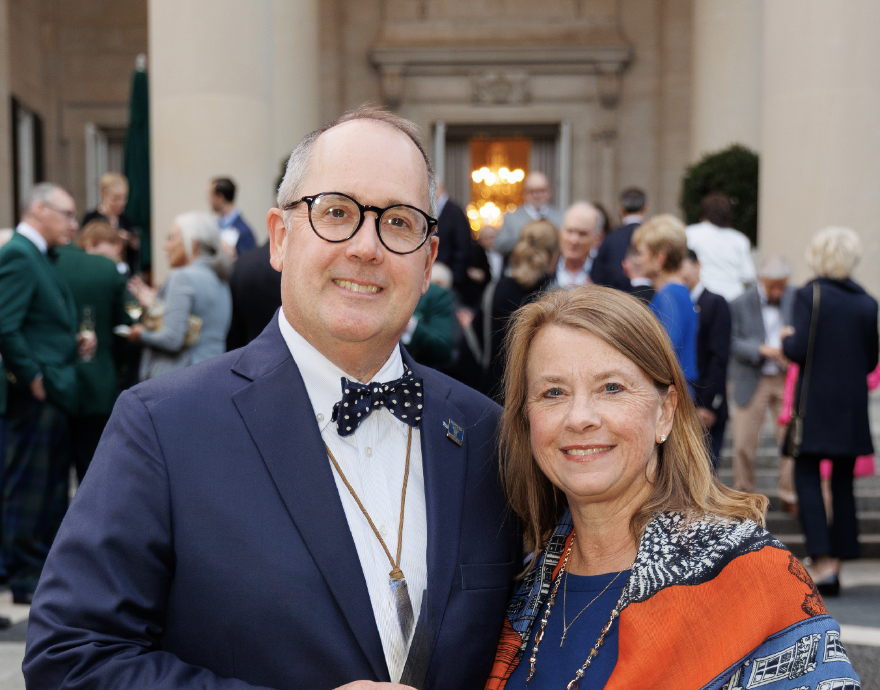
By Hal Oakley
Director, International Churchill Society Board
History is not something we simply study. It is something we inherit. With that inheritance comes responsibility.
Like many Americans, especially growing up in Illinois, one of my first great historical heroes was Abraham Lincoln. His moral clarity in the face of division, his refusal to abandon principle when it was unpopular, his steadfast defense of democratic government, and his perseverance in facing challenges throughout his life have shaped the way I think about leadership.
Over time, another figure joined Lincoln in that pantheon of heroes: Winston Churchill.
Churchill did not lead America, but he defended the very idea that makes America possible. In 1940, when the survival of liberty hung in the balance, he understood that the fight was larger than Britain. It was about preserving the foundations of free government itself. When the United States entered the war, Churchill became not merely an ally, but a partner in shaping the modern democratic world.
My first close-up encounter with Churchill’s legacy happened when I enrolled at Westminster College in Fulton, Missouri, in 1986. Churchill delivered his famous “Iron Curtain” address there in 1946. Standing many times over the years in the very place where he spoke so candidly about the future of freedom, I have been struck not just by nostalgia, but by urgency. Churchill was not simply reflecting on war. He was warning about the responsibilities that come with power and liberty.
Later while I served as Chair of the college’s Board of Trustees, America’s National Churchill Museum at Westminster College forged a formal relationship with the International Churchill Society as part of its responsibility to educate others about Churchill and the ideals he championed in the “Iron Curtain” address.
Those experiences through Westminster College and America’s National Churchill Museum deepened my appreciation for the transatlantic bond and clarified for me why Churchill still matters.
The partnership at the core of that bond—Churchill and Roosevelt, Britain and America—remains one of the defining relationships of the twentieth century. It was built on shared values: constitutional government, individual liberty, courage under pressure, and a belief that free societies are worth defending.
As we approach America’s 250th anniversary in 2026, those themes feel especially urgent.
The International Churchill Society has chosen to center our 2026 conference in Philadelphia around the theme “Churchill & America.” There could be no more fitting place. Philadelphia is where the American experiment began. It is where independence was declared and where a Constitution was drafted to secure liberty for generations.
Churchill revered that constitutional tradition. He studied it. He defended it. He often reminded audiences that democratic government, though imperfect, is the best system ever devised for preserving freedom.
As we gather in Philadelphia in October 2026, during the celebration of America’s Semiquincentennial, we will not simply be looking backward. We will be asking what Churchill’s example means for the next 250 years. What does courage look like today? What does statesmanship require in an age of uncertainty? How do we preserve transatlantic bonds in a changing world?
Churchill matters because he reminds us that democracy survives only when individuals are willing to stand for it.
Lincoln understood that. Churchill lived it. Now, as America reflects on two and a half centuries of constitutional self-government, it is worth asking what kind of leadership the next century will demand.
I am excited about what lies ahead for the International Churchill Society. The 2026 conference in Philadelphia will bring together scholars, public servants, military leaders, and citizens who care deeply about the transatlantic partnership and the future of democratic governance.
This is more than a conference. It is a moment.
A moment to celebrate the ideas that bind Britain and America together. A moment to recommit ourselves to the defense of liberty. A moment to ensure that Churchill’s voice continues to inform the next generation of leaders.
History is not finished with us. Churchill still has something to say.



Subscribe
WANT MORE?
Get the Churchill Bulletin delivered to your inbox once a month.