


|
|
 For ten years Churchill Centre editors and webmasters have wished to provide material on our website that is either too long for Finest Hour or of such immediate interest and importance as to deserve a "faster track" than Finest Hour can provide. The advent of our new website is an appropriate time to introduce FINEST HOUR ONLINE (FHO): vital articles by scholars and lay authors which bring an added dimension to Churchill Studies. For the convenience of users, articles are accompanied by abstracts, so that you can review an article's thrust and content before reading it.
|
|
Written by David Freeman
|
|
Friday, 12 February 2010 00:00 |
|
Abstract: The 2008 International Churchill Conference in Boston had as its theme “Churchill and Ireland,” and numerous papers have been published in Finest Hour 142-145 under the rubric “Churchill Proceedings,” which are downloadable by registered users of this website.
One of the most important omissions from the printed pages was the following paper by Finest Hour contributing editor David Freeman, who delivered the original in person. The paper in its present form was substantially enlarged for a forthcoming book, The Churchills and Ireland: Connections and Controversies from the 1660s to the 1960s (Irish Academic Press). It is based on Dr. Freeman’s presentation at a conference of the same name in Belfast in June 2009 sponsored by the University of Ulster. Copyright © David Freeman, 2010.
Winston Churchill enjoyed a good joke. According to Dennis Kelly, one of Churchill’s former literary assistants, the following was one of his boss’s favorite stories, one that ‘he used to adore telling’: ‘British bomber over Berlin, caught in the searchlights, flak coming up, one engine on fire, rear-gunner wounded, Irish pilot mutters, “Thank God Dev kept us out of this bloody war.”’i
|
|
Read more...
|
|
Written by Antoine Capet
|
|
Monday, 31 August 2009 19:47 |
|
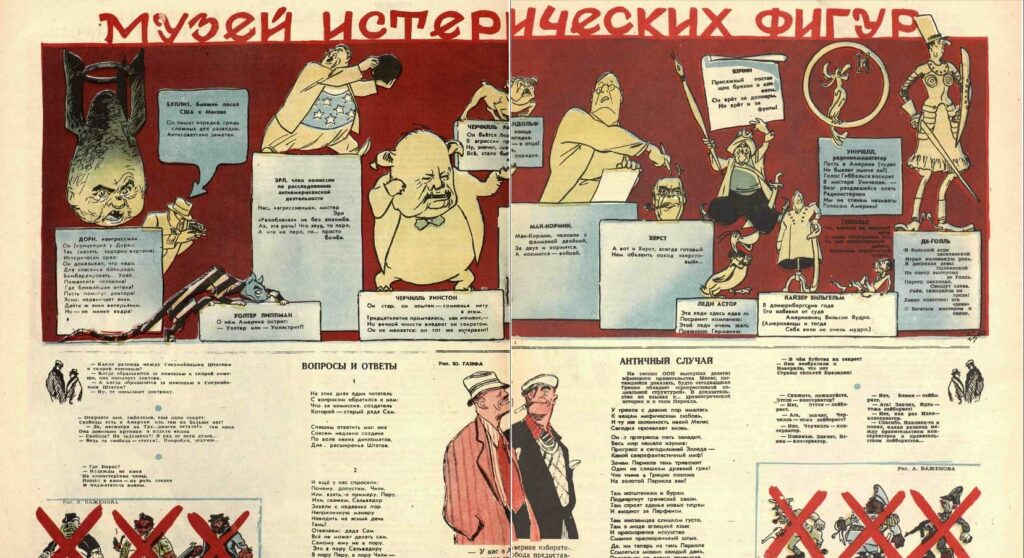
Abstract: Contrary to much of the literature that depicts him first and foremost as a lifelong foe of communism, Winston Churchill was actually quite pragmatic regarding his opposition to various forms of totalitarianism, a worldview which explains his near-rabid anti-communism following the First World War and also his gradually softening change as he began to see fascist Nazi Germany as the greatest threat to a stable world order in the years before the Second World War. It is this pragmatism and a basic hostility to tyranny, then, that best explains Churchill’s approach to all forms of totalitarianism.
Antoine Capet, FRHistS, is Professor of British Studies at the University of Rouen (France). He has edited a number of collections on Britain’s diplomatic and military policy in the 20th century, the latest being Britain, France and the Entente Cordiale since 1904 (Palgrave Macmillan, 2006). He has been Editor of the “Britain since 1914” section of the Royal Historical Society Bibliography since 2001 and he sits on the International Board of Twentieth Century British History.
Last March, I was invited to deliver a keynote lecture on “Churchill, Fascism and the Fascists” at the University of Lille (France), and when Dr Michael Kandiah asked if I were interested in giving a paper at the Cold War Conference which he was organizing, I immediately thought of “Churchill and Bolshevism” as the obverse of the same coin.
|
|
Read more...
|
|
Written by Sir Martin Gilbert CBE
|
|
Sunday, 31 May 2009 00:00 |
Abstract: When he was Home Secretary (February 1910-October 1911) Churchill was in favor of the confinement, segregation, and sterilization of a class of persons contemporarily described as the "feeble minded." The most significant letter Churchill wrote in support of eugenics was not, however, deliberately left out of the official biography by Randolph Churchill for reasons of embarrassment, but simply through oversight. -Ted Hutchinson The author (www.martingilbert.com) is an honorary member and trustee of The Churchill Centre, is the official biographer of Sir Winston Churchill and the author of more than eighty books, on the two World Wars, the Holocaust and 20th century history as well as Churchill.
Randolph Churchill has been accused of deliberately omitting from his narrative volumes and from the companion volumes-because he was ashamed of it-a letter from Churchill to Asquith, written in December 1910, stating that "The unnatural and increasingly rapid growth of the Feeble-Minded and Insane classes, coupled as it is with a steady restriction among all the thrifty, energetic and superior stocks, constitutes a national and race danger which it is impossible to exaggerate."
|
|
Read more...
|
|
Written by Justin D. Lyons
|
|
Monday, 18 May 2009 00:00 |
|
First Principles #25
Abstract: Although Winston Churchill personally admired Franklin Roosevelt and felt that the President¹s domestic policies were conceived with the best of intentions, he had serious reservations about the New Deal. His criticisms (most of which were written in the 1930s) centered on the idea that collectivist trends were ultimately destructive of personal freedom, and that even in times of great domestic political crisis the liberties and freedoms of the individual must remain supreme above the needs of the state.
Churchill was particularly hostile to the concepts of redistribution of wealth, and felt that even small steps in these directions, taken at a moment of turmoil, could someday lead to the destruction of personal freedom. The key to protecting against this in America, Churchill believed, was to honor the ideals of the U.S. Constitution and the Declaration of Independence in times of tranquility and crisis alike. --Ted Hutchinson
|
|
Read more...
|
|
|
|
|
|