Uncategorized
Event Opportunity: Churchill & Science of Warfare
March 27, 2026
The Financier, the Prime Minister, and the Laboratory
Tuxedo Park, New York
May 15 & 16, 2026
The Anglo-American alliance was not inevitable. It was built through persistence, persuasion, trust, and shared moral purpose, often under extraordinary pressure. As America approaches its semi quincentennial, that history invites serious reflection.
The International Churchill Society is marking America’s 250th with “Churchill & America” programming throughout the year. We invite you to join us at an exclusive fundraising lunch and historical briefing at the site of the Loomis Laboratory in Tuxedo Park, NY. Join us as we walk the grounds where the laboratory stood, the historic area, and where Churchill’s “Great Design” for Anglo-American cooperation first took flight.
The Tizard Mission: The Churchillian Gamble
The year 1940 was Britain’s “Darkest Hour.” Winston Churchill knew that without a technological miracle, the U-boat blockade and the Luftwaffe would eventually strangle the island nation. In a move of unprecedented trust, Churchill authorized the Tizard Mission to bring Britain’s most precious secrets to the United States. The centerpiece was the resonant cavity magnetron, a device capable of generating high-power microwaves that could detect objects at vast distances.
Event Overview & Opportunity
Friday, May 15: Dinner at The Links Club in New York City
Saturday May 16: Travel to Tuxedo Park for tour of area & luncheon with historian
Cost: $3,000 donation ($5,000 for couples); transportation to Tuxedo Park provided.
When the British mission arrived, they did not find their most effective partner in the halls of the Pentagon, but in the private laboratory of Alfred Loomis. Recognizing the magnetron’s potential as “the most valuable cargo ever brought to our shores,” Loomis didn’t wait for congressional funding or military approval. He used his own financial resources to immediately assemble a “brain trust” and prototype the first microwave radar sets. This private-public partnership, catalyzed in Tuxedo Park, led to the founding of the MIT Radiation Laboratory. It provided the “eyes” that allowed Allied pilots to spot U-boat snorkels in the Atlantic and bombers through the clouds of Europe. As the saying goes: “The Atomic Bomb ended the war, but Radar won it.”
 The Tower House: A Sanctuary for Genius
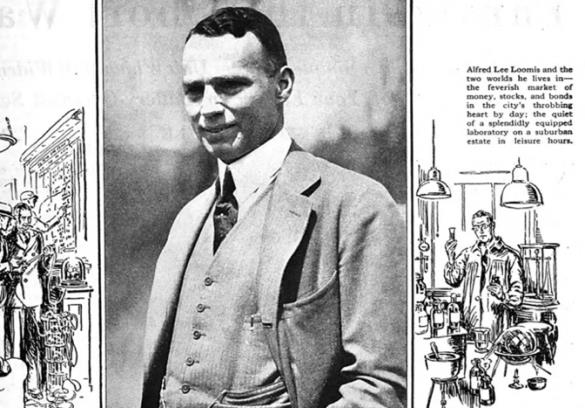
Alfred Lee Loomis remains one of the most enigmatic and consequential figures of the twentieth century. A towering figure on Wall Street, Loomis was a financier with a preternatural ability to read the tides of history. Sensing the impending catastrophe of 1929, he liquidated his firm’s holdings and moved into gold, emerging from the Great Depression with a staggering fortune and a singular mission: to fund the frontiers of science.
Loomis was the ultimate polymath — a man who could negotiate a railroad merger in the morning and solve complex equations in physics by the afternoon. He transformed his secluded estate in Tuxedo Park, New York, into the “Tower House,” a private laboratory that rivaled the greatest universities in the world. This was not merely a hobby; it was a strategic mobilization of private capital. By the time the clouds of war gathered over Europe, Loomis had created a world-class research hub that sat entirely outside the slow-moving gears of government bureaucracy, ready to be deployed at a moment’s notice in the service of freedom.
The Crossroads of Genius: Einstein, Heisenberg, and Bohr
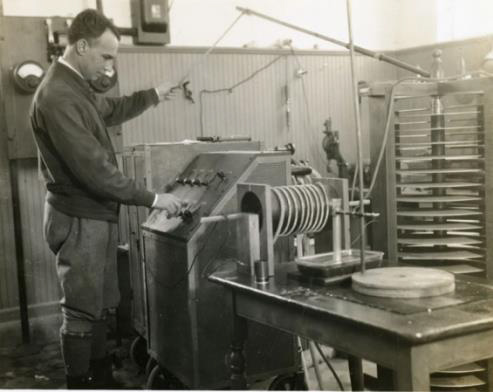 In the 1930s, the Loomis Laboratory was the unofficial center of the scientific universe. Because Loomis provided the most advanced equipment and a level of privacy unattainable elsewhere, the “Tower House” became a pilgrimage site for the architects of modern physics. It was here that the theoretical became practical.
A Gathering of Nobel Laureates: The laboratory’s guest book was a testament to Loomis’s influence. Albert Einstein was a frequent visitor, finding in Loomis a peer who could discuss the intricacies of time-keeping and electromagnetism. Werner Heisenberg, the pioneer of quantum mechanics, and Niels Bohr spent weeks at the estate, debating the nature of the atom on the very lawns where we will gather for lunch.
A Pre-War Scientific Renaissance: Before the lab turned toward defense, it was the site of revolutionary breakthroughs in ultrasonics — the technology that would eventually lead to modern medical imaging — and the development of the Loomis Chronograph, a device that measured time to a degree of precision previously thought impossible. These years of pure research built the intellectual “muscle” that Loomis would later flex when the Tizard Mission arrived on his doorstep.
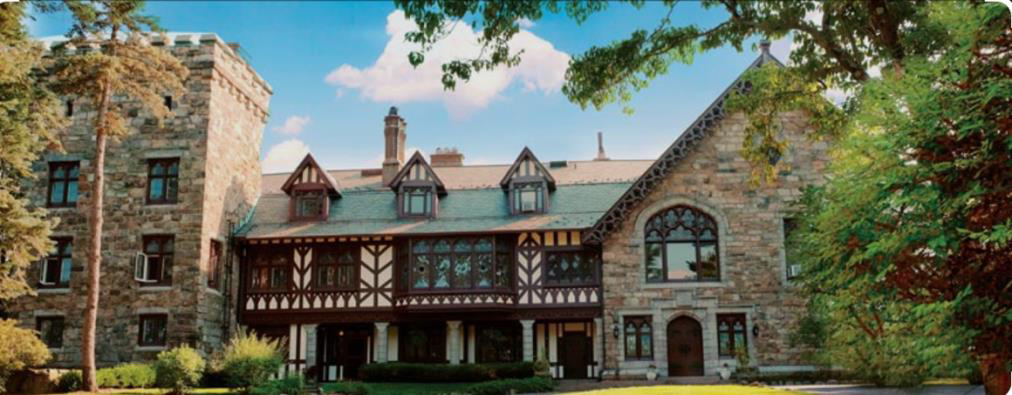
The Gilded Gates: A Brief History of Tuxedo Park
To understand the Loomis Laboratory, one must first understand the unique enclave of Tuxedo Park. Founded in 1886 by tobacco scion Pierre Lorillard IV, Tuxedo Park was designed as the ultimate private wilderness retreat for the American Aristocracy. Nestled in the Ramapo Mountains, it was here that the “Tuxedo” dinner jacket was popularized, and where names like Astor, Vanderbilt, and Morgan sought refuge from the clamor of Manhattan.
By the early 20th century, Tuxedo Park had evolved from a mere social club into a fortified bastion of American influence. It was a place characterized by a strict code of privacy and an architectural grandeur that mirrored the confidence of the Gilded Age. However, beneath this veneer of high-society leisure lay a spirit of rugged intellectualism. When Alfred Loomis chose this location for his laboratory, he wasn’t just seeking a scenic backdrop; he was utilizing the inherent seclusion and security to create a “sovereign state of science.” The very gates that kept the public out would soon protect the secrets that ensured the survival of the Western world.
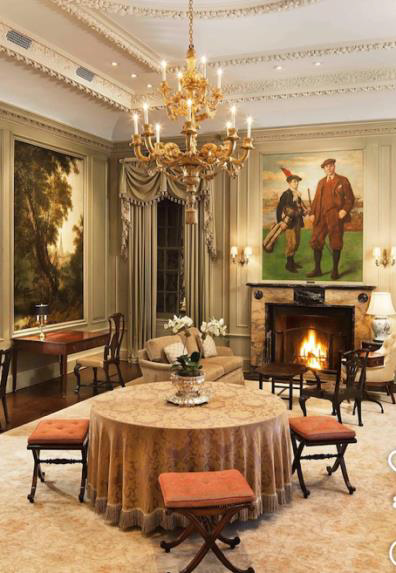 Your Support Makes a Difference
The story of the Loomis Lab is a quintessential Churchillian tale: a story of how private initiative, scientific brilliance, and international cooperation can overcome the darkest of hours.
Your support makes an impact on the work we carry forward all year — advancing scholarship, expanding educational outreach, supporting fellowships, and ensuring that Churchill’s example of principled leadership continues to reach new generations.
We hope you can join us!
Adam Howard
Executive Director
202-929-0309
ahoward@winstonchurchill.org





Subscribe
WANT MORE?
Get the Churchill Bulletin delivered to your inbox once a month.