Uncategorized
Event Opportunity: Churchill and Roosevelt
March 27, 2026
Strategy, Trust, and the Making of the Atlantic Alliance
Hyde Park, New York
August 7 & 8, 2026
The Anglo-American alliance did not emerge automatically from shared language or heritage. It was constructed deliberately, often quietly, and sometimes against domestic political headwinds on both sides of the Atlantic.
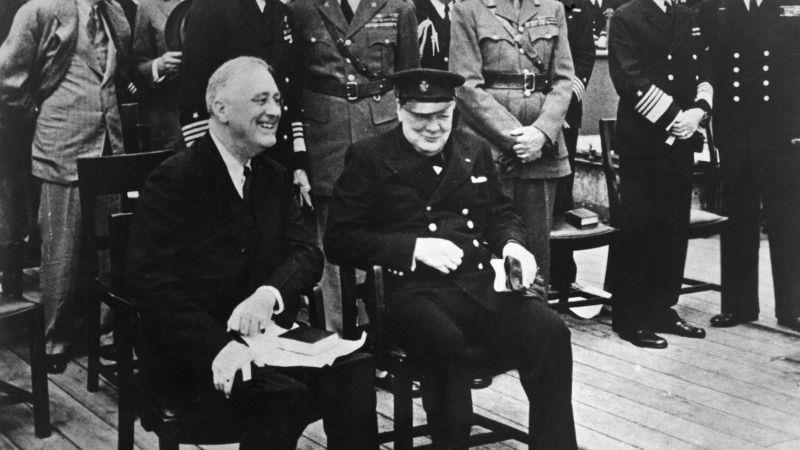
At its center stood two leaders who understood that history was closing in around them: Winston Churchill and Franklin Delano Roosevelt.
As America commemorates its 250th anniversary, the International Churchill Society invites you to step into the physical setting where critical decisions shaping the modern world were debated, refined, and secured.
We invite you to join us for an exclusive donor dinner in New York City followed by a curated historical immersion at the Franklin D. Roosevelt Presidential Library and Museum and Springwood, Roosevelt’s lifelong home in Hyde Park.
Event Overview & Opportunity
Friday, August 7: Dinner
Saturday, August 8: Travel to Hyde Park & FDR Presidential Library and Museum
Events feature: Private small group tour of FDR home. Discussion and presentation by Malcolm Venville, director of “Churchill At War” and “FDR.” Followed by luncheon.
Cost: $3,000 donation ($5,000 for couples).
This intimate experience supports the International Churchill Society and our mission to preserve and promote the legacy and life of Sir Winston Churchill.
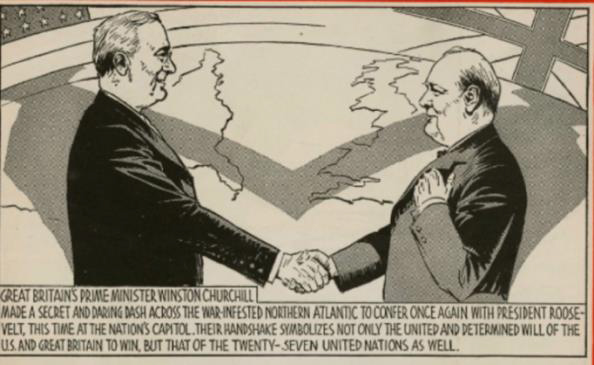 The Courtship Before the Alliance
When Churchill became Prime Minister in May 1940, Britain faced existential threat. France was collapsing. The Luftwaffe dominated the skies. U-boats tightened the Atlantic noose. The United States remained officially neutral.
Roosevelt faced reelection in a deeply divided country. Isolationist sentiment was powerful. Yet he grasped the stakes.
Long before Pearl Harbor, Churchill began what can only be described as a strategic courtship of Roosevelt. He wrote candidly. He appealed morally. He framed the conflict as a civilizational struggle.
Between 1939 and 1945, the two leaders exchanged nearly 2,000 communications. Their correspondence reveals more than policy; it shows persuasion, urgency, humor, and calculation. Churchill addressed Roosevelt as “Former Naval Person.” Roosevelt responded with warmth, but also caution. The survival of Britain depended not simply on American sympathy, but on American action.
Hyde Park: A Presidential Command Post
Hyde Park was not merely a residence. It functioned as a strategic retreat and an informal diplomatic theater. In September 1944, Churchill visited Roosevelt at Springwood. By that time, Allied victory seemed likely, but the postwar world was uncertain. Germany’s future, Soviet expansion, and atomic research all required delicate coordination.
At Hyde Park, Churchill and Roosevelt signed the Hyde Park Aide-Mémoire, quietly reaffirming Anglo-American collaboration on atomic development. The document was brief. Its implications were vast.
The Franklin D. Roosevelt Presidential Library, the first presidential library in American history, now houses original letters, cables, and memoranda exchanged between the two leaders. These papers allow us to examine the mechanics of alliance-building in real time.
The Atlantic Charter and a New World Order
In August 1941, months before the United States formally entered the war, Churchill and Roosevelt met aboard naval vessels off Newfoundland. The result was the Atlantic Charter.
Its principles were ambitious: self-determination, economic cooperation, freedom of the seas, and collective security. Though drafted during crisis, it provided intellectual scaffolding for the United Nations and the postwar liberal order.
Churchill later described the meeting as one of the most important of his life. Roosevelt understood that American public opinion had to be moved gradually, but decisively.
Their partnership fused moral clarity with political realism.
Malcolm Venville
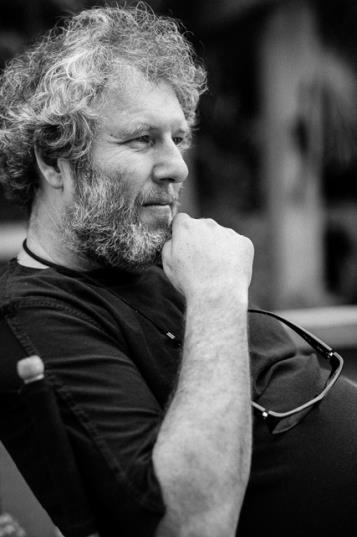 Malcolm Venville is a renowned photographer and filmmaker whose career spans advertising, narrative film, and documentary. He earned a degree in Film, Video, and Photographic Arts from the Polytechnic of Central London and first rose to prominence through award-winning commercial photography and advertising campaigns before moving into filmmaking, where his work has been recognized for its emotional depth and striking visual style.
His feature films include 44 Inch Chest (2009) and Henry’s Crime (2010).
In recent years, Venville has directed acclaimed historical documentaries such as Grant (2020), Abraham Lincoln (2022), Theodore Roosevelt (2022), and most recently, Churchill at War (2024), bringing the drama of leadership under pressure vividly to life.
He has also published photographic books including Layers, Lucha Loco, and The Women of Casa X, which explore identity, culture, and memory through portraiture.
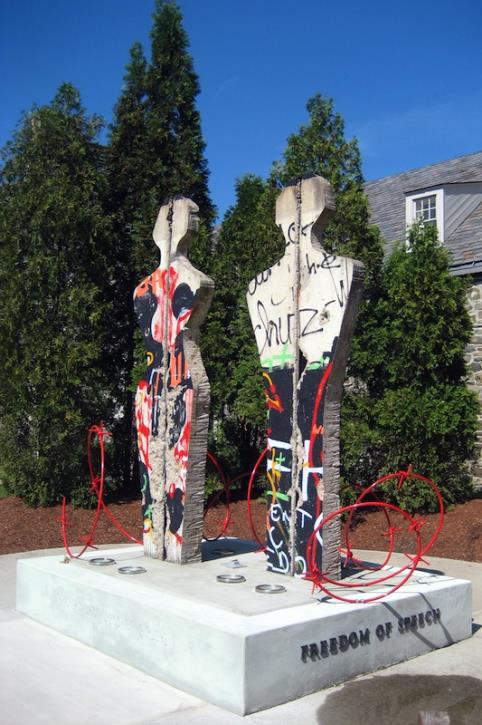
BreakFree by Edwina Sandys, granddaughter of Clementine and Winston Churchill, was installed in 1993. The sculpture is comprised of cut-out sections of the Berlin Wall and is the companion to her sculpture Breakthrough at America’s National Churchill Museum at Westminster College in Fulton, Missouri.
Why This Moment Matters
As America marks its 250th anniversary, questions about leadership, alliance, and democratic resilience once again dominate public life. The Churchill–Roosevelt partnership reminds us that freedom has required both courage abroad and political discipline at home.
This event benefits the International Churchill Society and advances our mission to preserve and examine Churchill’s leadership and its continuing relevance.
The story of Churchill and Roosevelt is not nostalgia. It is a case study in strategic patience, moral conviction, and alliance management under extreme pressure. We hope you will join us for this unique and historically grounded experience.
Contact
Adam Howard
Executive Director
202-929-0309
ahoward@winstonchurchill.org
Event Overview & Opportunity
Friday, August 7: Dinner
Saturday August 8: Travel to Hyde Park & FDR Presidential Library and Museum
Events feature: Private small group tour of FDR home. Discussion and presentation by Malcolm Venville director of “Churchill At War” and “FDR.” Followed by luncheon.
Cost: $3,000 donation ($5,000 for couples).





Subscribe
WANT MORE?
Get the Churchill Bulletin delivered to your inbox once a month.