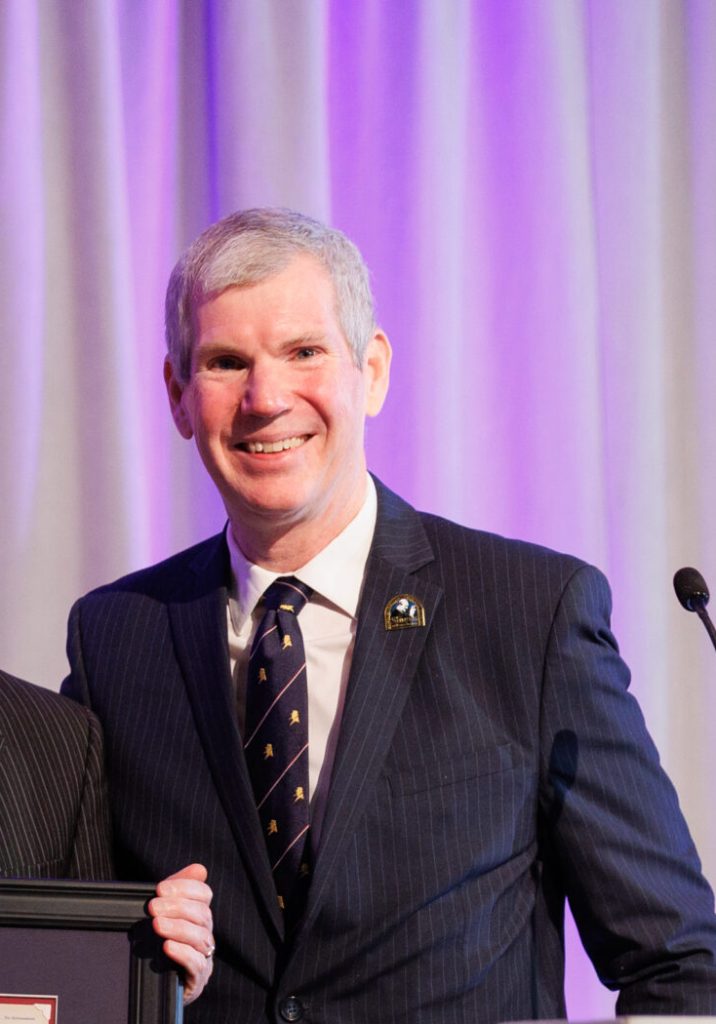
The Hottest Ticket in Town, 1946 By Donald P. Lofe, Jr. President and Chief Transformation Officer and Churchill Fellow, Westminster CollegeDirector, International Churchill Societ...
For much of the war, Churchill lived not at 10 Downing Street, the residence of the Prime Minister, but in ‘the Annexe’, a building nearby in Whitehall. Underneath this, were the Cabinet War Rooms (now a museum called the Churchill War Rooms) – a ‘bunker’ – where he and his government were protected from the worst the German bombers could rain down on London.
After failing to defeat the RAF in the Battle of Britain, the turned to night bombing raids against London and other British cities. The ‘Blitz’, as it became known, aimed to disrupt production and break morale. London was the main target and suffered the heaviest bombing but, by the end of the war, there was hardly a large city or town in Britain that had not come under attack. As the winter wore on, the air raids became heavier. But the repeated heavy raids would not crush the morale of the British people. The ‘Blitz’ spirit kept them going. And Churchill played his part in keeping up morale. He made sure he was frequently in the public eye, constantly travelling around the country, visiting ammunition factories, shipyards, the troops.
The summer of 1940 was, as Churchill called it, Britain’s ‘finest hour’. It was also his. When the German armies conquered France, Britain found itself in the line of attack. With German U-boats patrolling the seas and soon to have bases on the Atlantic, and German bombers marshalling on the coast of France, Britain faced its first serious threat of invasion since 1805. The months of June, July, August and September were to prove Churchill’s moment of ‘Destiny’. For more background information, see the Imperial War Museum’s material on 1940 . Many found it difficult to see how Britain could avoid being defeated. Victory seemed impossible. But Churchill was passionately opposed to negotiating with Hitler. The War Cabinet did consider a compromise peace – or at least the offer of mediation, by Italy, between Germany and the allies – but Churchill argued strongly against this. He was convinced that Hitler would renege on any promises or agreement, just as he had done back in 1938. Churchill used words to persuade his country to fight on. He was a great political communicator – he had refined his speechmaking over many years – and his speeches made at this time (most of them in parliament, with some broadcast later on the radio) ‘mobilized the English language and sent it into battle’.
Despite Churchill’s visits to Paris to stiffen French resolve, his attempts proved futile as the German blitzkrieg shattered the French resistance and drove the British Expeditionary Force back to the Channel ports. A pause in the German attacks between 27 May and 4 June allowed the evacuation of over three hundred thousand British and French troops from the beaches at Dunkirk – turning what was in reality a colossal military disaster into what came to be seen as a success; the saving of lives by the ‘little ships’ (fishing boats, pleasure craft, lifeboats) that ferried men to the destroyers waiting offshore. For more on Dunkirk, and a collection of personal accounts from some of those who took part in the mass evacuation, see the BBC’s Archive . Britain was now clearly in Hitler’s sights. Vulnerable, weakened by defeat on the beaches of France (and with much of its weaponry and ammunition left on French shores), and a long way from its empire and commonwealth allies, it faced the might of the German army and air force alone.
1940 was Britain’s first full year of war – and it was a time of enormous challenge as the country faced the very real threat of defeat . It was also Britain’s ‘finest hour’. The events of 1940 shaped the way the war was fought and helped to set Britain on the road to eventual victory – and only an extraordinary leader could guide the country through. Churchill found himself needing all his daring and endurance to face the task ahead.
Friday 8 May 2015 was the anniversary of VE Day (Victory in Europe Day), marking seventy years since the end of the Second World War in Europe. The occasion was commemorated with a three-day weekend of remembrance and celebration, with events being held across the UK.
All the Churchills supported their father. The children, to varying degrees, served him – and their country – in the Second World War, too. Diana served in the Women’s Royal Naval Service (WRNS), Sarah with the Photographic Interpretation Unit of the Women’s Auxiliary Air Force (WAAF) and Mary served in the armed forces in mixed anti-aircraft (AA) batteries with the Auxiliary Territorial Service (ATS). Mary also attended the Quebec conference of 1943 as an aide to her father, while Sarah played a similar role at Teheran in 1943 and Yalta in 1945. Randolph served as an Intelligence Officer in the Middle East, was attached to the newly formed Special Air Service (SAS), and undertook missions in the Libyan desert and in Yugoslavia.
Churchill is perhaps now best remembered for his powerful speeches and broadcasts, particularly those delivered during the Second World War – ‘a series of speeches that rank with the greatest in British history’ (Simon Jenkins, in , 2011). He used his great skill with the written word, and his dedication to rehearsing its delivery, to influence a national and an international audience. His speeches were carefully crafted both to raise morale at home and to act as political and diplomatic weapons abroad, sending messages of defiance to the enemy and calls to arms to allies. Learn more about Churchill’s development as a speaker, in an exhibition showcasing relevant . And this review of the exhibition in the .
The Cabinet War Rooms (now a museum called the Churchill War Rooms) – a ‘bunker’ – was where Churchill and his government were protected from the worst the German bombers could...
Get the Churchill Bulletin delivered to your inbox once a month.
Δ
Join the International Churchill Society today! Membership starts at just $29/year.