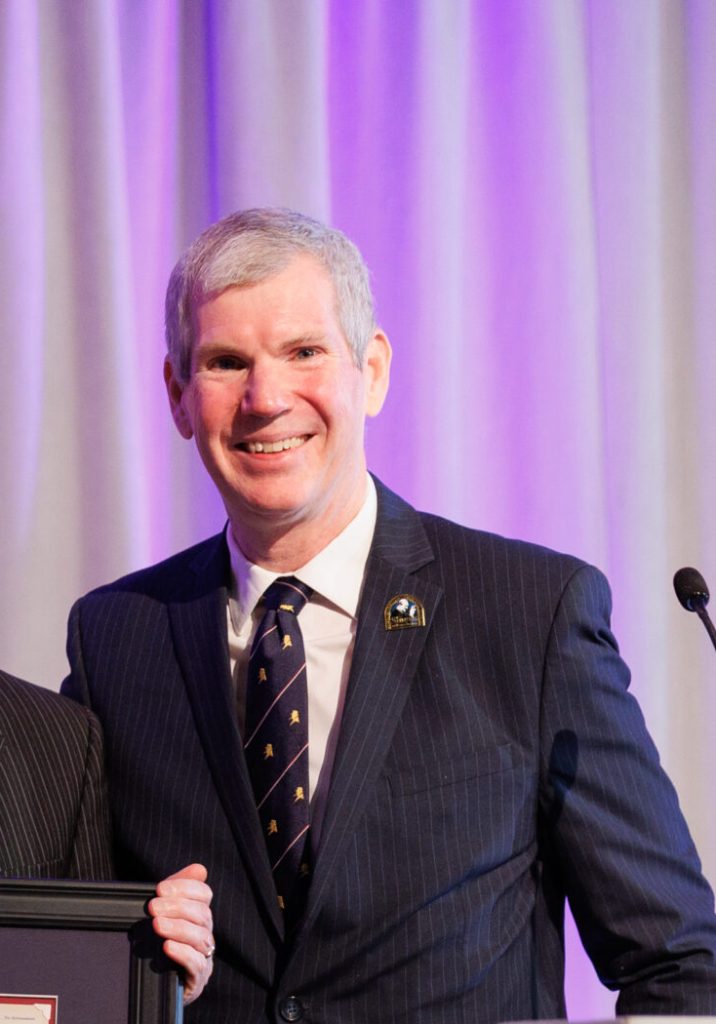
The Hottest Ticket in Town, 1946 By Donald P. Lofe, Jr. President and Chief Transformation Officer and Churchill Fellow, Westminster CollegeDirector, International Churchill Societ...
Churchill’s articles on the pleasures of painting appeared in the in 1921 and 1922, netting him the handsome sum of £1000 (considerably more than his paintings would earn him in his lifetime, of course). Clementine was cautious: ‘I expect the professionals would be vexed & say you do not yet know enough about Art’. Mary, his daughter, later wrote that Clementine was ‘in principle opposed to Winston’s writing what she regarded as “pot-boilers” to boost their domestic economy’. But Churchill, the professional writer (and now passionate painter), prevailed; his articles were a great success, explaining vividly why such pleasure was to be found in painting. Painting also provided consolation and peace in times of despair and grief.
Churchill spent much of his leisure time at Chartwell, the house and grounds he bought in 1922 set in the rolling countryside of Kent. When he wasn’t bricklaying, building tree houses for the children or feeding his menagerie of animals, he spent much of his time painting, particularly in his ‘wilderness years’. His studio at Chartwell is today much as it was when he was alive and many of his paintings can be seen on its walls. He generally preferred light and colour and, when the weather wouldn’t comply and he couldn’t paint out of doors, he often resorted to still-life studies of fruit, bottles and glassware (hence ‘Bottlescape’, his painting of a range of drinks and glasses, both full and empty.) His nephew Peregrine has said that Churchill, on receiving a large bottle of brandy for Christmas, sent his children round the house looking for other bottles to put alongside it, for a still life. Peregrine told Richard M. Langworth, the editor of , that Churchill said: ‘Fetch me associate and fraternal bottles to form a bodyguard to this majestic container’ ().
In the early twentieth century, ‘popular’ culture was still a fairly novel concept. Prior to this, culture was considered primarily the domain of the elite classes: art forms such as poetry, fine art, operas and ballet reflected the refined tastes of the aristocracy.
While supremely confident and self-assured in most fields of life, Churchill was generally modest about his achievements as a painter; he didn’t aspire to create masterpieces – he never claimed he had ever painted one – and didn’t intend to earn money from his pastime (unlike his other craft of writing). But he did have a certain ambition for his art. In 1921, only six years after he’d first tried his hand with a brush, he is said to have sold up to six paintings he’d exhibited in Paris under the pseudonym Charles Morin at Galerie Druet for the princely sum of £30.00 each. In 1947 he successfully submitted two paintings to the Royal Academy Summer Exhibition under the name David Winter (including ‘Winter Sunshine, Chartwell’, which had won a prize in 1927).
Churchill took up painting in 1915 at the age of forty after his sudden fall from office over the disastrous Dardanelles campaign. He hoped it would provide a distraction, and he threw himself into it wholeheartedly.
‘So much of him still lives in his paintings at Chartwell’ – so says the narrator of this 1968 documentary, which shows some of the paintings on display at Churchill’s...
copyright: Churchill Heritage Ltd, with kind permission of Anthea Morton-Saner, on behalf of Churchill Heritage Ltd...
This painting, of the garden of his friend, the Conservative MP Sir Philip Sassoon (Trent Park, New Barnet, Hertfordshire) hangs in the Studio at Chartwell copyright: Churchill Heritage Ltd, with...
International Churchill Society the preeminent member organization dedicated to preserving the historic legacy of The Rt. Hon. Sir Winston Churchill.
Get the Churchill Bulletin delivered to your inbox once a month.
Join the International Churchill Society today! Membership starts at just $29/year.