
Bulletin #217 - June 2026
Why Churchill Matters: We Can Still Believe in Leaders

Author with Lord Andrew Roberts, Savoy Hotel June 2026.
July 4, 2026
By Nikki Lafferty, ICS Member
There are moments in life when history stops feeling distant.
For much of my life, Winston Churchill was a name I knew, a figure fixed somewhere in the black-and-white photographs of the twentieth century. He belonged to wartime speeches, old newsreels, and the grand sweep of history books. But then came a period in my own life when I needed rest, recovery, and a way to make sense of challenge. I found myself reading more deeply, reaching for books that offered perspective, and eventually becoming immersed in Churchill’s world.
What began as curiosity became something more meaningful. I read about Churchill’s triumphs, but also his failures. I learned about the young man who sought adventure and recognition, the politician who made mistakes, the leader cast aside, the writer, the painter, the husband, the father, the public servant who did not always get things right. I saw not a perfect man, but a human being who kept learning, adapting, and returning to the work before him.
That mattered to me.
In an age when public life can feel combative, discouraging, and relentlessly cynical, it is easy to lose faith in leadership. Politics often seems defined by confrontation. Daily events can feel exhausting. We are surrounded by examples of people tearing one another down, and sometimes it becomes tempting to conclude that leaders will always disappoint us.
Churchill’s life offers a more complicated and more hopeful answer.
He disappointed people. He failed. He was criticized, defeated, dismissed, and, at times, deeply unpopular. Yet his story did not end with any one failure. Again and again, he returned to public life with experience sharpened by adversity. He absorbed history, understood the stakes of his moment, and when the hour demanded it, he found the language and resolve to help a nation endure.
That is why Churchill still matters. Not because he was flawless, but because he shows us that leadership is not the absence of failure. It is the capacity to learn from failure, to rise after it, and to serve something larger than oneself.
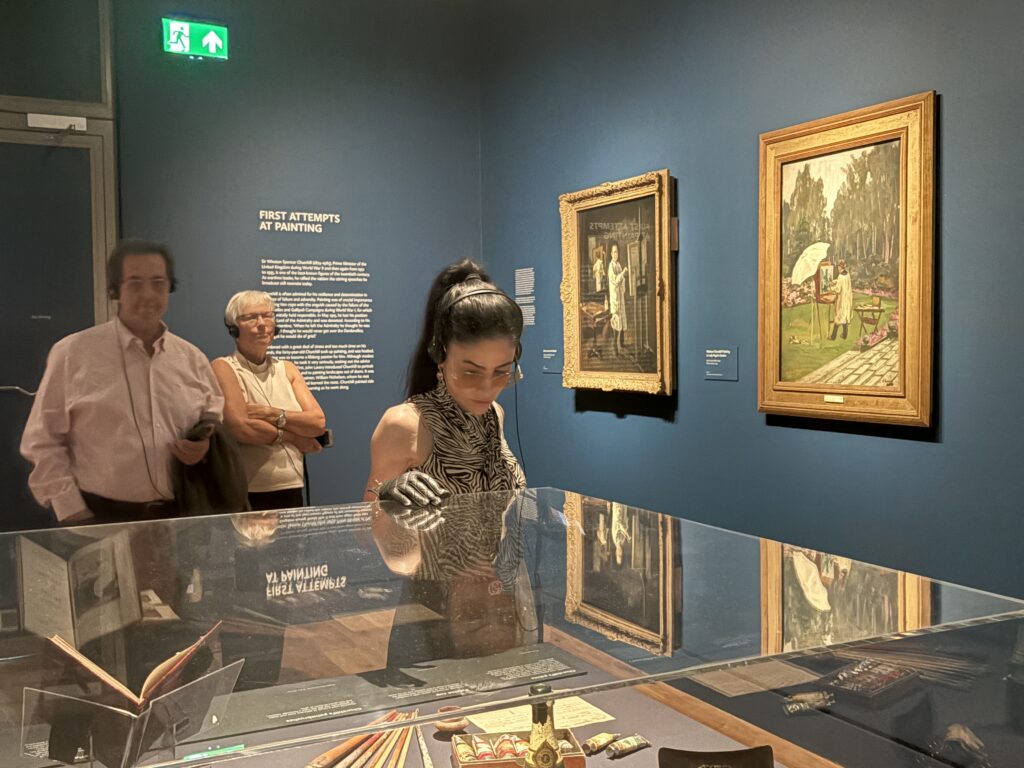
My connection to Churchill deepened through membership in the International Churchill Society. At a time when I was healing and rebuilding, ICS gave me a community of people who believed that history was not merely something to be preserved on a shelf. It was something to be studied, debated, visited, and carried forward. Through the Society, I found lectures, articles, conversations, and friendships that helped me see Churchill not only as a historical figure, but as a living source of perspective.
That engagement recently led me to the United Kingdom, where I had the opportunity to visit places central to Churchill’s life and legacy. To stand at Blenheim Palace, where he was born, is to be reminded that even towering lives begin in ordinary human vulnerability. To visit London sites associated with his public life is to feel the weight of decisions made under pressure. These places are not abstractions. They are reminders that history happened in rooms, streets, houses, gardens, and underground corridors where real people faced real uncertainty.
For younger generations especially, visiting these sites and learning about historical figures like Winston Churchill matters. We live in a time that often asks us to choose between worshipping historical figures or discarding them entirely. Churchill resists both approaches. He should be studied honestly, with his contradictions included. He should neither be flattened into myth nor reduced to his flaws. The value of history is that it teaches us how human beings confronted their circumstances, made choices, suffered consequences, and sometimes rose to meet the challenge.
That is the kind of history people need.
We need examples of leaders who were not perfect but were capable of growth. We need to understand that courage is not always loud, that perseverance can be built over decades, and that moral clarity is often formed through struggle. We need to know that public service can be difficult and disappointing, but still worthy. We need to believe that leadership can still matter.
Churchill’s story does not ask us to ignore complexity. It asks us to face it. His life reminds us that history is not made by perfect people. It is made by people who are tested, who fail, who learn, and who decide whether they will answer when called.
For me, Churchill became more than a subject of study. He became a reminder that pain can become purpose, that recovery can open the door to discovery, and that history can give us courage when the present feels uncertain. My journey through Churchill’s world began in a quiet season of recuperation. It led me to books, to membership in a community of history lovers, and ultimately to the places where his life unfolded.
I came away believing something that feels especially important now: we can still believe in leaders.
Not blindly. Not uncritically. Not because they are perfect. But because history shows us that human beings are capable of growth, resilience, service, and greatness under pressure.
That is why Churchill matters.
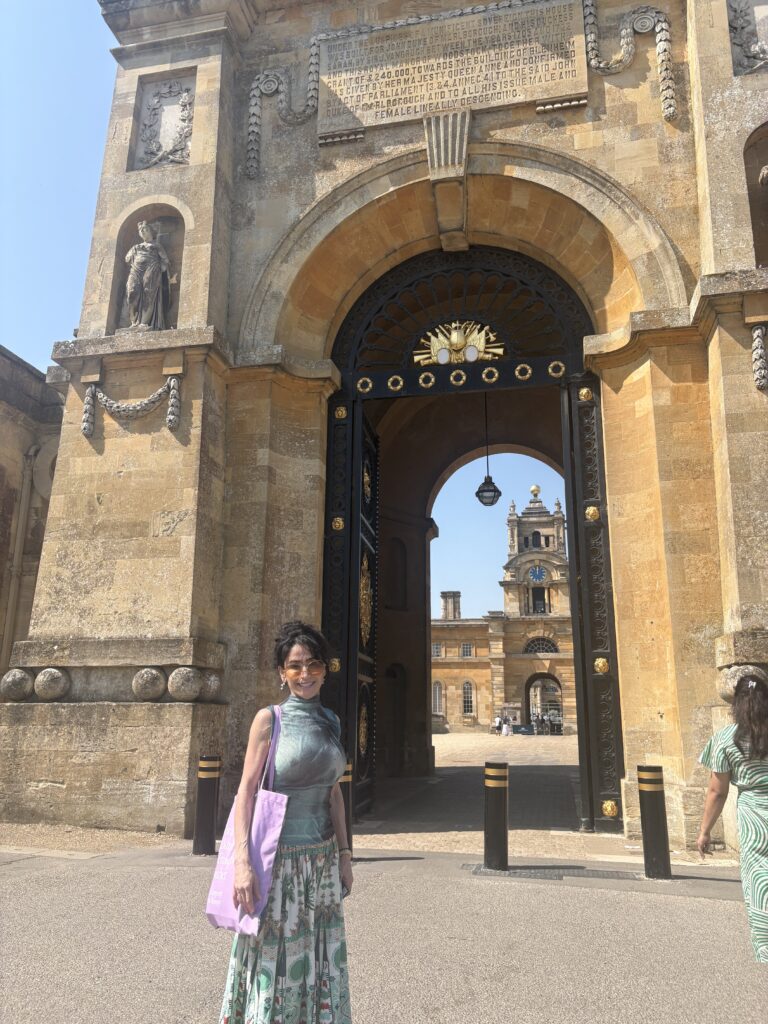
Author at Blenheim Palace, June 2026.




Subscribe
WANT MORE?
Get the Churchill Bulletin delivered to your inbox once a month.