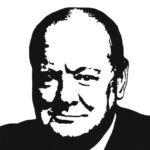
We will mete out to the Germans the measure and more than the measure that they have meted out to us. We will have no truce or parley with you, or the grisly gang who work your wicked will. You do your worst and we will do our best.
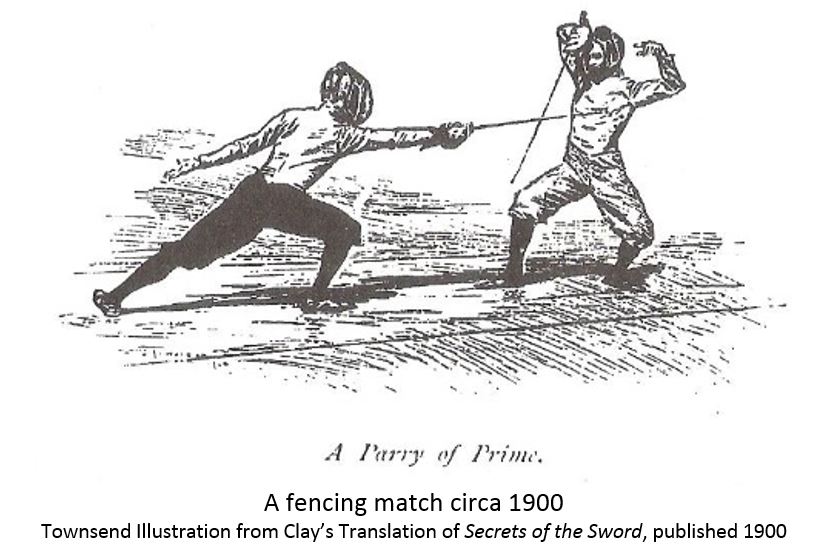
A few weeks before his eighth birthday, in 1882, Churchill – like many other children of his class and background – was sent away to boarding school. It was at his second school in Brighton (after two unhappy years at St George’s, Ascot where ‘floggings’ were common) that he learnt things that interested him; not just French and history, but riding a horse and swimming. Both riding and swimming were to feature heavily in his life. At Harrow he represented his house at swimming competitions, but it was at fencing that he excelled. In 1889, Churchill wrote to his ‘Darling Mummy’ asking her to allow him to take up fencing. Churchill went on to become an accomplished fencer and even became Public Schools Fencing Champion in 1892.
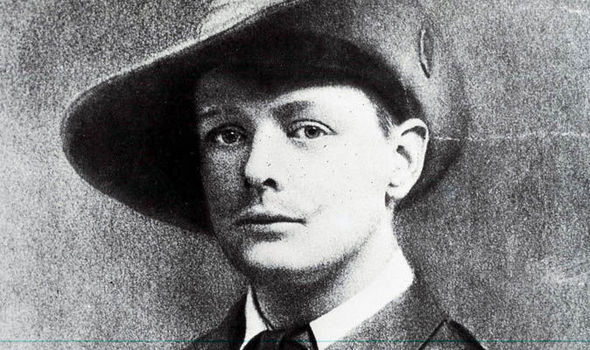
Churchill knew that the fastest way to political advancement lay in active service – ‘the glittering gateway to distinction’. He bemoaned the fact that the world was growing so ‘sensible and pacific’. There weren’t any battles close to home – as yet – so he had to look further afield to find action. For the moment, though, there was action to be found on a far-distant island – Cuba – and, through his mother’s contacts, Churchill managed to wangle a commission as a war correspondent for the Off he went, spirits high, to see some action. In late 1895, he and a friend Reginald Barnes were given leave to travel to Cuba, to observe the military campaign by the Spanish government troops against Cuban guerrilla rebels. Churchill spent some of his twenty first birthday under fire when the column he was travelling with was attacked. Despite only being in Cuba for sixteen days, he was recommended for the Spanish Cross of the Order of Military Merit.
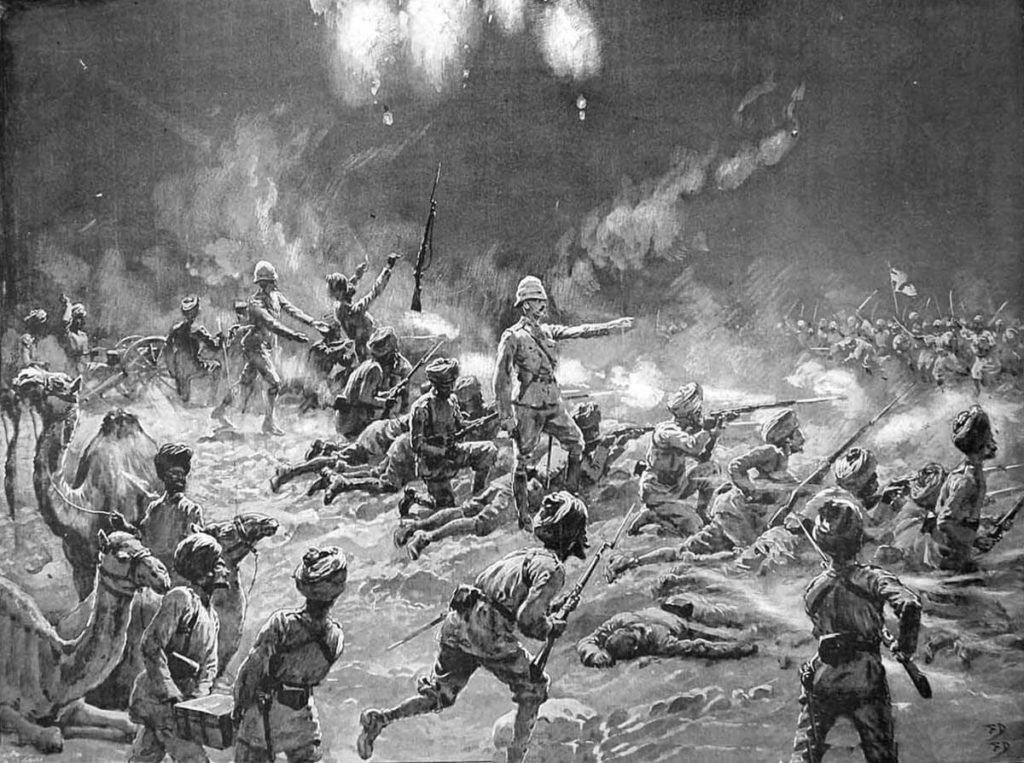
When Churchill sailed to India with his regiment, the Queen’s Hussars, in 1896, polo – and winning regimental polo cups – seemed to be the only action he was likely to see. Eager to make his mark, he took matters into his own hands and persuaded the to take him on as a war correspondent. In 1897, he travelled to the North West frontier of India and Pakistan to join the Malakand Field Force fighting against the Afghan tribes in 1897, under the command of Sir Bindon Blood. It took him a total of five uncomfortable weeks (by ship and by train), with the promise of nothing more than a role as ‘correspondent’, to get to the front.
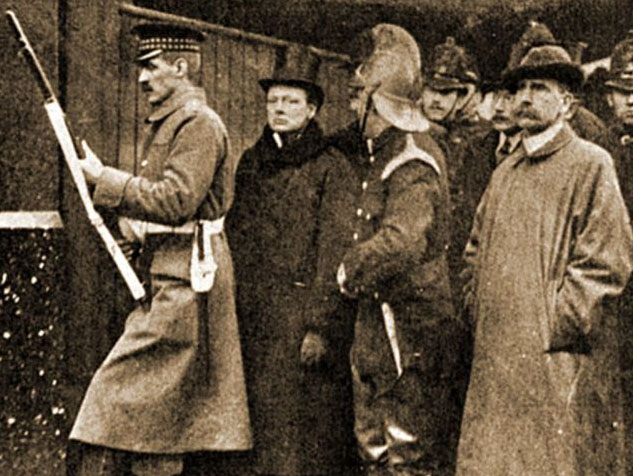
Away from the field of battle, Churchill’s risk-taking continued unabated. By January 1910, he was Home Secretary (his exploits in the war zones of the British Empire having succeeded in getting him into ‘the game of politics’) – and managed to engineer himself into the centre of the action.
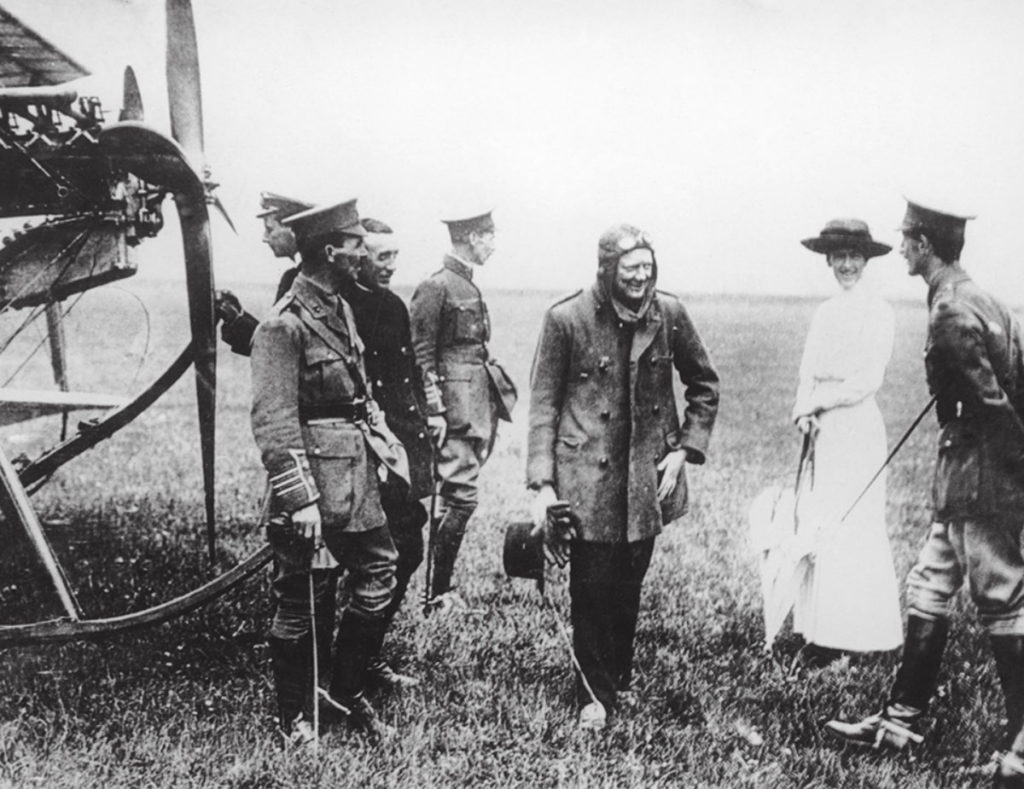
Typically adventurous, Churchill learnt to fly in 1913 when he was First Lord of the Admiralty, only ten years after the first aeroplane flight. At the time, the Royal Navy only had about a dozen aircraft and accidents were common. Planes weren’t very substantial; many of them couldn’t carry heavy loads, with some barely able to lift the pilot, never mind a co-pilot. Their engines were unreliable and even a modest wind could impede a flight. Flying these fragile planes required considerable skill as well as a great deal of luck.
International Churchill Society the preeminent member organization dedicated to preserving the historic legacy of The Rt. Hon. Sir Winston Churchill.
Get the Churchill Bulletin delivered to your inbox once a month.

Join the International Churchill Society today! Membership starts at just $29/year.